
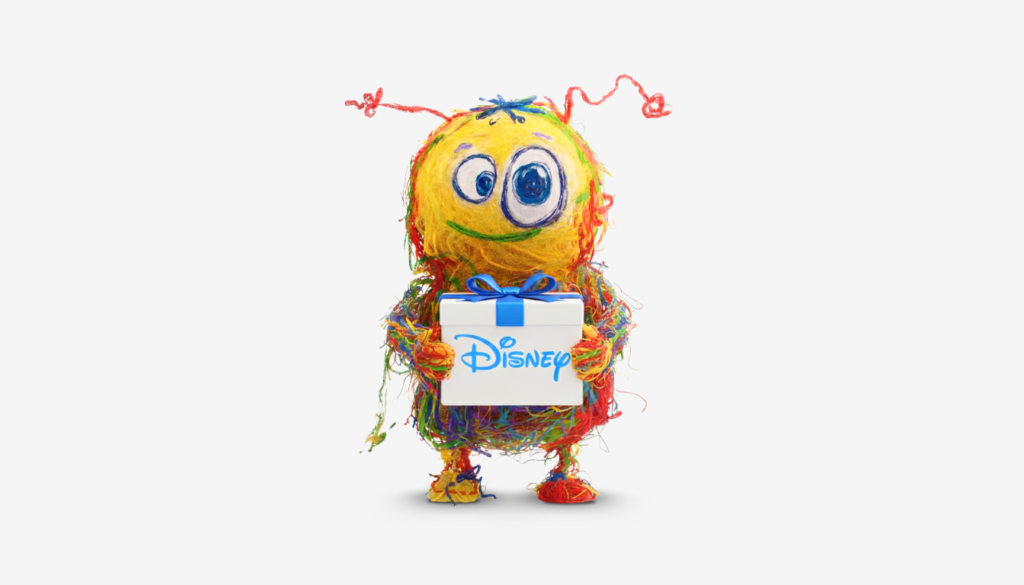
Disney’s latest holiday campaign arrives at a moment when the company is seeking resonance beyond its theme parks and amid streaming challenges. Rather than chasing trends or competing in the crowded landscape of holiday advertising, the brand returns to its most reliable north star: an earnest, emotionally charged story built on childlike wonder. The result is a film anchored in a drawn creature that comes to life, serving as a symbolic reminder of Disney’s capacity to turn imagination into something that feels real enough to hold. This renewed focus on emotional specificity reflects a strategic shift: if the brand wants to regain cultural momentum, it must create work that feels as iconic as its history.
Where Magic Becomes a Brand Strategy
What stands out in the film is not simply its technical craft, but its absolute clarity in reinforcing a single idea. Viewers organically used the word “magic” when reacting to the story, proving that Disney’s brand positioning is not only understood but also universally echoed. Instead of embedding taglines or relying on overt messaging, the campaign lets the narrative carry the weight of meaning. Magic is not a claim but an outcome. In a landscape where brands often dilute themselves with layered propositions, Disney offers a counterexample: the most powerful brand ideas are those people instinctively express without prompting.
This is why the campaign feels more like a return to form than a reinvention. Disney isn’t searching for a new identity; it is recommitting to the one it already owns. And in doing so, it demonstrates that brand equity is only as strong as a company’s willingness to protect and amplify it.
When Storytelling Begins With the Product
The film is also grounded in an old-school principle that modern marketers tend to overlook. The creature at the heart of the narrative takes its features from Disney toys, essentially making the products inseparable from the story’s emotional arc. This choice brings a sense of authenticity that transcends merchandising. Rather than treating the toys as add-ons, they become catalysts for the narrative, proving that emotionally resonant creativity and commercial objectives are not opposites but complementary forces.
This approach has long worked for retailers that understand holiday emotionality as a sales driver; Disney applies the logic with added depth. The film reminds audiences that the products in its universe are not static; they are conduits for stories, personalities, and emotional bonds. Effective brand storytelling does not need to hide commercial intent, as long as the product meaningfully participates in the story being told.
The Power of Cultural Density
What truly differentiates the campaign is its deliberate layering of cultural references. The narrative is filled with familiar characters, musical nostalgia, and instantly recognisable voices that invite rewatching and sharing. The density of Easter eggs works not as decorative clutter but as connective tissue between generations of fans. Each reference extends the story’s life beyond a single viewing, creating a participatory experience that encourages audiences to search, pause, and discuss.
This type of cultural intertextuality is rare outside entertainment powerhouses. While many brands chase virality through shock, humour, or topicality, Disney leverages its own archive as a creative engine. The campaign becomes a celebration of Disney’s vast storytelling world, while also functioning as a subtle reminder of its relevance in today’s fragmented media environment. It shows that a brand with a rich cultural ecosystem does not need to mimic competitors; it only needs to mine its own strengths.
A Platform Designed to Outdo Only Itself
The film feels like more than an isolated holiday moment. It hints at a long-term creative approach that positions Disney not against retailers or beverage giants, but against the best of its own history. By treating each holiday campaign as a chapter rather than a one-off, Disney lays the groundwork for a recurring platform that builds its universe year after year. This mindset mirrors the discipline once associated with John Lewis Christmas work, with a commitment to emotional continuity, creative ambition, and internal benchmarks.
Disney is clearly signalling its intent to reclaim leadership in holiday storytelling. And by embracing its own DNA, combining magic, nostalgia, and imagination, it demonstrates a confidence that could set a new global standard for festive brand advertising. The doodle may be small, but its impact marks a significant creative reset: a reminder that when Disney returns to creating work only it can make, the world pays attention.