
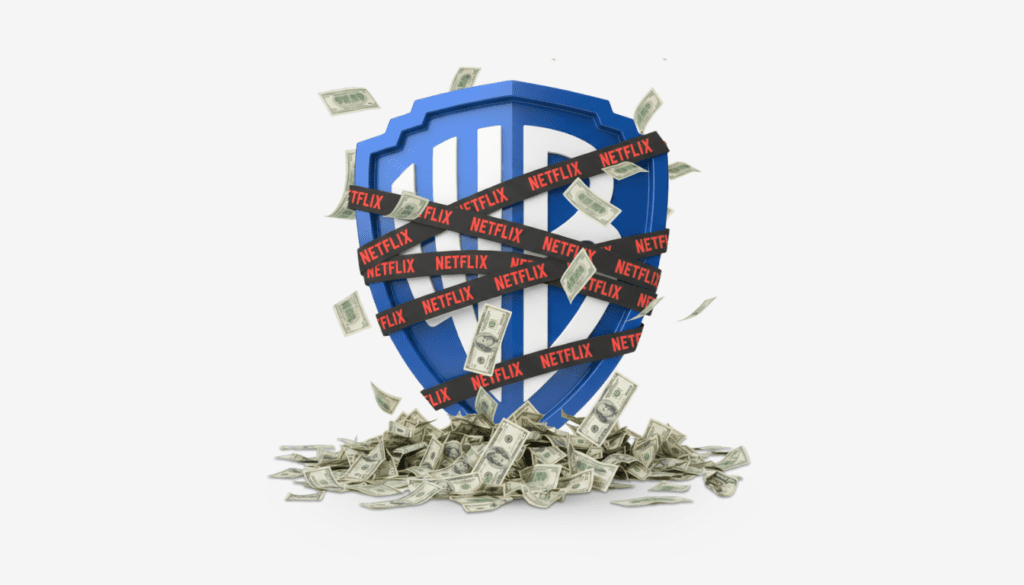
Netflix’s decision to acquire Warner Bros for $72 billion represents a structural shift in how content, distribution, and advertising will operate in the decade ahead. For years, the streaming market has been defined by fragmentation, rising content costs, and an uneasy coexistence between legacy studios and digital platforms. This merger collapses that tension into a new hierarchy, placing Netflix at the helm of one of the world’s most valuable libraries while transforming the economics of global entertainment.
Where Streaming Meets Studio Power
By absorbing Warner Bros’ film and TV studios, HBO’s premium slate, the Max streaming platform, and influential franchises such as DC and Harry Potter, Netflix transitions from a streaming powerhouse to a fully vertical studio empire. This evolution allows the company to expand beyond subscription metrics and lean into multi-format IP exploitation, spanning games, theatrical windows, and global licensing. Although Netflix has spent years building original hits, ownership of century-old franchises gives the company a deeper cultural anchor, turning attention into something more durable and monetizable.
Also, the shift reframes the competitive landscape. Rivals like Disney, Amazon, and Comcast must now confront a combined library of prestige dramas, blockbuster universes, and global series under a single market leader. What was once a crowded streaming race suddenly narrows into a tiered hierarchy, with Netflix occupying a rare position at the intersection of scale, technology, and iconic storytelling.
A Trigger for Industry-Wide Consolidation
The deal emerged from Warner Bros’ own structural split, which separated its linear television networks from its high-growth media assets. The sale sends a clear message: the future of value in entertainment lies in streaming, digital distribution, and IP expansion, not in legacy cable infrastructure. With Netflix securing the most coveted piece of the company, traditional media firms now face a heightened urgency to consolidate, partner, or pivot.
Paramount, Comcast, and others who attempted to bid for Warner Bros must reassess their next moves. Whether through mergers, strategic bundling, or selective acquisitions, the industry is entering a phase where scale becomes the primary advantage. Consumers may ultimately see fewer apps and more bundled ecosystems, though likely at higher prices as companies rationalize the cost of competing in an environment dominated by mega-platforms.
What This Means for Advertising and Brand Strategy
For marketers, the implications are immediate and substantial. Netflix, already one of the fastest-growing ad platforms, will soon control an even broader portfolio of premium inventory across streaming and tentpole content. Advertisers seeking high-attention environments will likely treat the combined Netflix–HBO ecosystem as a mandatory buy, much as Google and Meta became unavoidable pillars of digital media planning.
This consolidation could raise CPMs and create more exclusive advertising opportunities tied to blockbuster franchises. As Netflix integrates Warner Bros’ storytelling power with its data-driven ad model, brands may find new pathways for product integrations, universe-level collaborations, and long-tail partnerships that extend across shows, films, games, and fan communities. At the same time, measurement challenges inside walled gardens may intensify, pushing marketers to strengthen their independent analytics and diversify spending across social platforms, retail media, and YouTube.
The Consumer Dimension and Cultural Gravity
From a viewer standpoint, the merger promises convenience and friction. A unified library simplifies the streaming experience, yet the financial realities of such an acquisition increase the likelihood of price adjustments, stricter sharing policies, and a heavier emphasis on ad-supported tiers. Still, the cultural impact may be the most influential shift. When Netflix distributes HBO event series, Warner Bros blockbusters, and its own global originals, it concentrates cultural moments within one ecosystem, shaping the rhythms of weekly conversation and giving brands fewer but more powerful opportunities to tap into the zeitgeist.
The merger also deepens streaming’s influence on global culture. With a single platform hosting stories ranging from prestige dramas to superhero sagas, entertainment becomes more centralized, changing how trends emerge, how audiences engage, and how brands position themselves within these cultural cycles.
A Defining Moment for the Next Decade
In that sense, Netflix’s purchase of Warner Bros marks the beginning of a new era in entertainment economics. The merger redraws power lines, accelerates consolidation, and rewrites the calculus for how companies compete for attention. As the industry absorbs the shockwaves, marketers, creators, studios, and platforms must adapt to a world where a single player commands unprecedented influence over both storytelling and distribution.
This realignment will define the next chapter of Hollywood. For now, one fact is clear: Netflix is positioning itself as the new center of gravity in global entertainment, with consequences that will shape viewing habits, advertising strategies, and cultural narratives for years to come.