For more than a year, Hollywood’s relationship with generative AI has been defined by caution, lawsuits, and labor disputes. Studios worried about unauthorized use of intellectual property, performers feared the replication of their likenesses, and unions warned of creative erosion. Against this backdrop, Disney’s decision to license its characters to Sora, OpenAI’s short-form video platform, lands as a quiet but consequential pivot.
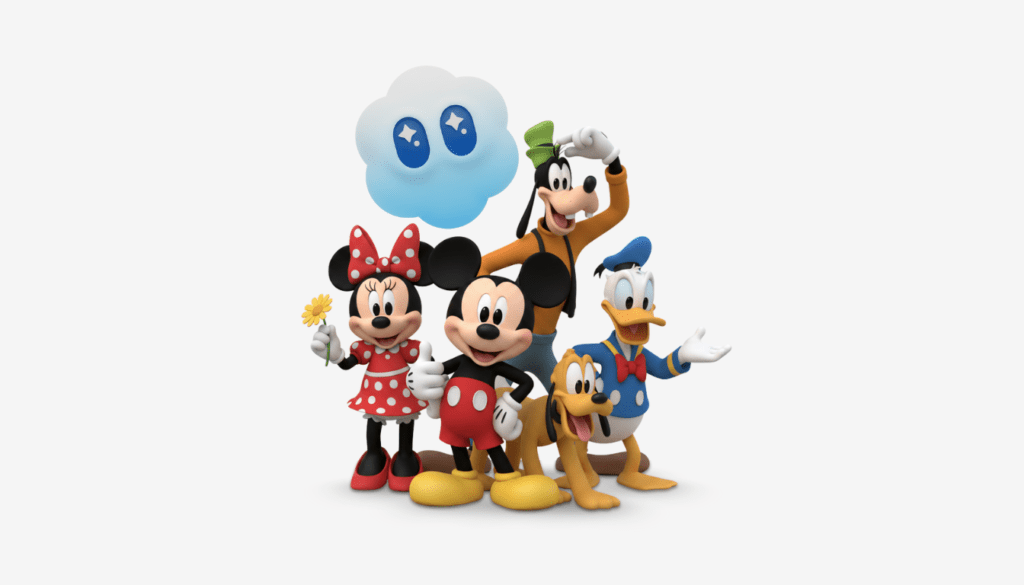
Rather than keeping AI at arm’s length, Disney is stepping inside the system. Under a three-year agreement, users will be able to generate short videos using Disney, Pixar, Marvel, and Star Wars characters and worlds through Sora. Select creations will be curated and streamed on Disney+, effectively turning fan-generated AI content into part of the company’s distribution ecosystem. At the same time, Disney will acquire a $1 billion equity stake in OpenAI, with the option to invest further, and deploy ChatGPT internally to support employees and product development.
It is not an embrace without limits. The deal explicitly excludes talent likenesses and voices, drawing a clear line around the industry’s most sensitive fault lines. Yet even with those boundaries, the signal is unmistakable: the largest steward of entertainment IP in the world is no longer asking whether generative AI belongs in Hollywood, but how it should be governed.
From Passive Audiences to Co-Creators
At its core, the partnership reframes fandom. For decades, Disney’s relationship with audiences revolved around consumption, whether through films, series, merchandise, or theme parks. Sora introduces a different dynamic. Fans are no longer only viewers; they become participants, using prompts to imagine scenes, moments, and narratives inside Disney’s worlds.
This shift aligns with broader changes in digital culture, where creation itself is a form of engagement. Short-form video platforms trained a generation to remix, reinterpret, and perform culture rather than simply watch it. By allowing controlled co-creation, Disney taps into that instinct while retaining curatorial authority through Disney+. What appears on the platform remains selective, signaling that canon still matters, even in an age of infinite variation.
The strategic implication is subtle but powerful. Time spent creating within a Disney universe may prove more valuable than time spent scrolling past it. Engagement deepens not through louder marketing, but through creative proximity.
A New Model for AI Governance
Disney’s approach also offers a blueprint for an industry struggling to define acceptable AI use. Instead of blanket bans or reactive litigation, the company is experimenting with licensing, constraints, and product integration. By separating character rights from human performance rights, Disney acknowledges labor concerns without freezing innovation entirely.
This distinction may become the industry’s temporary compromise. Characters and fictional worlds can be licensed into generative systems, while real human identity remains protected. It does not resolve every ethical question, but it creates a workable framework in a moment when the absence of structure has been the greatest risk.
Importantly, governance here is embedded into product design. Brand safety, thematic limits, and moderation are not external policies; they are part of how Sora must function to host Disney IP at scale. In that sense, Disney is influencing not just content outcomes, but the architecture of generative video itself.
Why the Investment Matters as Much as the License
The $1 billion equity investment elevates the partnership beyond a content deal. Disney is not only a client or licensor; it is a stakeholder in the infrastructure shaping the next creative era. If generative AI becomes a foundational layer of entertainment production and distribution, Disney wants both influence and upside.
This dual role reflects a broader recalibration among legacy media companies. Rather than building every tool in-house or outsourcing innovation entirely, strategic ownership offers leverage. It allows Disney to learn, experiment, and adapt alongside OpenAI, while hedging against a future in which AI platforms capture disproportionate cultural and economic power.
Deploying ChatGPT internally reinforces that logic. Generative AI is not being treated as a novelty for consumers, but as operational infrastructure that supports workflows, ideation, and, potentially, production across the company.
The Risks Beneath the Optimism
The move is not without tension. Opening the gates to AI-generated Disney content introduces perpetual moderation challenges. Even with guardrails, edge cases will test brand safety and cultural responsibility. There is also the risk of dilution, as endless variations threaten to blur what feels official and special.
Labor concerns, while partially addressed, remain unresolved. Writers, animators, and creatives will watch closely to see whether AI-assisted creation leads to new opportunities or quiet displacement. The deal may ease immediate fears, but it also accelerates the conversation about how creative value is defined and rewarded in an AI-augmented industry.
A Signal the Industry Cannot Ignore
Still, the broader message is clear. This is not a defensive maneuver; it is a strategic one. Disney is acknowledging that generative AI will shape how stories are imagined, shared, and monetized, and it intends to be an author of that future rather than a footnote.
For Hollywood, the deal reframes the debate. The question is no longer whether AI threatens the industry, but whether studios are willing to engage early enough to set the terms. Disney has made its choice, and in doing so, it may have quietly rewritten the rules for everyone else.