
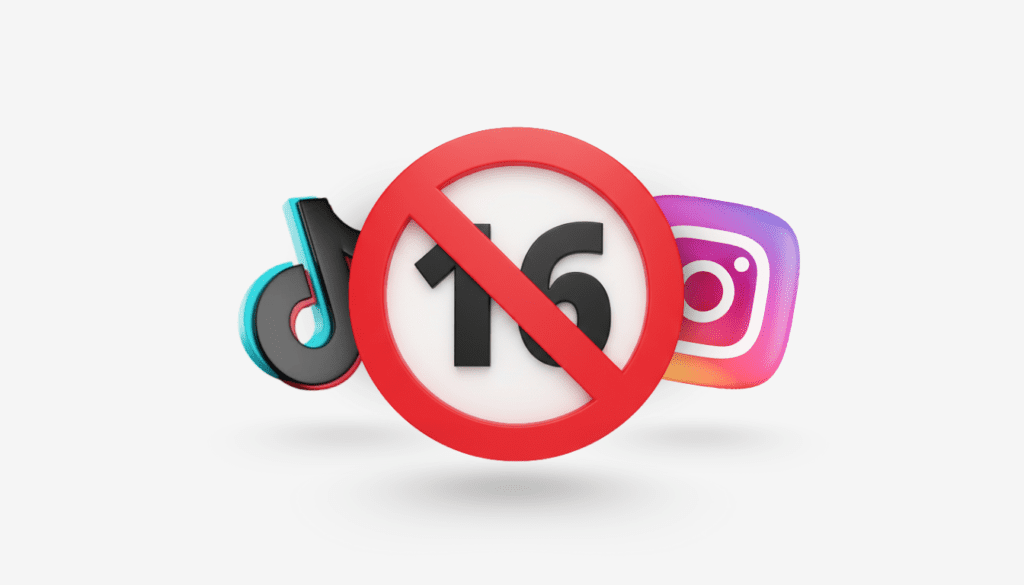
Australia has just taken one of the most decisive regulatory steps the digital world has seen. A new federal law barring children under 16 from major social media platforms is now in force, turning what was once a parental concern or a platform guideline into a matter of national policy. For the first time, a government has attempted to enforce age limits across an entire social ecosystem, shifting responsibility squarely onto technology companies rather than families.
The platforms affected read like a map of modern online life: Facebook, Instagram, Threads, Snapchat, TikTok, YouTube, X, Reddit, Twitch, and Kick. Together, they form the backbone of global digital culture. Others, such as Discord and Roblox, were left out after regulators deemed them closer to messaging or gaming services than traditional social media. That distinction may seem technical, but it reveals how carefully the law tries to define what “social media” actually is in an era when nearly every digital space is social by design.
Why Lawmakers Stepped in
Australian officials have framed the law as a response to mounting evidence that social media can magnify harm for young people. They point to online bullying, anxiety, peer pressure, and the risk of predatory behavior as problems that have outpaced voluntary platform safeguards. In this view, the ban is less about moral panic and more about harm reduction, a public-health style intervention applied to the digital sphere.
Yet the law also reflects a deeper frustration. For years, governments have urged platforms to self-regulate, improve moderation, and enforce age rules more seriously. Progress has been uneven, and age limits have often been little more than a checkbox. Australia’s move signals that patience with self-policing has worn thin.
The Age-Verification Dilemma
The most radical aspect of the law is not the age limit itself but how it is enforced. Platforms are now required to take “reasonable steps” to prevent under-16s from accessing their services, or face heavy fines. That vague phrase is intentional, giving regulators flexibility while forcing companies to rethink their systems.
In practice, this means age verification is no longer a symbolic gate but a structural feature. Platforms must decide how to confirm age without collecting excessive personal data, misidentifying users, or driving people away altogether. The balance between privacy, accuracy, and usability has suddenly become one of the most important design problems in tech.
Teens Are Unconvinced
Perhaps the most striking reaction to the ban has come from the very group it aims to protect. Surveys of Australian teens suggest deep skepticism. Most do not believe the ban will work, and a large majority say they intend to keep using social media anyway. To them, the policy feels disconnected from how digital life actually functions.
This gap between policy intent and user behavior exposes a core tension. If enforcement is weak, the law risks becoming symbolic, pushing teens to lie about their age or find workarounds. If enforcement is strong, it may drive young people toward less regulated corners of the internet, where safety standards and visibility are even lower. Either outcome raises uncomfortable questions about whether exclusion, rather than education and design reform, is the right lever.
A global Test Case
What happens next in Australia will be watched closely far beyond its borders. Parents, researchers, and governments around the world are treating the rollout as a live experiment. If the law meaningfully reduces harm without creating new harms, it could serve as a template for other countries grappling with the same issues. If it fails, it may serve as a warning about the limits of top-down regulation in a networked culture.
Legal challenges are already looming, and the finer details of compliance will likely be refined through courts and enforcement actions. The definition of what counts as social media, what qualifies as a reasonable safeguard, and how far platforms must go to verify age will shape the law’s real impact more than its headline promise.
More Than a Ban
At its core, Australia’s move is less about banning apps and more about redefining responsibility in the digital age. It forces a reckoning with who should bear the cost of protecting young users: parents, platforms, or the state. It also challenges the assumption that digital participation is an inevitable part of childhood, asking instead whether access should be earned gradually, with stronger guardrails.
Whether the policy succeeds or stumbles, one thing is clear. The era of treating children’s online lives as a private matter between families and tech companies is ending. Australia has drawn a line, and now the rest of the world is watching to see what happens when a nation tries to out-regulate the scroll.