
Every year, the industry announces a new disruption, such as a new platform, format, and promise of transformation. Yet when marketers are asked to define their real priorities, the answer remains strikingly consistent. According to new data from Integral Ad Science and YouGov, published by eMarketer in January 2026, 84% of US digital media professionals still rank social media as their top priority, far ahead of any other channel.
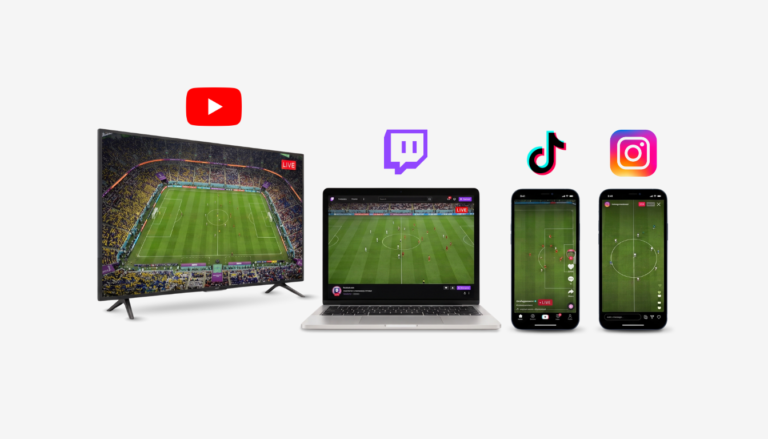
What makes this data compelling is not the ranking itself, but its persistence. Influencer marketing appears next at 61%, followed by video livestreaming at 56% and audio livestreaming at 50%, forming a cluster of formats that do not compete with social but instead reinforce its ecosystem. These are behaviors born inside social platforms, not alternatives to them. Rather than fragmenting attention away from feeds, they deepen the gravitational pull around them.
The result is a marketing landscape where social no longer needs to justify its relevance, cause simply functions as the structural center around which strategies are built.
Why Social Continues to Outperform Everything Else
Social media’s enduring strength lies in its ability to absorb change rather than be displaced by it. As short-form video became dominant, social platforms evolved. As creators gained influence, social infrastructure elevated them. As commerce moved closer to content, shopping tools became embedded in feeds. Each supposed disruption has ultimately reinforced the same ecosystem.
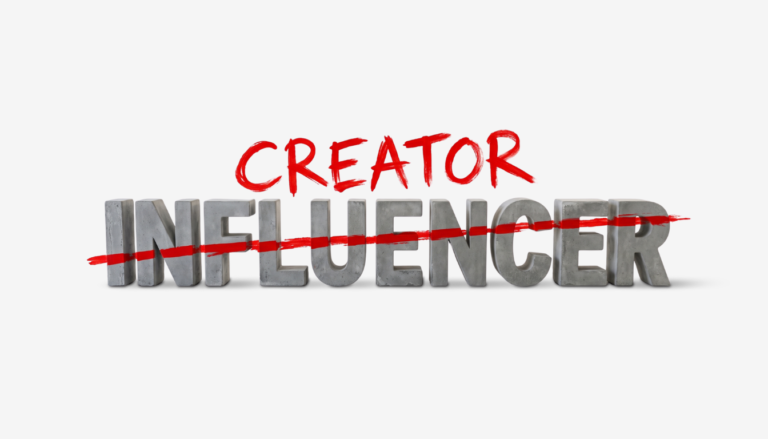
The data clearly reflects this dynamic, as influencer marketing’s 61% priority stems from the fact that creators operate primarily within social environments. Livestreaming’s rise to more than half of marketers’ focus stems from real-time engagement increasingly happening on social platforms. Even newer strategic behaviors, such as community-building, conversational content, and founder-led communication, continue to consolidate around social spaces rather than escape them.
Instead of losing relevance as the industry evolves, social has become the place where new behaviors stabilize first. Marketers are not prioritizing it out of habit; they are doing so because it remains the most reliable environment for capturing attention, shaping perception, and sustaining relevance.
The Comparison that Strengthens the Case
Perhaps the clearest evidence of social’s structural position appears further down the ranking. Search, historically the foundation of performance marketing, is now prioritized by 44% of professionals in the same dataset. Retail media networks, often described as the fastest-growing advertising channel, sit at 47%, tied with the open web. Gaming, despite commanding vast attention, registers at 28%.
These numbers do not suggest that other channels lack value, but that none of them has displaced social’s role as the strategic anchor. Search still captures intent, retail media still drives commerce, and gaming still holds cultural power, but none of them operate as universally across the journey as social does. Discovery, validation, engagement, conversation, and increasingly conversion continue to happen most naturally inside feeds.
From Trend to Infrastructure
There was a time when social media felt experimental, volatile, and unpredictable; however, that phase has passed, cause what the data now reflects is maturity. Social has become embedded in how marketing teams are structured, how creative is developed, how budgets are allocated, and how success is measured. It is no longer a layer added to strategy; it is the foundation upon which strategy is built.
This maturity explains why social remains dominant even without the excitement of novelty. Marketers are no longer prioritizing it because it feels new, but because it is operationally unavoidable. It is where brands maintain relevance, where narratives evolve daily, and where audiences continuously evaluate legitimacy.
The platforms may change, features may evolve, and formats may rotate, but the underlying behavior remains stable. As people still scroll, watch, engage, and form opinions around social content, marketers continue to organize around this reality because the data consistently confirms that this is where influence lives.
What the Consistency Ultimately Reveals
Taken together, the numbers from Integral Ad Science, YouGov, and eMarketer do not paint a picture of an industry in transition. They describe an industry that has already settled into its center of gravity. Social media’s 84% prioritization, combined with the strength of influencer marketing and livestreaming, paints a picture of continuity rather than disruption.
The real story is not that social leads. It is what keeps leading even as everything around it evolves.
For brands, this consistency carries a sobering implication: being present on social is a table stake. The real competitive advantage now lies in how fluently a brand operates inside these environments, how consistently it shows up, and how credibly it earns attention in spaces where audiences already spend their time.
Social media remains at the center of marketing not because the industry lacks alternatives, but because the data keeps confirming a simple truth: this is still where attention, influence, and cultural relevance converge most reliably, and if you still have doubts on how to operate on it, keep the focus on creating conversation and unveiling opinions.