
The Illusion of “Effortless” Brands
Scroll long enough through any feed, and a pattern begins to emerge: certain brands feel instantly recognizable even before you consciously register what they are saying, their content seems intentional rather than improvised, and their growth appears steady rather than frantic. You do not experience them as loud, yet they remain memorable, while others publish relentlessly, jump between aesthetics and narratives, and still manage to feel interchangeable.
This gap is often attributed to talent, taste, or budget, but in practice, it is far more structural than creative. Brands that appear effortless usually understand the difference between branding and marketing and respect the roles each plays, rather than forcing them to compensate for one another.
The Distinction Most Teams Still Blur
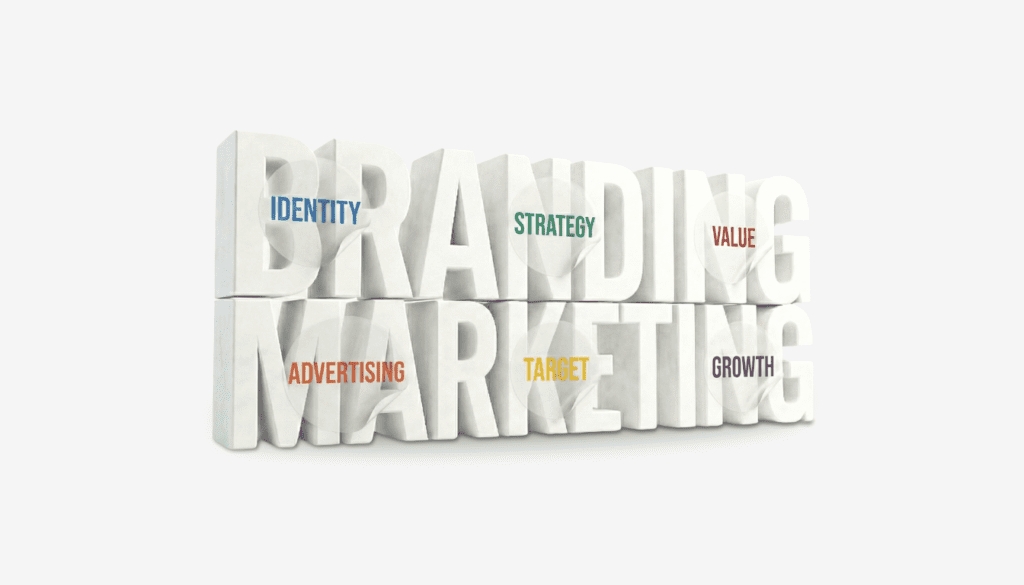
Branding is not the aesthetic layer added at the end of a campaign, any more than marketing is simply the execution engine that distributes content. They serve different purposes and operate on different timelines, even though they must ultimately function as one system.
On one hand, Branding defines who you are. It shapes how you show up, what you stand for, the emotional territory you occupy, and the meaning people attach to your name over time, which is why a brand can feel recognizable even before you consciously analyze its content. On the other hand, Marketing defines how people discover you. It creates visibility, reach, and momentum through channels, formats, distribution systems, and performance, operating faster and adapting constantly to changing platforms.
When these roles are confused, brands begin to chase performance by adjusting their identity or launching campaigns without a clear foundation, which is precisely how communication turns into noise rather than recognition.
When Branding Should Lead
Branding needs to take the lead whenever a business is defining or redefining its direction, whether that happens at launch, during a repositioning, while expanding into new audiences, or simply when a brand begins to feel inconsistent in its own communication. In those moments, the priority is not growth but clarity: what the brand wants to be known for, what emotion it intends to evoke, and what belongs inside its identity versus what does not.
Without that clarity, marketing becomes experimentation without coherence. Content becomes harder to create because every post feels like a new decision, teams debate tone endlessly because there’s no shared reference, and audiences struggle to recognize the brand because nothing repeats long enough to become familiar. Growth, when it happens, tends to come in spikes rather than waves.
Strong brands understand that meaning must be established before it is amplified.
When Marketing Should Lead
Once identity is clear, marketing naturally becomes the leading force. When positioning, emotional territory, tone of voice, and visual language are defined, marketing shifts from invention to translation, carrying an existing identity outward through channels, formats, and systems designed to scale.
At this stage, the core message does not change every month; instead, it is expressed through different angles, adapted to different formats, and refined through performance feedback. Data informs evolution rather than reinvention, which is why the most effective brands often look consistent rather than constantly reinvented. Their strength lies less in novelty and more in disciplined repetition that builds familiarity.
How Strong Brands are Actually Built
What is often mistaken for instinct or aesthetic talent is, in reality, the result of deliberate structure. Brands that feel coherent usually begin by narrowing their focus rather than expanding it, defining what they want to be known for in one clear idea instead of scattering themselves across multiple narratives. From there, they choose the emotional response they want to provoke — trust, desire, confidence, calm, aspiration — and allow that intention to guide decisions across communication, experience, and presence.
Visual language is treated not as decoration, but as recognition architecture, where colors, typography, and imagery become signals people subconsciously learn to associate with the brand. Tone of voice follows the same discipline, shaping not only what is said but how it consistently sounds across every touchpoint. Just as importantly, strong brands define what they are not, excluding what does not belong even when it is trending or temporarily effective, because coherence over time creates something far more valuable than short-term performance: memory.
How Marketing Scales What Branding Defines
Once identity is clear, marketing’s role transforms from searching for a story to operationalizing one. The most effective brands rarely try to dominate every platform simultaneously, choosing instead to concentrate on the spaces where their audience already exists and build depth rather than dispersion.
Their core message is not reinvented daily but translated into repeatable formats that reinforce the same idea from multiple perspectives, whether through education, application, narrative, or proof. Consistency becomes the growth lever rather than constant novelty, because recognition compounds when people encounter the same idea expressed with discipline over time. Performance data, in this context, becomes a tool for refinement rather than a trigger to start over, which is why strong teams tend to double down on what already works rather than rebuild every cycle.
This is the moment where marketing stops behaving like noise production and starts functioning like momentum.
Why Alignment Changes Everything
When branding and marketing are aligned, the experience of building a brand shifts internally and externally. Decisions become easier because there is a shared reference point, content creation becomes lighter because boundaries are clear, and recognition builds faster because audiences begin to connect patterns rather than decode randomness. Loyalty emerges not through persuasion but through familiarity, because consistency creates trust long before performance metrics can measure it.
Marketing, instead of feeling like guesswork, starts functioning as reinforcement. Teams stop asking what to try next and begin asking how to express the same idea more clearly. Growth becomes cumulative rather than episodic, which is precisely why the brands that feel calm are often the ones building the strongest equity.
Why this Matters More Than Ever
In a digital environment where everyone can constantly pay attention, attention is no longer a rare asset. Clarity is. Most brands are not underperforming because they lack tools, platforms, or tactics; they are underperforming because their identity shifts faster than their audience can understand.
Marketing may bring people in, but branding is what keeps them coming back. And when branding sets the direction while marketing carries it forward, growth stops feeling frantic and starts feeling deliberate, which is the difference between brands that exhaust themselves chasing relevance and brands that quietly build equity while everyone else is busy refreshing.