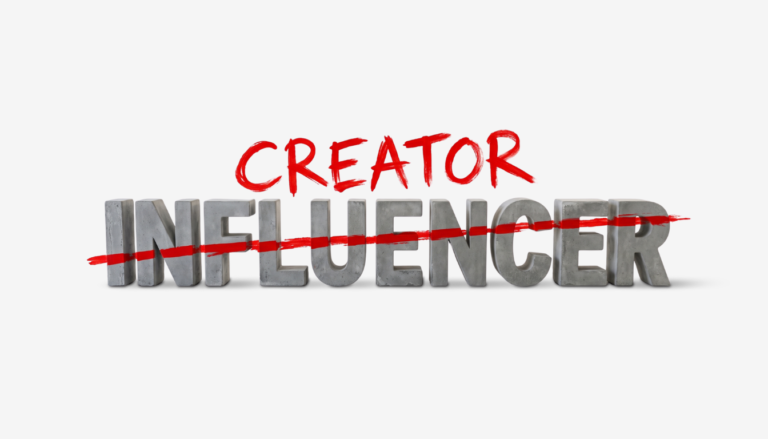


For much of the last decade, influencer marketing was treated as a shortcut to relevance, a fast track to visibility that promised immediate cultural presence and accelerated growth, often without the long-term investment traditionally required to earn trust. Brands paid for access to someone else’s audience, hoping that borrowed attention might translate into real demand, and while the model occasionally produced spectacular wins, it more often delivered inconsistent outcomes that were difficult to replicate, difficult to forecast, and even harder to scale.
As social platforms became more saturated and creator rates continued to rise, the limitations of this approach became harder to ignore. Marketing teams began to notice that performance fluctuated wildly from campaign to campaign, that engagement did not reliably translate into conversion, and that visibility alone rarely built meaningful brand equity. What once felt like an efficient growth lever started to resemble a fragile bet, one dependent on timing, algorithms, and audience mood rather than on strategy.
The issue was never the creators themselves, but the architecture surrounding them. The math is simple, renting reach produced bursts of attention but rarely built durable familiarity, and without sustained familiarity, trust struggled to form.
Why Reach Stopped Being Enough
What many brands have since realized is that exposure without continuity is a weak foundation for belief. Paying for access to someone else’s audience does not guarantee resonance, memorability, or intent, particularly when that audience has grown accustomed to seeing products appear and disappear in an endless rotation of sponsored posts. Yet at the same time, an apparent contradiction emerged: when creator-led content was used in paid media, on product pages, in email campaigns, and across performance channels, it often outperformed more traditional creative formats.
The conclusion was not that creators had lost value, but that the old structure was misaligned with how trust actually forms. Instead of chasing visibility through one-off moments, brands began to explore something more deliberate and patient: a repeated, believable presence in the lives of real people. The objective gradually shifted away from virality and toward recognition, away from spectacle and toward familiarity, away from short-term attention and toward long-term credibility.
From Influencers to Ambassadors
Out of this shift, a new model has begun to emerge—less transactional, more relational, and fundamentally more strategic. Rather than centering on isolated collaborations, this approach favors long-term partnerships in which creators develop an ongoing relationship with both the product and the audience. The value no longer lies primarily in follower count or cultural proximity to fame, but in continuity, coherence, and credibility over time.
Today’s most effective brand ambassadors are not necessarily the most famous faces; they are the ones who integrate products into their routines in ways that feel natural rather than staged, who develop a consistent narrative around usage rather than a single promotional moment, and who gradually become associated with a category, a lifestyle, or a point of view. Over time, their presence stops feeling like advertising and becomes context—a subtle but powerful distinction.
Trust, after all, does not emerge from perfection but from familiarity. It grows when products appear consistently instead of sporadically, when usage feels chosen rather than sponsored, and when the story around a brand unfolds gradually rather than arriving fully scripted. These signals accumulate slowly, but when they do, they compound.
The System Behind Predictable Growth
What ultimately separates this evolving model from its predecessor is not aesthetic, but structural. The brands seeing the most reliable outcomes are no longer treating content as a series of isolated executions, but as an operational system designed for iteration, learning, and compounding performance. Instead of hiring a single creator for a single campaign, they are building small ecosystems of creators who represent the same customer profile while offering different perspectives, tones, and identities. Instead of negotiating post by post, they are investing in monthly output. Instead of vague direction, they are offering structured briefs that clarify angles, narratives, and strategic intent.
This systemic approach unlocks something the old model rarely allowed: refinement over time. Messaging improves through repeated testing. Creators become more authentic advocates because their relationship with the product deepens. Performance stabilizes because insights accumulate rather than reset with every new campaign. When the strongest content is then amplified through paid media, what scales is not just attention, but credibility.
The result is a noticeable shift in how growth feels. Instead of volatile peaks and troughs, patterns begin to emerge. Instead of unpredictable spikes, momentum becomes measurable. Instead of hoping, brands begin engineering.
The Psychology Behind What Actually Converts
The effectiveness of this model is deeply psychological. The content formats that perform best within these systems tend to mirror how people naturally evaluate decisions: they introduce problems before solutions, demonstrate usage before persuasion, offer comparison before commitment, and emphasize long-term satisfaction over short-term excitement.
When someone explains how a product fits into their daily life, articulates what changed after switching, demonstrates repurchase behavior, or shows the product appearing naturally over time, the content begins to resemble lived experience rather than persuasion. The audience does not feel targeted; they feel oriented. They are not being convinced; they are being accompanied.
This alignment between storytelling and real decision-making is what gives the system its strength. Trust forms not because the content is louder, but because it is more believable. And when trust compounds, conversion becomes less an event and more an outcome.
Why Brands Are Choosing Systems Over Moments
The deeper shift underway is cultural as much as tactical. Increasingly, brands are abandoning the pursuit of viral moments in favor of something less glamorous but far more durable: sustained presence. Rather than chasing attention, they are cultivating association. Rather than betting on isolated campaigns, they are investing in content infrastructures that grow stronger with each iteration.
This is why more companies are choosing systems over one-off collaborations, consistency over novelty, and long-term creator relationships over fleeting partnerships. They are beginning to recognize that when content is treated as an asset rather than an accessory, growth stops feeling like chance and starts behaving more like design.
Influence, in other words, is not disappearing. It is being rebuilt—quietly, deliberately, and with far more intention than before. The brands that understand this shift are not scaling louder. They are scaling smarter.