
For more than a decade, fashion e-commerce has been haunted by the same unresolved tension: the distance between what we see on a screen and what ultimately arrives at our door. Zara’s new AI-powered try-on feature is designed to close that gap, but its implications reach far beyond convenience. What it signals is a deeper transformation in how we shop, how we perceive ourselves online, and, perhaps most importantly, how closely technology is beginning to mirror identity.
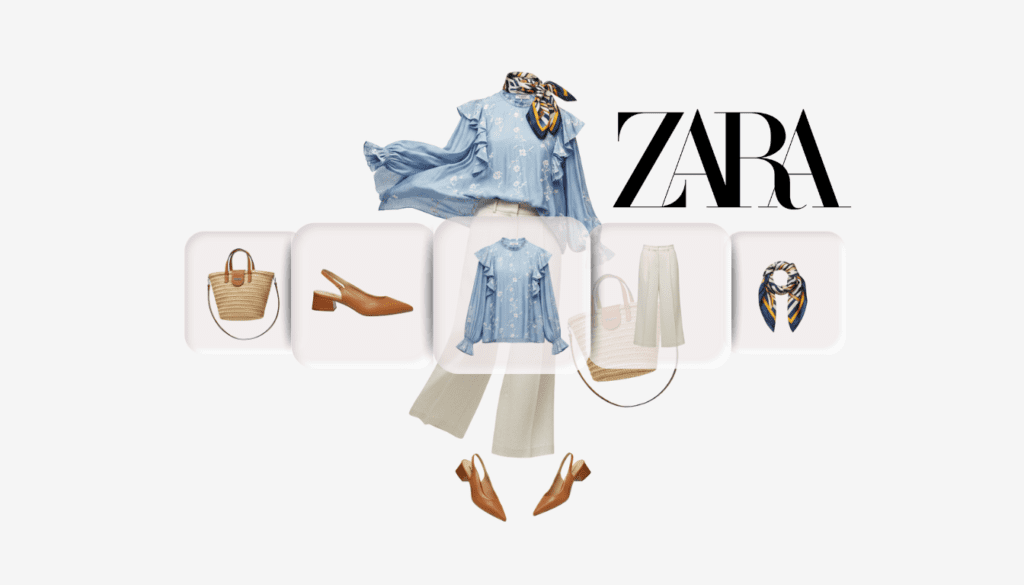
The experience itself feels almost effortless. Users upload two images — one of their face and another of their full body — and within moments, the system generates a personalized digital version of them, onto which garments can be virtually worn. As shoppers move through product pages, silhouettes adjust to their proportions, lengths shift realistically, and pieces begin to behave less like flat catalog images and more like clothing responding to a real body. The promise is not technical perfection, but something arguably more powerful: plausibility convincing enough to reduce the most persistent anxiety in online shopping, the uncertainty.
From Generic Avatars to Digital Doubles
Virtual try-on technology has existed for years, yet it has largely lived in the realm of novelty. Filters that float clothing awkwardly over live video, standardized avatars that bear little resemblance to real bodies, and features that impress briefly before being forgotten have all failed to embed themselves into real consumer behavior. Zara’s shift toward personalization is what distinguishes this moment. Rather than presenting clothes on idealized or generic bodies, the experience adapts to the individual, creating the impression of a digital double rather than a technical trick.
That shift from spectacle to utility is critical. Utility creates habit, and habit creates behavior change. When consumers begin to feel that what they see more closely resembles what they will receive, browsing becomes more purposeful, confidence replaces hesitation, and the app evolves from a catalog into something closer to a private fitting room that happens to live inside a phone.
The Psychological Shift Behind the Screen
What makes this feature particularly powerful is not only the technology itself but the psychology it addresses. The greatest barrier in fashion e-commerce is rarely price alone; it is doubt. Shoppers abandon carts because they cannot visualize fit, because they fear disappointment, because past experiences have trained them to expect that what arrives will not resemble what they imagined. A personalized try-on does not eliminate that doubt entirely, but it softens it enough to meaningfully shift behavior.
At the same time, it transforms the emotional texture of browsing. Instead of passively scrolling through endless product imagery, users begin to engage more actively with their own image. They test silhouettes they might otherwise avoid, compare looks visually, build outfits around themselves rather than around models, and start to imagine wardrobes instead of individual purchases. The experience becomes less transactional and more exploratory, which subtly deepens engagement while making the journey feel less like persuasion and more like self-expression.
Why is Zara Making This Move Now
Strategically, the timing is precise. Fashion brands are increasingly prioritizing owned channels, seeking to pull consumers away from social platforms and into environments where experience, data, and relationship-building can be fully controlled. A feature that feels exclusive, personalized, and genuinely useful gives shoppers a reason to return to the app not just when they intend to purchase, but when they want to explore.
Beneath the surface, however, the true value may lie in the intelligence the experience generates. Every virtual try-on produces signals that are far richer than traditional metrics: which cuts consistently attract attention, which pieces are tried repeatedly but never purchased, which silhouettes flatter the user yet remain unexplored, and where hesitation appears after visualization. Over time, this kind of insight can quietly influence recommendations, merchandising strategies, and even product development, shaping what the brand creates as much as what it sells.
The Discomfort is Part of the Story.
Still, it would be naïve to view this innovation only through the lens of excitement. There is an undeniable discomfort embedded in the experience, precisely because it is so personal. Uploading images of your face and body to a fashion app crosses a line that few shopping technologies have approached before. The same intimacy that makes the feature powerful is what makes it sensitive.
This is why the tool feels simultaneously impressive and unsettling. It represents a moment in which personalization stops being abstract — no longer just algorithms shaping feeds — and becomes embodied, visual, and tied to identity. Long-term adoption will depend less on how realistic the renderings are and more on how much trust brands can build through transparency, user control, and clarity about how personal data is handled.
A New Pressure on the Entire Fashion Industry
If Zara’s approach proves successful, it will inevitably reshape expectations across the industry. A truly functional try-on experience raises the bar for product accuracy, fit consistency, and garment representation. Brands will be pressured to improve digitization processes, standardize sizing logic, and communicate fit more honestly, because the technology will quickly expose where discrepancies live.
The implications extend beyond commerce mechanics and into creative production itself. As clothing becomes increasingly experienced through personalized visualization, the dominance of idealized model photography begins to lose its centrality. The focus shifts toward how garments behave on real bodies, not just how they look in editorial imagery. Fashion, in this context, becomes less about aspiration through others and more about interpretation through the self.
The Mirror is Becoming the Interface.
Ultimately, Zara’s new try-on feature is not simply a convenience layer, but a glimpse into the future shape of digital commerce. Shopping is evolving from consuming external images to interacting with a version of ourselves. The screen is no longer just a window into someone else wearing clothes we desire; it is becoming a mirror that shows us who we might be in them.
That evolution will make e-commerce more efficient, more immersive, and more emotionally persuasive. Yet it will also force a reckoning with how much of ourselves we are willing to digitize in exchange for convenience. The future of retail will not only be shaped by what we choose to buy, but by how closely technology learns to reflect us back.