
Marketing still likes to present itself as a rational discipline, built on positioning statements, feature differentiation, price architecture, and measurable performance, yet beneath this structured surface operates a far more powerful and often underestimated system, one that shapes attention, desire, trust, and behavior long before consumers consciously believe they are making a choice. Psychological triggers function below awareness, guiding perception and influencing action in ways that feel intuitive rather than persuasive, which is precisely why they are so effective.
As behavioral science continues to reveal, the human mind does not process decisions like a calculator, nor does it follow the linear logic marketers often design for. Instead, choices emerge from instinctive emotional responses first, are reinforced by unconscious pattern recognition second, and are wrapped in rational justification only afterward. This invisible sequence explains why consumers frequently feel attached to brands they cannot fully explain, why certain products feel compelling even when alternatives are objectively similar, and why loyalty often forms before logic has a chance to intervene.
Why Emotion Arrives Long Before Logic Does
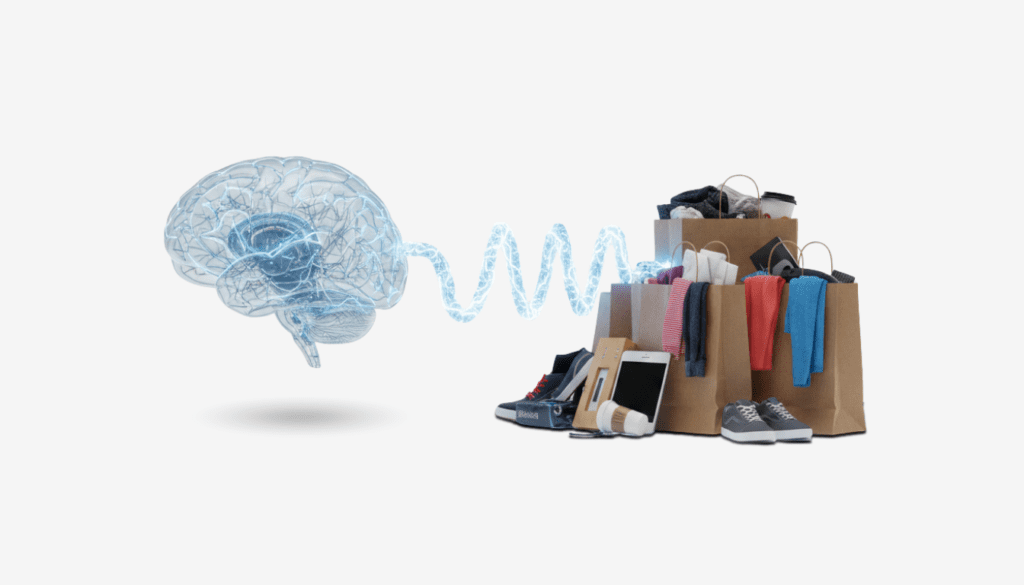
The brain’s structure itself helps clarify why this dynamic persists. Human decision-making is shaped by interconnected systems that evolved at different stages of survival: a primal system that responds to urgency and threat, an emotional system that governs trust, attachment, and belonging, and a rational system responsible for reflection and justification. While contemporary marketing often aims its messaging toward the rational mind, most behavior is driven by the faster, older systems that react before conscious thought has time to engage.
This is why urgency consistently outperforms explanation, why storytelling resonates more deeply than specification lists, and why brand identity often carries more weight than marginal price differences. Messages that speak to instinct and emotion bypass resistance not by overpowering consumers, but by aligning with the way decisions already occur. When logic eventually enters the process, it rarely reverses the choice — it simply provides the narrative consumers use to defend it.
Scarcity, Status, And the Allure of What Feels Rare
Exclusivity remains one of the most enduring drivers of desire because the human brain instinctively associates rarity with value, interpreting limited access not only as constraint but as meaning. When something appears difficult to obtain, urgency intensifies, perceived worth increases, and the emotional stakes of acquisition rise. In that sense, scarcity does not simply accelerate conversion; it fundamentally reshapes perception.
Brands that understand this dynamic recognize that value is not only constructed through product quality, but through context and framing. Limited drops, private access, curated environments, and subtle signals of restriction transform products from commodities into symbols of identity. In these ecosystems, consumers are no longer simply purchasing; they are participating in pursuit, where desire is fueled as much by what is withheld as by what is offered.
Why Trust Accelerates When Others Lead the Way
Social proof operates through a different yet equally instinctive mechanism: the human tendency to seek validation from collective behavior when uncertainty is present. People look to others not because they lack intelligence, but because shared behavior reduces perceived risk, builds confidence, and offers psychological safety. Reviews, testimonials, user-generated content, and visible adoption do not feel like persuasion; they feel like evidence.
This is what makes social proof so effective. It dissolves resistance precisely because it does not resemble marketing. When consumers see others choosing a product naturally, they interpret it as legitimacy rather than influence, allowing trust to form organically and decisions to accelerate without the friction that traditional persuasion often creates.
Desire Often Peaks Before the Product Even Exists
Anticipation reshapes demand not at the moment of launch, but in the period leading toward it. Neuroscience consistently shows that dopamine spikes occur in expectation, not fulfillment, meaning the emotional intensity of waiting often exceeds the pleasure of receiving. For brands, this has profound implications: the story built before release can be more influential than the release itself.
When audiences are invited into a sequence of clues, previews, behind-the-scenes moments, and gradual reveals, they do not merely observe a launch — they emotionally invest in it. The product becomes a narrative unfolding over time, transforming marketing from a single event into a sustained psychological experience where attention deepens rather than fades.
The Discomfort of Incompletion Keeps People Returning
Collectability taps into a subtle but powerful cognitive tension: humans are deeply uncomfortable with unfinished loops. When something feels incomplete, it generates mental pressure to resolve the gap, a mechanism that quietly fuels repeat behavior. This explains why people feel compelled to complete collections, continue series, or return to brands that structure their offerings as evolving systems rather than isolated transactions.
This trigger is particularly transformative for business models because it replaces the need for constant re-persuasion. Instead of repeatedly convincing customers to buy again, brands create environments where continued engagement feels psychologically natural, driven less by conscious decision and more by internal momentum.
When Brands Evolve From Products into Identity
Among all psychological forces shaping behavior, belonging stands as the most enduring. Humans are inherently social beings, and when a brand successfully integrates into a consumer’s sense of self, the relationship transcends utility. At this stage, the brand is no longer evaluated purely on price or function; it becomes part of identity.
This is why strong brands often behave less like corporations and more like cultures. They develop shared language, rituals, symbols, and emotional codes that turn customers into participants. Loyalty deepens because people are no longer simply buying — they are expressing who they are, and advocacy emerges not through incentives but through genuine identification.
The Strategic Shift Modern Marketing Can no Longer Ignore
Taken together, these psychological forces point toward a necessary evolution in how influence is understood. The most effective marketing today is not louder, more aggressive, or more optimized; it is more aligned with how the human mind already operates. Brands that win are not those that chase attention relentlessly, but those that shape environments where attention feels natural, trust forms effortlessly, desire builds organically, and return becomes habitual.
In an era of constant stimulation and shrinking patience, the competitive advantage is no longer found in volume, but in psychological intelligence. The brands that understand this are not fighting for visibility — they are creating gravitational pull, becoming the ones audiences are drawn back to, often without fully realizing why.