
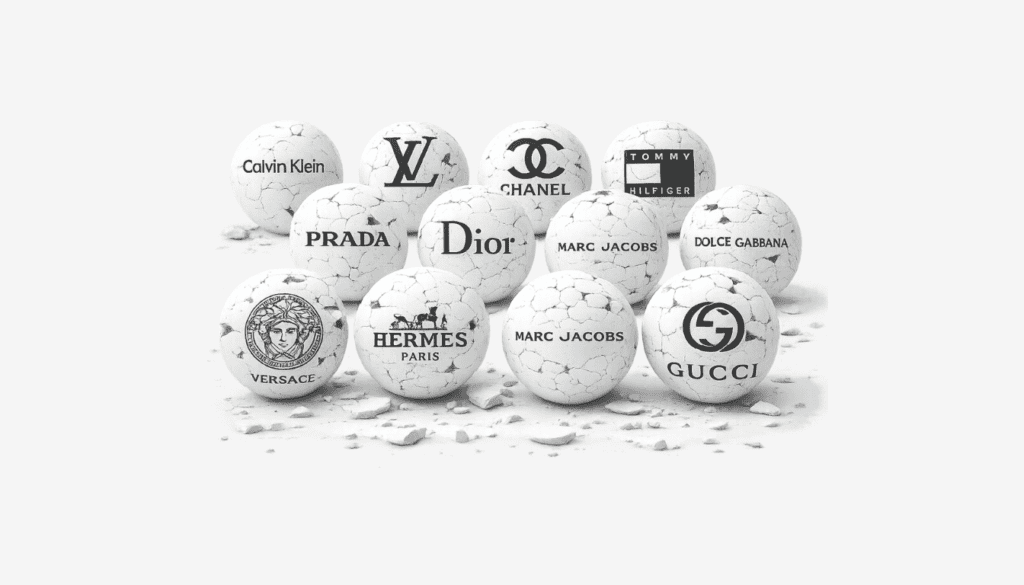
For generations, luxury brands occupied an almost uncontested position at the top of the cultural and commercial hierarchy, their authority sustained not only by the intrinsic quality of their products but by the powerful symbolism of heritage, scarcity, and controlled access. Their dominance was rarely measured in frequency or visibility, because it did not need to be; luxury existed above the mechanisms of competition that governed the broader market. Yet recent engagement data suggests that this long-standing balance is beginning to fracture through a gradual, measurable redistribution of consumer attention.
According to data released by Lyst in January 2026, analyzing global user behavior on its platform between February 2022 and early 2026, engagement with contemporary or accessible premium brands has risen at an extraordinary pace, increasing more than fivefold over the four years. Starting from a baseline index of 100 in early 2022, contemporary brands surpassed 500 in engagement by 2026, while traditional luxury brands reached approximately 380-400 in the same timeframe. The most decisive moment occurred around early 2024, when contemporary brands overtook luxury and maintained their lead, marking the first time in the measured period that accessible brands commanded a greater share of consumer attention.
This crossover point reflects a structural shift in where consumers are directing their curiosity, signaling that attention itself is becoming less concentrated among legacy luxury houses and more distributed across a broader and more digitally integrated competitive landscape.
The Emergence of Brands Built for Continuous Discovery
Contemporary brands have been structurally designed to thrive within the environments that now shape modern attention. Unlike traditional luxury houses, whose influence was historically reinforced through physical boutiques, controlled distribution, and carefully orchestrated scarcity, contemporary brands have embedded themselves within digital ecosystems where discovery is continuous, decentralized, and driven by algorithmic visibility.
Their products circulate more freely across social platforms, multi-brand retailers, and creator-driven channels, ensuring that they appear not as distant symbols of aspiration but as frequent participants in the consumer’s everyday visual and cultural landscape. This sustained presence generates familiarity, and familiarity, over time, reshapes perception, gradually transforming accessibility into desirability.
Engagement metrics, including searches, product views, purchases, and social interactions, serve as early indicators of emerging demand. When engagement increases more than fivefold within a relatively short timeframe, it signals not just temporary enthusiasm but a reorientation of consumer attention toward brands structurally aligned with the realities of modern discovery.
The Constraints of Legacy Power in a Digital Environment
Luxury’s historic strength has always been rooted in its ability to limit exposure, preserving an aura that elevated its products beyond the logic of mass visibility. This strategy, which once reinforced exclusivity and sustained cultural authority, now exists in tension with a digital ecosystem that rewards constant presence and ongoing participation in cultural dialogue.
Attention today is fluid and continuously renegotiated, shaped less by physical proximity and more by algorithmic circulation, social validation, and the rhythms of digital consumption. Brands that appear frequently become cognitively familiar, and familiarity subtly reshapes perceptions of relevance, value, and desirability. Contemporary brands, by operating within this continuous cycle of exposure, have positioned themselves to benefit from this structural reality. At the same time, traditional luxury houses remain partially insulated by their own deliberate restraint.
It is important to recognize that this engagement data does not capture the entirety of luxury’s influence. Many of the most prestigious houses continue to rely heavily on their own retail channels and maintain limited participation on third-party platforms, potentially underrepresenting their cultural presence in metrics that prioritize digital visibility. However, even with this limitation, the broader pattern remains unmistakable. Luxury is not disappearing, but its exclusive hold over consumer attention is loosening.
The Redefinition of Prestige in the Age of Attention
What is unfolding is not the collapse of luxury, but the redefinition of what confers power within the modern marketplace. Prestige was once inherited through history, reinforced by distance, and protected through scarcity. Today, it is increasingly reinforced through visibility, relevance, and the ability to remain continuously present within the consumer’s field of awareness.
Contemporary brands have embraced this transformation, positioning themselves not only as producers of goods but as active participants in the ongoing flow of digital culture. Their success reflects a structural alignment with the mechanisms that now govern discovery, in which attention accumulates gradually through repetition, accessibility, and cultural proximity.
Luxury brands, with their enduring symbolic capital and financial strength, remain formidable forces. Yet the erosion of their dominance in engagement signals a deeper competitive shift that may reshape the hierarchy of influence in the years ahead. The brands that ultimately define the future of the market may not be those that remain the most exclusive, but those that remain the most visible—because in an economy governed by attention, visibility has become the foundation upon which desirability itself is built.