
For much of modern business history, marketing’s most celebrated victories were embedded not in quarterly reports but in collective memory. The near-universal recognition of Mickey Mouse and the enduring association between Nike and “Just Do It” did not emerge from short-term optimization; they were cultivated through decades of consistent brand stewardship that transformed characters and slogans into cultural shorthand. These achievements illustrate how long-term investment can generate intangible assets that gradually compound over time.
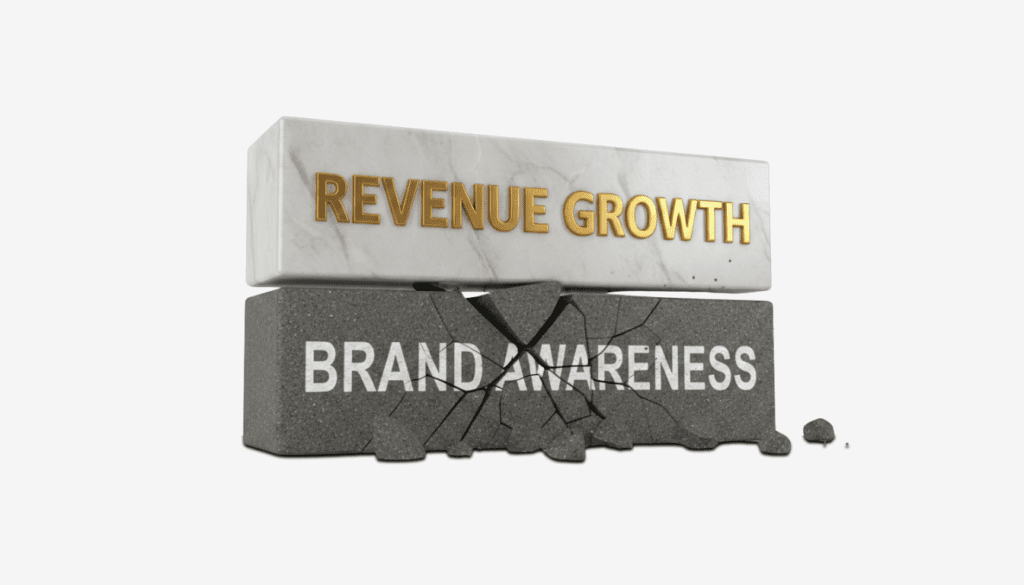
Yet the environment confronting today’s chief marketing officers tells a different story. According to a NewtonX survey conducted for ADWEEK, nearly half of executive-level marketers—48%—now identify revenue growth as their primary objective, while only 24% place long-term brand awareness at the top of their agenda. The numbers suggest not a dismissal of brand building, but a reordering of priorities that reflects the pressures shaping corporate leadership in 2026.
Daniel Sills, vice president of partnerships at NewtonX, frames the transition succinctly: the CMO is increasingly regarded as the leading single owner of overall revenue growth. Marketing, once perceived as the architect of perception and demand, is now expected to stand shoulder to shoulder with finance and sales in delivering measurable top-line performance.
Financial Fluency in the Boardroom
This expanded mandate has elevated financial literacy from a desirable skill to an operational requirement. Marketing leaders are no longer evaluated solely on creative effectiveness or campaign reach; they are being asked to demonstrate how specific initiatives translate into revenue, margin improvement, and shareholder value. Attribution models, performance dashboards, incrementality testing, and ROI frameworks have become the vocabulary through which marketing secures its relevance in the boardroom.
Marketers are increasingly finding themselves explaining their activities in the language of financial KPIs when facing boards and investors. In a climate marked by scrutiny and volatility, storytelling without quantification risks being dismissed as ornamental rather than essential.
Even the way marketing executives describe their roles reveals how far the position has evolved. Major League Baseball CMO Uzma Rawn Dowler recently referred to herself as a “get-shit-done officer,” a candid expression that captures the expanding remit of modern marketing leadership. Today’s CMO must orchestrate cross-functional alignment, operational efficiency, data analytics, investor communication, and growth strategy, often simultaneously, while still safeguarding the brand narrative that underpins long-term equity.
The title has not changed, but the expectations embedded within it have multiplied.
Economic Uncertainty and Corporate Caution
The recalibration of priorities cannot be separated from the broader economic backdrop. Pew Research data indicates that 72% of Americans rate current economic conditions as fair or poor, a sentiment that has remained largely consistent since the fall of 2025. That pervasive caution reverberates through corporate strategy, influencing how executives allocate resources and define success.
In the NewtonX findings, economic anxiety surfaces prominently: two-thirds of marketers’ top concerns center on macroeconomic factors, including reputational risk, the possibility of a recession, and potential layoffs. Even where marketing budgets have somewhat increased—between 36% and 40% of brand marketers report moderate growth over the prior year—the prevailing sentiment is not one of expansion but of vigilance.
Leaders repeatedly describe a “do more with less” environment, a phrase that reflects not merely budgetary restraint but heightened accountability. Agencies, in particular, report feeling the squeeze, with only about a quarter benefiting from budget increases. In such conditions, every initiative must justify itself in tangible financial terms, and long-term brand investments, however strategically sound, must coexist with the demand for immediate, provable returns.
Revenue, in times of uncertainty, offers reassurance that awareness alone cannot.
AI and the Escalation of Expectations
Overlaying economic caution is the accelerating influence of artificial intelligence, which has introduced both opportunity and pressure into the marketing function. Sixty-three percent of surveyed marketers report that AI has already had a moderate or significant impact on their daily work, reshaping workflows, content production, and analytics capabilities.
Contrary to widespread speculation, AI-driven layoffs within marketing remain limited according to recent data. The transformation is less about workforce reduction and more about performance intensification. Executive leadership widely believes in AI’s capacity to enhance productivity and efficiency, and that belief has translated into rising expectations for measurable growth.
If AI can streamline processes, personalize communication at scale, and optimize media investments in real time, then revenue acceleration is presumed to follow. As a consequence, marketing teams face mounting pressure to deliver faster results, at greater scale, with clearer attribution. The perception of AI’s potential has become a catalyst for heightened scrutiny.
In this context, demonstrating direct contribution to revenue serves not only as a strategic objective but as a form of institutional protection. The ability to point to concrete financial impact reinforces marketing’s indispensability within the corporate hierarchy.
The Brand Building Dilemma
None of this diminishes the enduring power of brand equity. The universal recognition of iconic characters and slogans remains evidence that long-term investment in cultural assets yields a durable competitive advantage. Strong brands create pricing power, foster loyalty, and provide resilience during downturns.
Yet the NewtonX data suggests that brand building now competes with immediate revenue generation for primacy in the CMO’s agenda. The tension is fundamentally temporal: brand equity accrues gradually, often invisibly, while financial markets and executive boards operate on quarterly cycles that demand clarity and immediacy.
The challenge facing today’s marketing leaders is therefore not whether to choose between brand and revenue, but how to integrate both within a unified strategy that balances short-term accountability with long-term value creation. It is a delicate balancing act that requires both analytical rigor and strategic patience.
A Redefined Era of Marketing Leadership
The evolution of the CMO role reflects a broader shift in corporate governance, where every function is increasingly evaluated through the lens of measurable contribution to growth. Economic fragility and AI-fueled optimism about efficiency have accelerated this transition, positioning marketing at the intersection of creativity and capital allocation.
Whether this heightened focus on revenue ultimately strengthens marketing’s strategic influence or risks narrowing its long-term vision remains an open question. What is certain is that the contemporary CMO operates in a landscape where awareness alone no longer secures authority. Financial impact, clearly articulated and consistently demonstrated, has become the defining currency of leadership.
In an era shaped by uncertainty and technological acceleration, the mandate is unmistakable: brand remains foundational, but revenue is decisive.