
The marketing industry has spent decades refining the art of search visibility, carefully optimizing websites, keywords, and content so that brands can rise to the top of search results pages. Yet as generative artificial intelligence begins to reshape how people access information online, agencies are confronting a different kind of question—one that cannot be answered by simply tracking search rankings. Increasingly, the challenge lies in understanding whether a brand appears at all when an AI assistant assembles an answer.
In response, a growing number of advertising agencies are embracing a new discipline known as generative engine optimization, or GEO—a practice focused on improving how content ranks in AI-generated search results—while simultaneously experimenting with an unconventional development technique that has spread through the technology community. Known as “vibe coding,” this approach relies on AI-powered coding assistants—software that uses artificial intelligence to help programmers write code—to translate natural-language descriptions into working software, dramatically accelerating application development. Within agencies, this method has begun to yield a new generation of internal platforms designed to analyze how brands surface in AI-generated responses—and, in some cases, to transform those insights into products that can be licensed to clients.
When AI Becomes the Gatekeeper of Brand Discovery
For most of the internet era, digital discovery followed a predictable pattern: consumers typed a query into a search engine, scanned a list of links, and clicked through to the websites that appeared most relevant. Entire industries were built around mastering that system, from search optimization specialists to analytics platforms that meticulously tracked rankings and keywords.
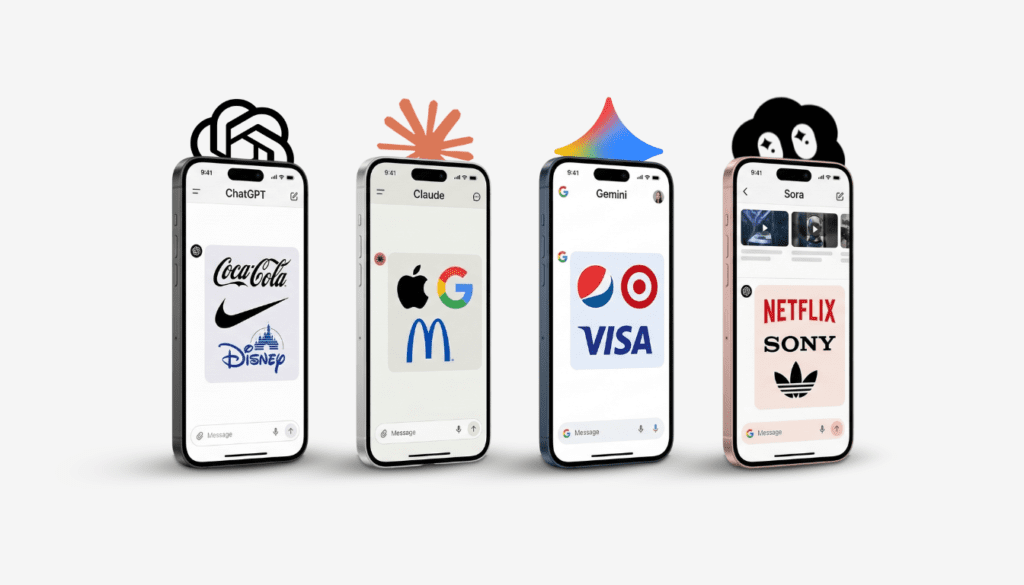
Generative AI is changing this dynamic. Tools like ChatGPT and Claude now synthesize information into a single response, combining knowledge from various sources. Some brands are referenced or recommended in these answers, while others may not appear at all.
For marketers, this shift creates a new competitive landscape. Visibility now depends not only on search rankings but also on whether an AI model includes a brand in its answers. As more people use conversational AI for information and recommendations, monitoring and influencing these responses has become a key area for marketing intelligence.
Building GEO Platforms at Remarkable Speed
The speed of agency response highlights the impact of AI-assisted development. For example, Havas launched Brand Insights AI using Anthropic’s Claude Code and Replit. The platform generates prompts for a client’s brand across multiple language models and analyzes both brand frequency and citation as a source.
The platform now operates in nearly 100 countries and over 60 languages, giving marketers a global perspective on brand visibility in AI conversations. It has evolved from an analytical tool into a strategic asset, used in client pitches and licensed as standalone software.
This rapid development was unlikely just a few years ago. With ‘vibe coding,’ teams describe the desired application and use an AI assistant to generate much of the source code, allowing for faster experimentation, refinement, and deployment.
A New Form of Competitive Intelligence
Some agencies are experimenting further. For example, Broadhead developed its own GEO monitoring system by having Claude Code assemble the initial version in a single evening. The tool analyzes how various AI providers position a brand compared to competitors in response to common consumer questions.
An early feature asks the model to identify which competing brands are most likely to appear in response to a specific query, creating what the team calls a “competitive intelligence vote.” The agency later expanded this by adding audience personas to prompts, allowing the system to simulate how different consumer types might ask about a category.
This addition revealed a key insight: the brands recommended by an AI model can change significantly based on how a query is phrased, reflecting differences in user intent, location, or consumer priorities. This suggests that competitive dynamics in AI-generated answers are more fluid than those seen in traditional search analytics.
Why Agencies Are Choosing to Build Their Own Tools
Although startups are quickly launching GEO analytics platforms, many agencies prefer to build their own systems for greater control over both the technology and the resulting insights.
Custom-built platforms let agencies design interfaces that fit their workflows and tailor analytics to clients’ needs, whether managing multiple brands globally or serving specialized industries. Internal development also allows agencies to experiment with prompt structure, response evaluation, and strategy development.
Financial factors are also important. Enterprise agreements with AI providers can be expensive, especially with token-based pricing. By building modular systems internally, agencies can test different models and scale gradually, avoiding inflexible long-term commitments as technology evolves.
The rapid evolution of the AI ecosystem is equally important. New models frequently offer better reasoning, speed, or accuracy. Agencies avoid relying on a single provider, since AI capabilities can shift quickly. Building their own tools gives them flexibility to adapt to new technologies.
The Transformation of the Agency Business Model
The rise of vibe-coded GEO platforms reflects a broader transformation in advertising. Agencies traditionally focused on creative services are now developing proprietary technology. Brand Insights AI, for example, shows how internal analytics tools can become licensed products, blending consulting with software development. In this new model, agencies provide both strategic guidance and the technology to measure brand performance in an AI-driven environment.
For brands navigating a world where conversational AI increasingly mediates discovery, that infrastructure may soon prove indispensable. If AI assistants become the primary gateway through which consumers explore products, ideas, and services, understanding how those systems represent a brand could become as important as search optimization once was.
What began as rapid experimentation may signal a broader shift in agencies’ roles. As algorithms shape information, agencies that once optimized search now build tools that reveal brand presence in AI-driven answers.