
When Fashion Becomes Interface
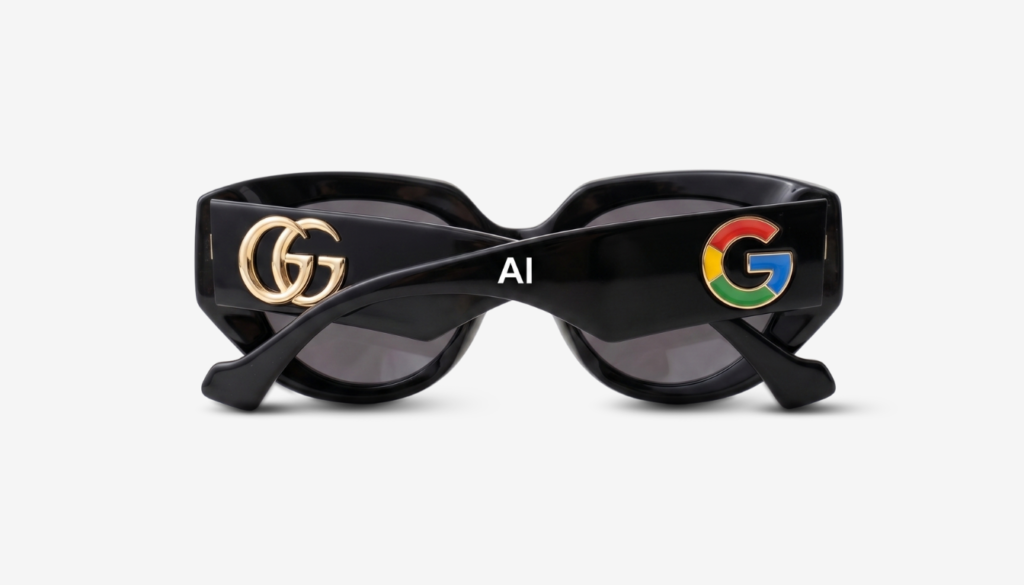
In a move that reflects both ambition and a clear reading of the cultural moment, Gucci has partnered with Google to develop a new generation of AI-powered smart glasses, expected to arrive around 2027, marking one of the first instances in which a major luxury house steps decisively into the wearable technology space not as a collaborator on the margins, but as a defining voice within it.
Powered by Gemini, the glasses are anticipated to integrate voice assistance, cameras, microphones, and real-time contextual interactions into a form that is not only designed for everyday use but carefully constructed to feel indistinguishable from traditional eyewear, suggesting that the real innovation lies not in the presence of technology itself, but in its ability to disappear into the object. In this sense, what is being proposed is not merely a device, but a subtle reconfiguration of how technology inhabits personal space, transforming eyewear from a static symbol of style into a dynamic interface through which users interpret and engage with their surroundings.
A Strategic Shift Toward Intelligent Luxury
For Gucci, the initiative unfolds less as an experimental extension and more as a calculated repositioning, one that acknowledges a generational shift in expectations, where younger audiences increasingly gravitate toward products that offer not only aesthetic value but also immediacy, utility, and a sense of continuous connection to the digital world.
Luxury, long anchored in craftsmanship and heritage, now finds itself negotiating with a new dimension of desirability, in which innovation becomes inseparable from identity and products are expected to perform as much as they signify, effectively expanding the definition of what makes an object worth aspiring to. Within this evolving landscape, Gucci’s entry into wearable AI suggests an understanding that cultural relevance will depend not solely on visual language but on the capacity to integrate seamlessly into the systems that shape how people communicate, navigate, and make decisions in real time.
By moving early, the brand positions itself not simply as a participant, but as a potential architect of the category, one capable of influencing how intelligence is translated into form and how that form, in turn, is received within the codes of luxury.
The New Competitive Arena
This development inevitably places Gucci within a rapidly forming competitive landscape, where Meta has already made strides through its collaboration with Ray-Ban, introducing smart glasses that lean toward accessibility and broad adoption, thereby familiarizing consumers with the category while testing its social viability.
Yet the distinction between these approaches is revealing, as Gucci’s alignment with Google suggests a different ambition, one that seeks to define the upper tier of the market, where desirability is shaped less by technical specifications and more by the interplay between design, status, and cultural resonance. In products worn so visibly and intimately, particularly on the face, acceptance is governed not only by functionality but by whether the object can seamlessly integrate into social contexts without friction, an area where luxury brands possess a longstanding advantage rooted in their ability to shape taste and aspiration.
Beyond Accessories Into Systems
What elevates this moment beyond a conventional product launch is the broader implications of what smart glasses represent, as they begin to emerge not simply as accessories but as potential successors to the smartphone in shaping how individuals access and interact with digital environments.
Where the last decade was shaped by screens held in the hand, the next may be defined by interfaces that exist within the field of vision itself, subtly augmenting perception without requiring deliberate engagement, and in doing so, altering the relationship between user and technology in ways that feel both immediate and ambient. Within this context, Gucci’s role extends beyond design, positioning the brand within a larger technological narrative in which aesthetics become inseparable from experience, and where the success of a product depends as much on how it feels to use as how it looks to wear.
The Making of a New IT Object
The suggestion that smart glasses could evolve into the next defining accessory of luxury may, at first glance, appear speculative, yet it follows a familiar pattern in which new categories emerge when cultural relevance, functional value, and aspirational appeal converge with sufficient force to reshape consumer behavior.
For such a transformation to occur, the technology must achieve a level of subtlety that allows it to blend effortlessly into daily life, while simultaneously offering advantages that justify its presence, creating a balance between invisibility and indispensability. At the same time, widespread adoption will depend on a gradual normalization, through which the act of wearing such devices becomes socially intuitive rather than performative, allowing them to transition from novelty to necessity within the rhythms of everyday life.
A Future Worn, Not Held
Ultimately, Gucci’s collaboration with Google reflects a broader recalibration across industries, as brands reconsider their role in an environment where technology is no longer external but increasingly embedded in the objects people carry, wear, and rely on.
As these boundaries continue to blur, luxury appears to be entering a phase in which its value is defined not only by what it represents, but by what it enables, suggesting that the most desirable products of the future may be those that operate quietly in the background, enhancing experience without demanding attention. Should this vision materialize, the significance of this moment will extend far beyond a single product, marking instead a shift toward a form of luxury that is not only seen but continuously lived.