
The Surprise Nobody Asked For
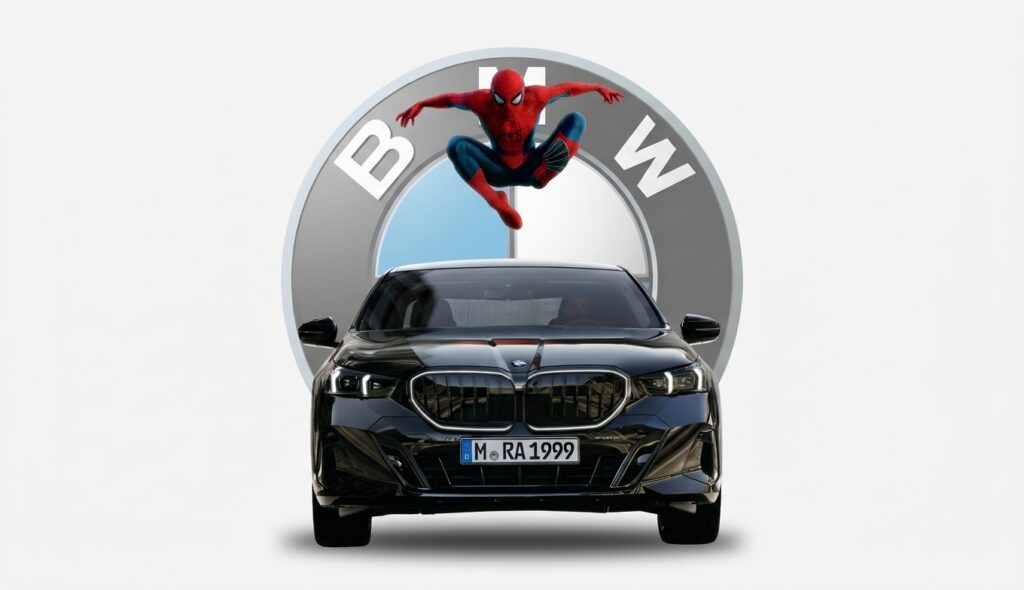
Sometime after Spider-Man: Brand New Day opened on July 27, BMW drivers in more than 70 countries started their cars and found the movie waiting for them. A banner appeared on the iDrive Control Display, the main center screen, and tapping it launched a full-screen animation set to music, with the cabin’s ambient lighting shifting color to match. Owners had to play or dismiss the promotion before they could use the infotainment system. The campaign ran on vehicles built after July 2020 with BMW’s newer operating systems, from the film’s premiere through August 10. BMW called it a special surprise. Its customers, many of whom paid between $50,000 and $160,000 for the car, called it something closer to an intrusion.
A Reversal on the Record
The anger was sharpened by BMW’s own words. In December 2023, Stephan Durach, the company’s senior vice president for connected company development, told an industry roundtable that BMW had no interest in selling dashboard screen space, and that a car is your last private space. Two and a half years later, the same screens were playing a Sony movie promotion on startup. BMW has since argued that the animations are not advertisements but a celebration of a brand partnership with the film, a distinction that did little to calm the reaction. On Reddit’s r/BMW forum and across social platforms, owners described the experience as dystopian and compared it to an episode of Black Mirror. When a company reverses a stated principle, the audience remembers the principle.
The Dashboard Becomes a Battleground
BMW is not the first automaker to test this boundary, and the pattern is becoming familiar. Stellantis drew criticism through 2024 and 2025 when full-screen ads began appearing on the startup screens of Jeep, Ram, Dodge, Chrysler, Fiat and Alfa Romeo vehicles, and Tesla ran in-car promotions for a Tron film in 2025. Each case follows the same script. An automaker with a captive audience and a connected screen decides the screen is inventory, and the owners decide it is not. The car is a uniquely sensitive surface because the buyer has already paid in full, and unlike a free app or an ad-supported streaming tier, there is no bargain in which the customer trades attention for a lower price. The screen was part of the purchase, which is why an ad on it reads as a broken deal rather than a fair exchange.
Why Automakers Keep Trying
The temptation is structural. Cars now ship with large, connected screens that can be updated over the air, and automakers have watched software and services become the highest-margin part of the business. BMW has already tested charging subscriptions for features such as heated seats, and in-car media is the same instinct pointed at a new surface. From a media-buying perspective, a connected vehicle is a premium audience sitting in front of a screen with known location, income and behavior, and the industry has spent two years studying whether that surface can be sold. eMarketer and others have flagged connected-car advertising as a real emerging channel, and also as one running into a wall of safety, privacy and trust concerns. BMW’s episode is the clearest illustration yet of that wall. The technical capability arrived before the social license did, and the gap between the two is where the backlash lives.
What Marketers Should Learn
For brands and the studios that partner with them, the lesson is about context, not reach. Sony placed its movie in front of an affluent global audience, but it also attached the film to a wave of consumer anger, and the coverage that followed was about the intrusion rather than the picture. An impression delivered in a resented context can subtract from brand equity even as it adds to reach, and the dashboard is proving to be the most resented context yet discovered. The wider signal for marketers is that the supply of new ad surfaces is not the same as the supply of acceptable ones. As screens spread into cars, refrigerators, watches and thermostats, the brands that hold up will be the ones that ask not whether they can appear somewhere, but whether the person on the other side of the screen believes they agreed to it. BMW answered the first question and skipped the second, and its owners answered the second for it.