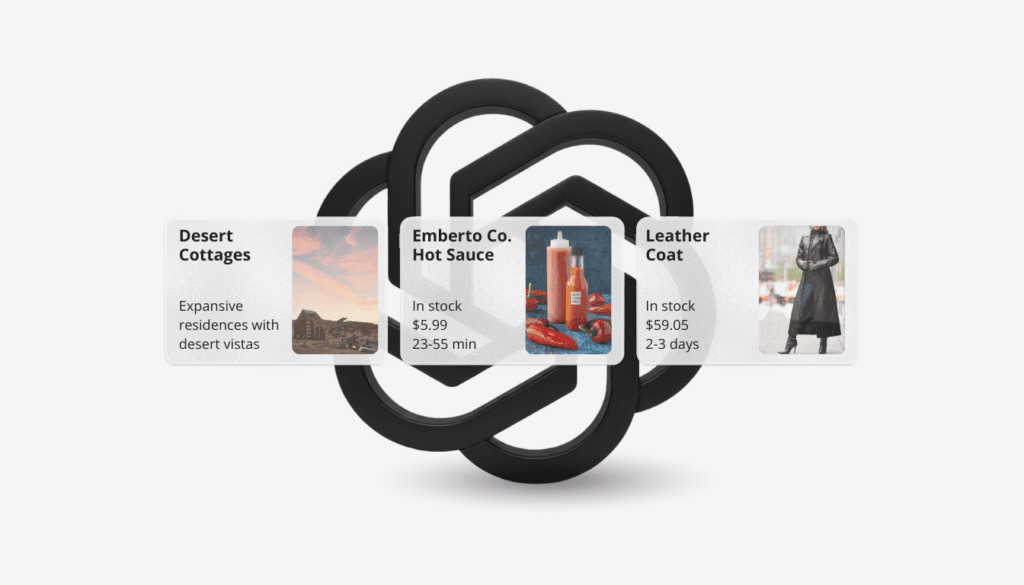


ChatGPT has occupied a rare position in the digital ecosystem, emerging not as a platform competing for attention but as a tool designed to facilitate clarity, productivity, and understanding, offering users a direct and seemingly neutral interface to information. That perception, however, began to shift this week, as OpenAI initiated early tests of advertising inside ChatGPT, introducing a development that signals far more than a new revenue stream and instead marks the beginning of a structural transformation in how artificial intelligence will operate, scale, and evolve.
At first glance, the decision reflects the practical realities of sustaining one of the most computationally intensive technologies ever deployed at scale. Artificial intelligence systems require extensive infrastructure, continuous model training, and substantial energy resources, resulting in operational costs that far exceed those of traditional software platforms. Advertising, in this context, offers a familiar solution, one that has historically enabled transformative technologies to expand globally while maintaining broad accessibility. Yet advertising does not simply support platforms financially; it gradually shapes their incentives, influencing the priorities, decisions, and design philosophies that ultimately define the user experience.
In doing so, ChatGPT’s introduction of advertising marks the moment artificial intelligence began transitioning from a purely technological breakthrough into an integrated participant in the global attention economy.
When Monetization Begins to Shape the Product Itself
The significance of this transition has not gone unnoticed within the company. Zoë Hitzig, a former OpenAI researcher who recently departed the organization, articulated her concerns not as a rejection of advertising as a concept, but as a recognition of the trajectory it tends to create. Advertising, she argues, introduces incentives that extend beyond revenue generation, gradually influencing how platforms operate, what they prioritize, and how they balance user interests against commercial objectives.
Her warning draws from patterns that have played out repeatedly across the technology industry, where platforms initially structured around user empowerment and transparency slowly adapted to the economic logic of engagement-driven monetization. Companies that once emphasized user control and privacy often introduced incremental changes, framed as improvements to personalization or functionality, that expanded data collection and optimized for interaction. Over time, the cumulative effect of these adjustments reshaped not only the business model but the platform itself.
This evolution rarely occurs through a single, visible decision, but rather through a series of rational, incremental choices, each individually defensible yet collectively transformative. In this sense, the introduction of advertising represents the beginning of a different set of incentives that will inevitably influence how artificial intelligence systems develop over time.
From Software Tool to the Gateway Through Which Information is Experienced
What makes this shift particularly consequential is the role ChatGPT has come to occupy in the digital landscape. Unlike traditional platforms that present information for users to interpret, generative AI systems actively synthesize information, constructing responses that shape not only what users see but also how they understand complex topics, evaluate products, and form opinions. The system is no longer simply delivering access to the internet; it is mediating the experience of knowledge itself.
As reliance on AI assistants continues to grow, they increasingly function as an intermediary layer between individuals and the vast ecosystem of digital information. In this position, artificial intelligence does not merely influence visibility, but perception, determining how ideas are framed, which options are presented, and what conclusions appear most salient. The introduction of advertising into this environment introduces a new dimension of influence, one that operates not alongside information, but potentially within it.
This represents a fundamental shift from traditional advertising environments, where promotional content existed as a separate visual element, distinct from the informational content surrounding it. In conversational interfaces, by contrast, the boundaries between information, recommendation, and promotion become more fluid, increasing both the potential effectiveness of advertising and the complexity of maintaining user trust.
The Economic Gravity Pulling Artificial Intelligence Toward Advertising
The forces driving this transition are not merely strategic, but structural. Generative AI operates at a scale and cost that few traditional business models can sustain indefinitely without diversification. While subscription models and enterprise partnerships have provided significant revenue streams, they inherently limit reach to paying users or organizations, creating a ceiling on accessibility and growth. Advertising, by contrast, allows platforms to scale with usage, enabling broader adoption while distributing costs across the economic ecosystem that benefits from user engagement.
This dynamic has historically defined the expansion of nearly every major digital platform, from search engines to social networks, where advertising transformed products from niche utilities into global infrastructure. Artificial intelligence now appears to be entering that same phase, driven not by preference but by economic necessity. Advertising provides a mechanism for advanced technology to remain widely accessible while supporting the enormous infrastructure required to sustain it.
In this sense, the introduction of advertising is less a departure from precedent than a continuation of a familiar technological pattern, one in which transformative tools inevitably evolve into monetized platforms.
Trust Emerges as the Most Valuable and Fragile Currency
Yet artificial intelligence differs from its predecessors in one crucial respect. While social media platforms mediate communication and search engines mediate access to information, generative AI mediates interpretation itself. Users increasingly rely on AI systems not simply to retrieve facts, but to contextualize, synthesize, and explain them, placing these systems in a position of perceived authority.
This elevates trust from a desirable attribute to a foundational requirement. The credibility of artificial intelligence depends on the perception that its responses are guided by accuracy, relevance, and integrity rather than by commercial incentives. Even subtle shifts in this perception could influence how users engage with the technology, shaping not only adoption, but reliance.
Maintaining this trust while introducing monetization mechanisms represents one of the most complex challenges artificial intelligence companies will face. Transparency, governance, and alignment between user interests and business incentives will become defining factors in determining which platforms ultimately succeed.
Artificial Intelligence Enters Its Platform Era
The introduction of advertising into ChatGPT signals something far more consequential than the addition of a new feature. It represents the moment artificial intelligence began its evolution into a platform operating within the same economic and strategic dynamics that have shaped every dominant interface layer of the digital age. From operating systems to browsers, from search engines to social networks, each transformative technology eventually became not only a tool, but a marketplace, where attention, information, and influence intersected.
Artificial intelligence now stands at the threshold of that same transformation, moving beyond its origins as a computational breakthrough and into its role as a central interface through which people navigate the modern world. Advertising is not simply enabling that transition. It is accelerating it.
What happens next will not only determine how artificial intelligence is funded but also how it evolves, is trusted, and ultimately shapes how people interact with information.
The era of artificial intelligence has begun, and with it, a new chapter in the relationship between technology, economics, and human understanding.