
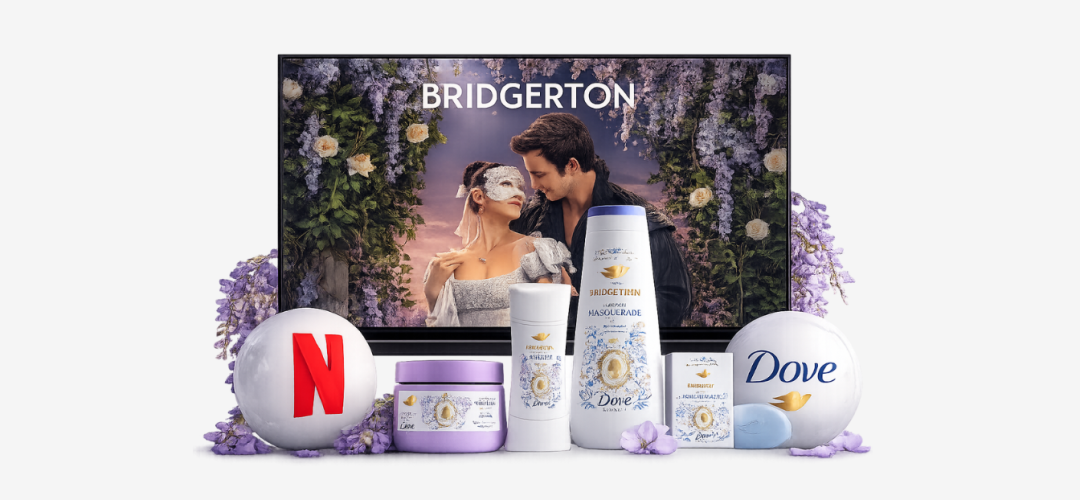
Dove’s decision to step into the world of Bridgerton is more than a licensing deal. It is a deliberate cultural move, revealing how mass brands are now competing not just on price or performance, but on narrative power. By partnering with Netflix ahead of the new season and releasing a limited-edition Bridgerton collection, Dove is transforming everyday personal care into something closer to a collectible object, infused with fantasy, emotion, and social currency.
At first glance, the collaboration looks like classic entertainment marketing, combining themed packaging, romantic visuals, florals, and ornate details designed to echo Regency aesthetics. But the real shift is happening at a deeper brand level. Dove has long owned the territory of care, softness, and everyday self-esteem. Bridgerton adds drama, indulgence, and escapism to that equation. Together, they allow the brand to reframe self-care not as a routine, but as a ritual.
Beauty Meets Storytelling Economy
What makes this partnership particularly strategic is how seamlessly it taps into the modern attention economy. Bridgerton is a solid Netflix series and a cultural moment that dominates social feeds, group chats, and fandom communities whenever a new season approaches. By entering that ecosystem, Dove gains access to a ready-made emotional environment where consumers are already primed to engage, share, and purchase. The collection does not need to explain itself. The audience already understands the codes, the mood, and the fantasy.
This is how mass brands are now borrowing the mechanics of luxury. Instead of raising prices, they elevate perception. Through limited availability, ornate design, and narrative-driven launches, Dove turns familiar products into objects of desire. The strategy is subtle but powerful: the consumer feels they are buying into a moment, not just buying soap.
From Product Drop to Cultural Drop
In addition, the launch ahead of the new season turns the line into part of the broader cultural countdown. It becomes something fans discuss, gift, post, and search for while waiting for episodes to drop. That is where the strategy becomes truly contemporary. As entertainment becomes more and more like an infrastructure for commerce, shows create calendars, rituals, and attention peaks that brands can plug into directly.
Dove’s move also reflects the evolving nature of beauty consumption. Shoppers increasingly seek products that express identity, mood, and a sense of belonging. A Bridgerton bottle in the bathroom is aesthetic and a signal. It says something about taste, fandom, and participation in culture. In a crowded category where functional differences are difficult to perceive, symbolic value becomes a competitive advantage. In the social media era of marketing, every form of community identification generates organic content and buzz.
A Refresh Without Reinvention
What makes the partnership especially effective is that it does not betray Dove’s core. The brand does not suddenly pretend to be exclusive or untouchable, remaining accessible, familiar, and grounded in care. The collaboration simply extends the emotional range of the brand, allowing it to feel more playful, more indulgent, and more culturally plugged in without losing credibility.
This is the kind of brand refresh many legacy players struggle to achieve. Instead of chasing trends on social media or forcing a tone shift, Dove borrows meaning from a universe that already feels coherent with its values. Romance, softness, intimacy, and emotion have always been part of its communication. Bridgerton amplifies them.
The Real Test Comes After the Hype
The success of this move will not be measured only by how quickly the limited editions sell out. The deeper question is whether it changes how people feel about Dove once the season passes. The smartest brand collaborations are not just short-term spikes; they subtly expand the audience and update perception. If consumers discover new scents, new formats, or new pleasures in the products through this collection, the partnership becomes a long-term brand investment disguised as a seasonal drop.
In that sense, Dove is studying how culture now moves and adapting its marketing architecture accordingly. The brand is acknowledging that in 2026, attention is shaped by fandom, purchasing is influenced by narrative, and relevance is built by proximity to culture, not by shouting louder in ads.