
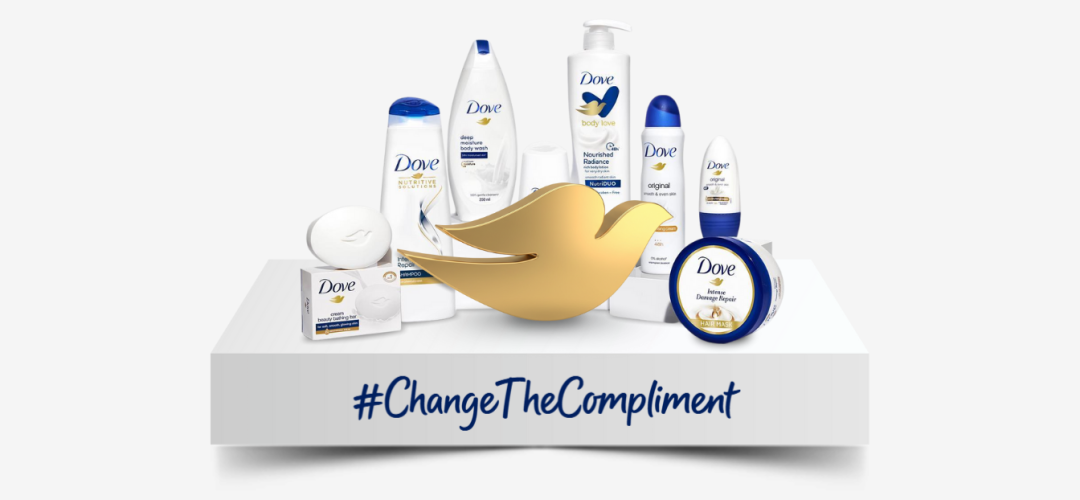
Dove’s latest push, launched globally on October 11, is based on changing what you say to a girl. By replacing “you’re so pretty” with “you’re brave,” “curious,” or “creative,” the brand argues to begin shifting a lifetime of feedback loops that skew self-worth toward appearance. The idea arrives with the weight of a two-decade “Real Beauty” platform, yet it feels newly urgent in a feed where beauty standards are now algorithmic, downloadable, and relentless.
A hero film carries the instruction with spare typography and a simple narrative swap, but the real power lies in its portability. The phrase is easy to repeat, easy to localize, and easy to enact without explanation. By design, it can travel across short videos, school assemblies, locker-room pep talks, and kitchen-table check-ins—places where culture is negotiated in real time.
Becoming a Daily Habit
For years, Dove asked marketers and media to depict women differently, and this recent campaign goes a step further by asking adults to speak differently. That pivot matters as real change tends to stick when it becomes a habit, and speech is among the cheapest and most scalable habits to influence. The brand buttresses the creative with lesson plans, conversation guides, and mentor toolkits that translate the slogan into repeatable practice at home and in classrooms. It is a rare brand movement with a teach-and-do spine rather than a single awareness spike.
The strategy also narrows the problem; rather than taking on “beauty standards” in the abstract, it targets the well-intended compliment that prioritizes looks. Dove is not asking people to stop praising beauty, only to diversify praise so that girls hear attributes tied to effort, capability, and character, and that nuance helps the idea survive the social-media stress test, where absolutism often triggers backlash.
Where Participation Meets Performance
Early creative testing suggests the work earns attention without sacrificing warmth, strongly emphasizing both short-term persuasion and long-term equity. That blend is not accidental, while participation is coded into the idea, the call to action—swap one word—invites parents, coaches, and creators to demonstrate the change on camera with low production effort and high meaning, fueling completion rates and shares.
In addition, global reach amplifies the effect. The compliment lists flex with cultural nuance as the message rolls across markets from North America to Latin America, Europe, Africa, and Asia.
Behind the Empathy
Dove has long invested in self-esteem as a distinctive brand asset; this is the latest expression of that strategy in a post-filter era. The commercial logic is clear; when a heritage brand claims a social function, helping girls build confidence, it inoculates against commoditization and price-only competition on the shelf. It also supplies a durable brief for innovation and retail storytelling, from point-of-sale to retail media networks that increasingly reward purpose with premium placements.
However, the choice is not without risk, as any initiative that appears to police language can draw criticism, and beauty remains an authentic source of joy for many. The message works best when it reads as additive, combining beauty and bravery, rather than a ban on appearance-based praise. That balance will depend on local copywriting, community moderation, and how quickly Dove can show evidence that the idea does more than trend for a week.
What to Watch Next
The meaningful metrics sit beyond views. Suppose the brand can publish pre- and post-measures of how often caregivers use skill- and character-based compliments, and schools adopt lesson plans at scale. In that case, the campaign becomes defensible as behavior change rather than brand theatre. Retail signals will follow: elevated brand affinity scores tied to “helps me feel confident,” search lift on campaign terms, and incremental sales on hero SKUs during activation windows.
The larger lesson for marketers is pragmatic. In a world of sweeping manifestos, the most portable ideas are often micro-behaviors with social proof baked in. Change the habit, and the headline writes itself.