
Halloween 2025 brought another perspective for the season rulebook. Brands across food, fashion, entertainment, and retail turned the season into an interactive playground, merging nostalgia with new media mechanics. The traditional October playbook of themed packaging and limited-edition treats evolved into a multi-sensory calendar of games, AR experiences, collectibles, and cause-driven rituals.
Instead of chasing fear, marketers pursued participation from fast-food giants to gaming universes. Brands designed campaigns that behave like entertainment, being episodic, shareable, and built for the camera. The result was a Halloween where design, storytelling, and technology blurred into one continuous format: experiential by nature, digital by design.
When Monsters Meet Mechanics
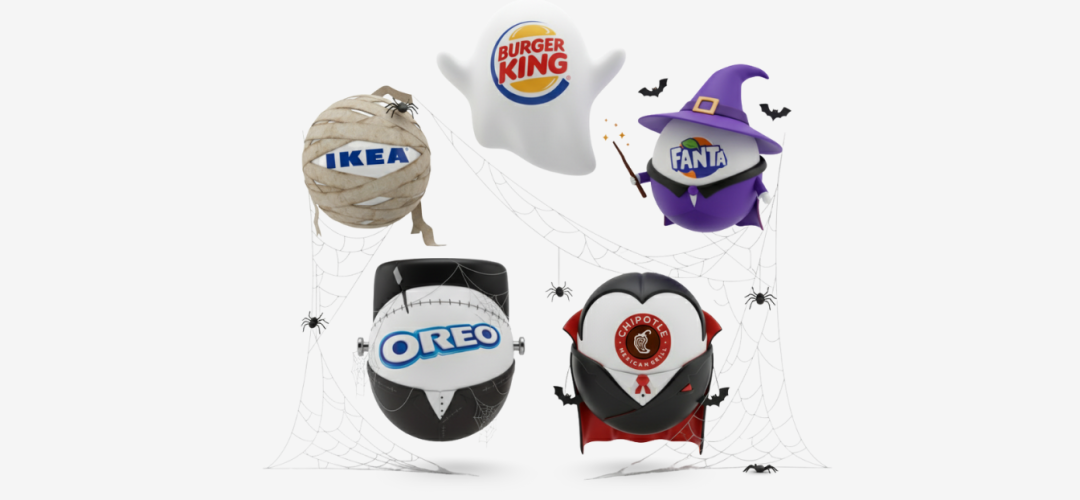
This Halloween season, brands did more than chase costumes and candy; they reinvented the ritual. Burger King, for instance, resurrected the nostalgia of its 1980s trick-or-treat buckets, now redesigned with monster faces and a $2 price tag, transforming sidewalks into moving billboards. Each bucket became a piece of portable advertising, visible under streetlights and camera flashes, while the accompanying Scooby-Doo toys reintroduced the art of collectible storytelling. What once was a one-night event turned into a shareable, repeatable journey for families and social feeds alike.
Horror Icons into a Packaging Platform
Fanta leaned into the seasonal costume change by treating its cans and bottles like collectible posters. The brand convened a cast of horror heavyweights—from slashers to modern villains—across limited-edition flavors, letting packaging do the storytelling. At the same time, retail displays and cinema tie-ins pushed discovery in the wild. The creative idea is elegantly commercial: when the pack becomes the prop, every fridge restock is unboxing theater, and every shelf becomes a photo set. By pairing flavor novelties with character art and extending the experience into theaters and social challenges, Fanta compressed awareness, trial, and UGC into a single glance. The result is less “ad” and more “drop,” with scarcity logic and fandom economics doing the heavy lifting.
Softer Scare with Scandinavian Restraint
IKEA’s Halloween play eschewed jump scares for a calm, camera-first aesthetic. The returning KUSTFYR line, featuring ghost throws, cat candles, monochrome doormats, and shadow-casting lanterns, reads like seasonal UX for the home, designed to blend into everyday interiors rather than stand out. It’s a clever reframing of Halloween as hosting, featuring elements that double as stagecraft for dinners, porch bowls, and kid crafts, inviting shoppers to direct their own scenes without clutter or kitsch. By standardizing motifs, keeping prices impulse-friendly, and making each object photogenic under low light, IKEA treats seasonal décor as modular storytelling, easy to assemble, easy to share, and perfectly on-brand for a retailer built on rituals of assembly and ambiance.
Turning Tradition into a Month-Long Game
Another great example is Chipotle, which stretched Halloween beyond October 31. Its “Chip-or-Treat” challenge rewarded app users with surprise digital treats every week, culminating in the brand’s cult ritual, the Boorito, celebrating its 25th anniversary. The strategy fused loyalty with lore, building a month-long cadence of gamified rewards and weekly badges that kept users checking in and posting their progress.
It might look like a coupon campaign, but it was actually a behavioral one. Each reward cycle built micro-habits that strengthened Chipotle’s relationship with its most active fans. The Boorito finale wasn’t just a discount night; it was the digital equivalent of a festival, blending online participation with in-store celebration. Halloween became a multi-episode narrative, not a single day on the calendar.
Making Objects That Photograph Themselves
Krispy Kreme didn’t step behind either, with its “Trick or Treat!” doughnuts and Raising Cane’s glow-in-the-dark cups that followed a different playbook—objects designed to be seen. The doughnuts, shaped as ghosts, cats, and pumpkins, came in photogenic boxes ready for flat-lay perfection, while Cane’s glowing cups solved a universal Halloween content problem: poor nighttime lighting. A simple collectible turned into a creative prop, each cup equipped with a QR code that unlocked a virtual haunted-house tour and instant-win prizes.
These tactile ideas reflect a broader trend of brands engineering “camera-first” objects, items that maintain visual consistency across both real life and social platforms. The design brief is no longer “make it cute”; it’s “make it legible on a phone at midnight.”
When IP Becomes Gameplay
In gaming, Halloween became a cultural mashup. Fortnite’s annual “Fortnitemares” turned into a blockbuster event, inviting characters like Ghostface, Doja Cat, and the Scooby-Doo crew into the game’s world. Each collaboration is brilliant, combined with a skin drop as a narrative mechanic. Players could battle, explore, or unlock content themed around the characters, turning brand collaborations into gameplay itself.
The brilliance of Epic Games’ model lies in turning licensing into immersion. Instead of traditional ad placements, these integrations functioned as mini-storylines where brands, characters, and fans co-create meaning in real time. In Fortnite’s hands, Halloween stopped being seasonal to become a living cultural moment.
Costumes with a Cause
Meanwhile, Spirit Halloween took a meta turn. Beyond its viral Scrub Daddy costume, which transformed a household sponge into social-media cosplay, the brand deepened its charitable arm by raising millions through its “Spirit of Children” initiative for pediatric hospitals. Each in-store donation was accompanied by a ringing bell, creating a small but powerful moment of theater that connected commerce with community.
In a marketplace increasingly driven by purpose, Spirit Halloween’s success shows that creativity and conscience can share a costume rack. It reframed the simple act of shopping into an act of participation.
The Snackable Showstopper
Even in the candy aisle, innovation crept in. OREO’s dual-colored, glow-packaged cookies and Reese’s movie tie-in with Scream 7 reimagined how confectionery can interact with culture. OREO’s die-cut cookie designs turned snacks into props for at-home photography, while the glow-in-the-dark packaging practically demanded to be shared. Reese’s connected its limited editions to cinematic experiences, merging horror fandom with purchase behavior.
These campaigns captured the shift toward “snackable storytelling,” where the product itself performs on social media. The cookie, the wrapper, and even the barcode all become surfaces for brand narrative.
A New Kind of Halloween Economy
Together, these campaigns reveal how brands are blurring the lines between ritual, merchandise, and interaction. The creative currency of Halloween 2025 isn’t fear or fantasy—it’s format. What stands out isn’t who had the best costume, but who designed the smartest experience: objects that glow, games that progress, and brands that act more like playgrounds than advertisers.
Halloween might become a stage for storytelling systems. And this year, the real magic wasn’t in the moonlight, but in the mechanics.