
When Record Numbers Hide a Strategic Pivot
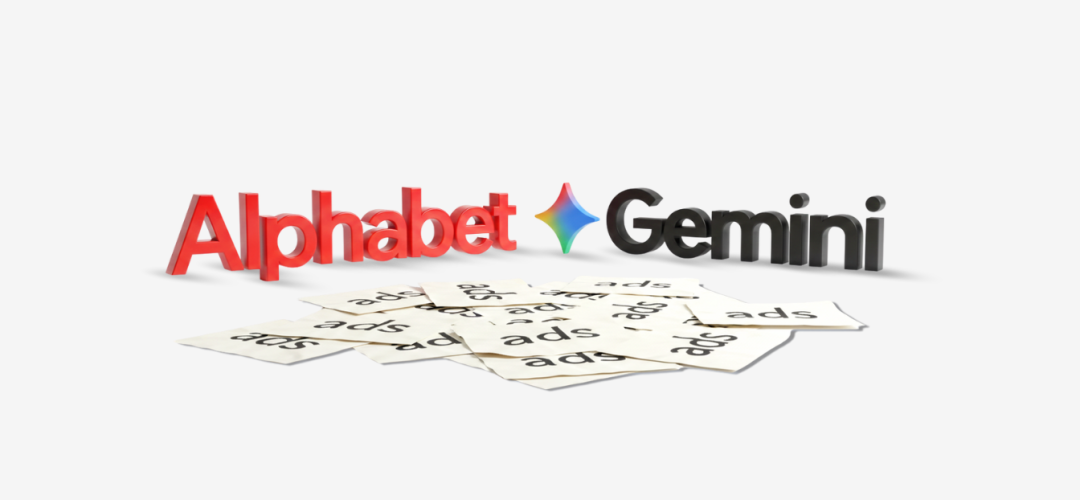
For the second quarter in a row, Alphabet surpassed $100 billion in revenue, ending the year with nearly $114 billion in Q4 alone and pushing annual revenues beyond $400 billion for the first time in its history. Google Services continued to dominate the mix, generating close to $96 billion in the quarter. In comparison, YouTube ads climbed past $13 billion, and Google Cloud posted one of its strongest performances yet, growing nearly 50% year over year. On the surface, the numbers suggested a company firmly in control of its trajectory.
Yet the tone coming from executives told a more nuanced story. Rather than focusing on victory laps, leadership framed the moment as transitional, emphasizing not what Google has achieved, but what must change. Advertising still fuels the engine, but the ways people search, discover, and decide are evolving quickly, and Google appears acutely aware that scale alone will not protect its core business from the structural shifts introduced by AI.
Gemini Steps Out of the Lab and Into the Business
That awareness explains the new positioning of Gemini, which has gradually moved from being perceived as a consumer-facing chatbot to becoming a foundational layer across Google’s products. Gemini now counts more than 750 million monthly active users and processes over 10 billion tokens per minute via direct API usage, figures that speak more to infrastructure than to novelty. More than 120,000 enterprises are already building with Gemini, integrating it into workflows that span commerce, logistics, and customer experience.
For Google, this matters not because Gemini is popular, but because it is learning. Every interaction feeds a system designed to interpret intent in richer, more contextual ways than keyword-based search ever could. According to CEO Sundar Pichai, AI has driven Search usage to record levels, not by replacing it, but by expanding how people ask questions, explore options, and resolve uncertainty.
The implication is clear: if AI reshapes how intent is expressed, it can also reshape how that intent is monetized.
Advertising Rebuilt Around Understanding, not Placement
Alphabet has been unusually explicit about how it believes Gemini will strengthen its ad business. The first gain comes from ad quality, as AI improves query understanding and reduces mismatches between what users want and what ads appear. The second lies in advertiser tools, where greater accuracy in targeting, bidding, and creative optimization shifts more decision-making from humans to models. The third, and most transformative, sits at the experience layer, where AI-driven interfaces are expected to match products and ads to users at moments that feel closer to decision than distraction.
This logic helps explain recent performance across Google’s ad portfolio. YouTube’s growth has been led by direct-response advertising, where AI-driven optimization produces clear, measurable outcomes, while network advertising has softened year over year. Performance formats reward automation, and when results improve, advertisers are often willing to accept less transparency in how those results are achieved.
At the same time, the decline in network revenue reinforces a broader industry truth: in an AI-first environment, first-party platforms with closed data loops and proprietary surfaces hold an increasing advantage over the open web.
Expanding the Market Without Shrinking the Experience
When Google’s leadership talks about “expanding the playing field” for advertisers, the phrase is less about adding more ad slots and more about redefining where commercial intent lives. Conversational search, multimodal prompts, product comparisons, and task-based interactions all create new moments where advertising can appear as part of problem-solving rather than interruption.
The challenge, however, is delicate. Google must introduce monetization into these AI-shaped experiences without undermining trust or usability, especially at a scale where small missteps can shift user behavior globally. Its advantage lies in its reach, spanning Search, YouTube, Android, and Chrome, enabling rapid testing and iteration. Its constraint lies in responsibility, because any redesign of the experience reshapes how billions interact with information.
The Cost of Rewriting the System
The financial commitment underscores how seriously Google is treating this transition. Capital expenditures are set to climb toward $185 billion next year, largely to support AI infrastructure. Such investment only makes sense if Gemini does more than defend existing ad revenue; it delivers new efficiencies while opening fresh pathways for growth.
Strategic partnerships point to that ambition. Google’s collaboration with Apple, including work on next-generation foundation models, suggests a future in which Gemini-powered intelligence extends beyond Google’s ecosystem, influencing how ads, recommendations, and commerce operate across devices and platforms.
A Quieter Reinvention Than It Appears
The deeper story is not that Google has embraced AI, but that it has chosen to anchor its advertising future to it. Search, YouTube, and Cloud are no longer separate narratives, but interconnected surfaces feeding a single system designed to understand human intent at unprecedented depth.
For marketers, the shift will feel gradual but consequential. Advertising on Google is likely to shift from managing formats and placements to participating in AI-mediated moments where decisions are made. Keywords give way to signals, channels to contexts, and optimization to orchestration. Google is betting that if it can understand users better than anyone else, monetization will follow naturally—and that this time, the transformation will happen not with a dramatic break, but with a steady, almost invisible rewrite of the rules.