

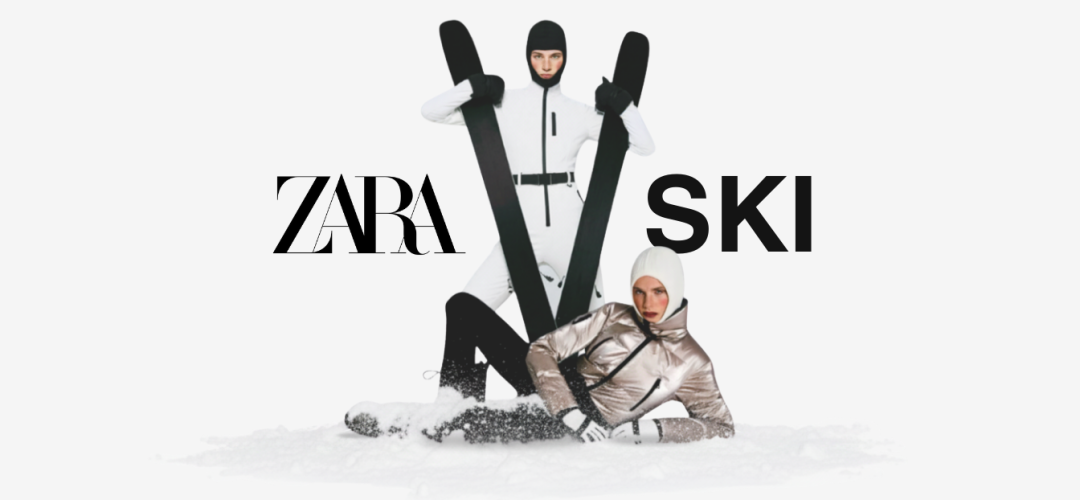
When Zara released its latest Ski collection, the move looked at first like a straightforward seasonal drop. Yet beneath the glossy puffers, sculpted jumpsuits and mirrored goggles lies a strategic shift in how fashion borrows from sport to build identity, aspiration and cultural reach. Skiing, once reserved for elite performance brands and affluent resort-goers, has become fertile ground for a broader lifestyle narrative, and Zara understands that this narrative is no longer limited to the mountain.
The retailer’s collection sits at the intersection of technical credibility and visual seduction. Pieces carry the vocabulary of true performance, such as water resistance, thermal insulation, windproof coatings, and RECCO technology, yet they are styled with a distinctly editorial sensibility. Clean silhouettes, cinematic scenery, and monochrome palettes present skiing not as a functional activity but as a dramatic stage for winter fashion. By stripping away the competitive context and focusing on mood, Zara reframes the sport as a world anyone can step into, whether they plan to reach the slopes or not.
Fashion Adopts the Codes of Performance
This blending of identities reflects a broader movement in marketing, where brands increasingly use sports not for sponsorship visibility, but for emotional and aesthetic borrowing. Traditional sports marketing relied on athletes, arenas, and events to create cultural relevance. Today, brands can claim those associations simply by adopting visual and symbolic codes: equipment, terrain, posture, even the colour psychology of a given sport. Ski becomes a lifestyle shorthand for adventure, status, cold-weather glamour, and winter travel, and Zara ensures these associations remain intact even when its audience uses the pieces far from the Alps.
The campaign imagery leans heavily on these codes. Models appear in tight base layers, high-gloss jumpsuits, and sculpted puffers, against stark alpine landscapes that signal both danger and freedom. The absence of athletes is deliberate; the story is not about winning but about belonging, about inhabiting a world that feels aspirational but accessible. This mirrors a larger shift in sports culture online, where aesthetics often eclipse performance, and viewers consume sporting environments as aspirational media rather than technical expertise.
The Democratization of an Elite Sport
Skiing traditionally carries connotations of privilege and exclusivity, a sport intertwined with travel, equipment, and seasonal luxury. Zara’s collection translates this into a mass-accessible narrative through design, price, and distribution. It is not a technical gear line meant to rival specialist brands; instead, it is a way for consumers to signal a lifestyle, combining winter escapes, alpine fantasy, and après-ski sophistication, whether or not they participate in the sport. This democratization of elite sports codes is one of the key reasons fashion keeps returning to football, tennis, racing, and now winter sports, meaning identity is powerful, even when decoupled from practice.
Through this lens, the Ski collection acts as a halo for Zara’s broader winter assortment. The visual language of the drop, with glossy surfaces, crisp black-and-white contrasts, and aerodynamic shapes, flows into puffers, boots, and knitwear throughout the season. As retailers fight for differentiation in a crowded winter market, the ski aesthetic gives Zara a fresh emotional anchor.
A New Playbook for Brand Expansion
Zara’s move reveals how brands can enter sports culture without costly partnerships or elite equipment. By crafting a standalone world built on authentic visual cues, limited-time drops, and editorial storytelling, the retailer captures the energy of performance while staying firmly rooted in fashion. It signals a future where sport identities keep growing around the feelings of movement, freedom, adrenaline, purpose, and adventure, and that identity is captured by the brand.
For Zara, this is part of a longer-term agenda. With the expansion of Zara Athleticz and increasing experimentation in performance-inspired categories, the brand is positioning itself as a hybrid player; not quite technical, not just lifestyle, but something in between. As consumers seek clothing that performs everywhere—gym, street, travel, leisure—Zara is betting that sport will remain one of the most persuasive lenses for expressing modern identity.
In the end, the collection is less about skiing and more about storytelling. It offers a curated world where performance meets desire, where cold-weather function becomes a style stage, and where a mass-market brand can own a narrative once reserved for luxury labels. Zara is actually selling a vision of who its customers can be when sport is reimagined not as competition, but as culture.