
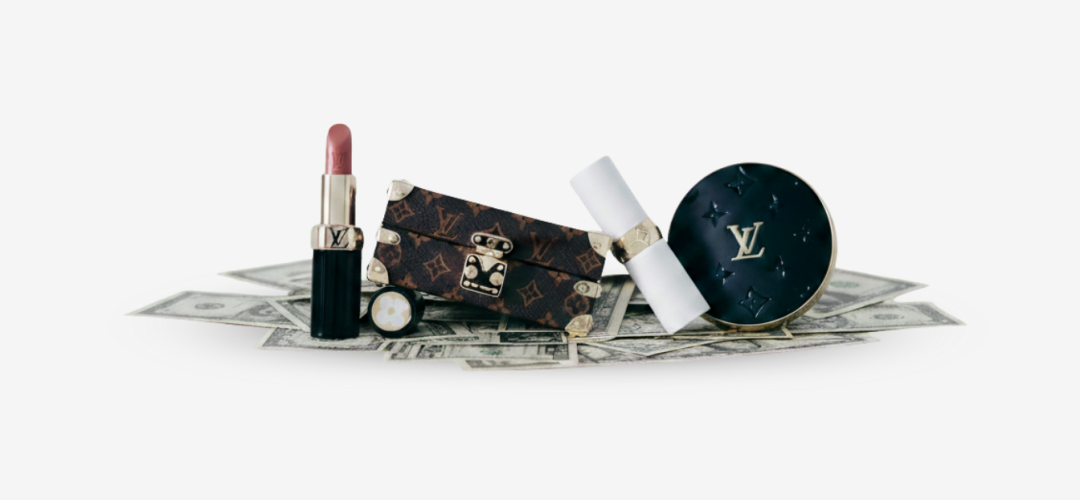
Louis Vuitton’s first modern color collection, La Beauté Louis Vuitton, arrives not as an invitation to democratized glamour, but as a thesis on exclusivity. Developed in collaboration with renowned artist Pat McGrath and teased earlier this year, the line comprises 55 lipsticks and 10 tinted balms, priced at $160 each, as well as eight eyeshadow palettes, priced at $250 each. The launch sequence is equally deliberate: China on August 20, a global digital pre-launch on August 25, and wider availability from August 29, both online and in select Louis Vuitton stores. In an industry that long used beauty to welcome aspirants into a brand’s orbit, Vuitton is doing the opposite by designing cosmetics to feel like an extension of its trunks and handbags rather than an “affordable” slice of the logo.
A Price That Signals Status, Not Access
Designer beauty has historically floated just above the mass market, with lipsticks in the $40–$50 range providing a gentle on-ramp to storied maisons. By charging more than three times that, and pricing eyeshadow like a luxury leather accessory, Vuitton reframes purchase intent, and makes a statement. High pricing narrows the audience by design, concentrating on a tier of clients who already treat beauty as a discretionary collectible. That approach may seem counterintuitive in a year when many shoppers are trading down or delaying repeat purchases. Still, it aligns with the brand’s core playbook: protect equity, court the most loyal, and let the product itself prove it belongs in the house’s universe.
The most significant strategic risk sits where performance meets perception. At $160, the formula cannot merely be good; it must be unmistakably superior across shade depth, comfort, longevity, and finish on diverse skin tones. McGrath’s involvement provides instant credibility with makeup artists and connoisseurs. Still, consumer reviews will determine whether the range is a beautiful object with decent makeup or a beautiful object with industry-leading makeup. The latter is required to sustain repeat purchases beyond the initial collector wave.
Distribution Will Decide the Outcome.
Leading with China is a clear signal of where Vuitton expects early momentum and social halo. A China-first drop can generate immediate, high-visibility content from luxury-savvy consumers and beauty creators, then leverage that cultural capital to drive the global pre-launch and boutique theater. Sequencing matters: by the time the product is widely available, shoppers will have seen it “in the wild,” framed not as a shopping decision but as a lifestyle choice.
Beauty brands often scale via multi-brand retailers to gain reach and velocity. Vuitton is more likely to prize control, particularly in e-commerce and select maison stores, where service, storytelling, and visual merchandising amplify the object’s value. That’s the tightrope. A too broad footprint risks making the line feel ordinary; a too narrow one stalls discovery. Expect tightly edited counters, limited doors, and high-touch services (such as engraving, appointment bookings, and capsule shade drops) that create a sense of ceremony around replenishment.
Target Customer by Design
The immediate audience is not the price-sensitive beauty shopper. It’s the existing Vuitton client who values continuity of brand codes across categories; the collector who treats first editions and special packaging as investments in cultural cachet; the gifter who wants something unmistakably Vuitton at a four-figure aura and three-figure price. If the line succeeds, it will be because it deepens spending among those already inclined to buy into the world of LV—not because it recruits masses of new customers.
What Success Looks Like
Sales spikes at launch will be easy; endurance is the harder part. The telltales to watch are quiet ones: the ratio of refills to new cases after the initial wave; the number of shades that become true signatures worn, not just displayed; the attachment of beauty to leather-goods baskets in clienteling; and the pace of limited releases that keep the narrative moving without overwhelming the core. If the brand maintains scarcity, protects its service theater, and proves that the formulas belong on runways and in real life, the line can thrive at a boutique scale with strong margins.
Louis Vuitton is testing a new ceiling for designer color cosmetics, replacing the old “beauty as entry point” logic with “beauty as luxury object.” If it works, rivals will feel pressure to upgrade packaging, trim distribution, and put artistry at the center, precisely as mid-market shoppers continue to trade down. The market fractures: utility buys on one side, collectible cosmetics on the other. Vuitton is betting the future of its beauty business lies squarely with the latter.