
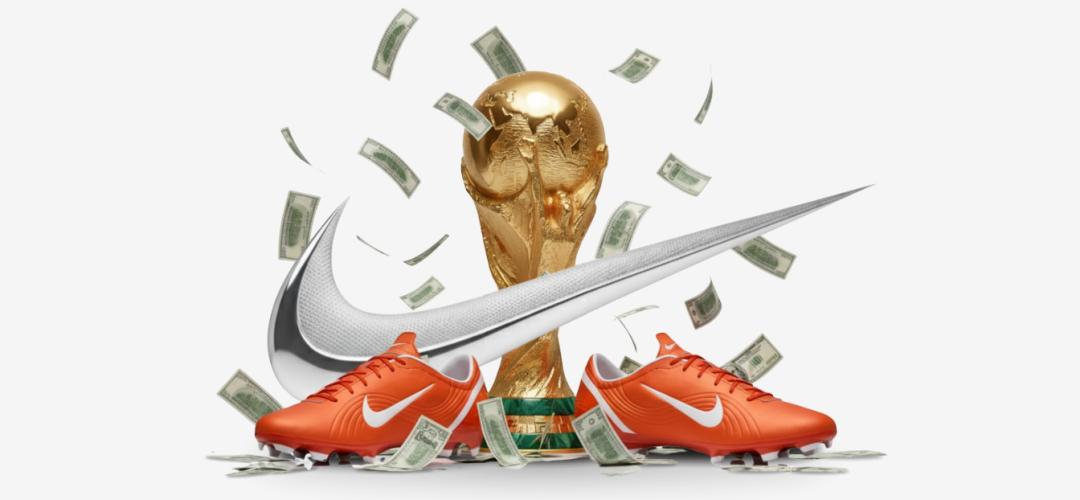
The clock is visible now as the 2026 men’s World Cup opens on June 11, 2026, in North America, with the tournament running through July 19, 2026, across 16 cities in the United States, Canada, and Mexico. FIFA says Visa pre-sales have already cleared 1 million tickets as of October 16, 2025, a sign that global demand is building months before the first whistle. For Nike, which outfits powerhouses including Brazil, France, and England, that momentum turns the spring into a decisive pre-sell window, with national team kits and boot color stories widely expected to surface in March–April 2026, giving roughly a 10–14 week runway to convert attention into orders before opening night.
Aiming a Bigger Checkbook
Nike’s fiscal 2025 (year ended May 31, 2025) underscored why the company is accelerating demand creation, according to Nike’s June 26, 2025, earnings release. The company’s filing shows demand creation expenses at $4.7 billion, up 9% year over year. The fourth quarter’s expenses are roughly $1.3 billion, up 15%, reflecting increased brand and sports marketing. Management trimmed operating overhead by 7% for the year, but a tougher mix and clear-through promotions weighed on profitability. In the third quarter, reported March 20, 2025, gross margin contracted by about 330 basis points to ~41.5%, with higher discounts and product costs cited, and Nike Direct revenue fell 10% on a currency-neutral basis as digital sales declined and store comps softened, according to Nike’s Q3 FY25 results. Those prints set the stage for a turnaround narrative that must be proven in sell-through, not slogans.
A New Chief and a Narrower Promise
Leadership has also shifted alongside the message. Elliott Hill returned as President and CEO effective October 14, 2024, spending his first year refocusing on core sport performance, running, basketball, and global football, while rebalancing wholesale and pulling back on blanket DTC promotions. Early commentary around FY26 points to healthier running trends and more disciplined launches. The test is whether performance credibility shows up in repeat rates at full price and in fresher franchise cycles from Pegasus and Vomero to signature basketball and elite football boots that will appear across World Cup broadcasts.
The Marketing Around a Matchday
The World Cup is a month, but Nike is treating it as a quarter. Expect a 90-day runway that begins with player-led training content in late winter, crests with coordinated kit reveals in March–April 2026, and spills into city-level retail takeovers in host metros like Los Angeles, Dallas, New York, Mexico City, and Toronto. The point is to turn Dri-FIT and fit-system claims into visible, repeatable routines fans can copy, linking broadcast moments to app challenges, membership drops, and in-store experiences. If the cadence lands, the halo is designed to elevate adjacent categories beyond football, particularly in running and women’s training, which has been a brand focus in 2025.
Tariffs, Sourcing, and the Math Investors Will Model
In this scenario, the biggest external headwind might be policy. In June 2025, Nike estimated ~$1 billion in tariff costs for the year; by early October 2025, management discussion framed a possible $1.5 billion drag scenario if rates persist. The mitigation plan is multipronged, aiming to reduce U.S. exposure to China from roughly 16% of footwear imports to high single digits by FY26. It focuses on increasing reliance on Vietnam and Indonesia and implementing “surgical” U.S. price increases starting in fall 2025, while protecting hero franchises from broad discounting. The key line for investors to watch is gross margin; if tariff relief lags, the only sustainable offset is full-price sell-through on newness, not markdown addiction.
Channels, Partners, and Inventory Discipline
After swings that strained relationships, Nike is rebuilding synchronized floorsets with key wholesale partners even as it keeps its own stores and apps as the storytelling hub. The World Cup offers a visible test of that détente, combining timed kit deliveries, appointment-style boot fittings, and localized displays tied to June–July 2026 fixtures. In that way, cleaner inventory changes from a financial input to a brand signal. If consumers consistently pay ticket price for kits and boots in March–July 2026, Nike can guide to lower promotional intensity for the back half of the calendar year.
Competitive Heat that Won’t Cool by Kickoff
It’s important to mention that Hoka continues to outgrow the running market; meanwhile, Chinese players have been more assertive at home, just as Nike’s China demand turned choppy through 2024–2025. The World Cup’s cultural reach helps, yet the measure of success is granular, as the company shares gains in performance running by June–September 2026, repeat purchases of flagship football boots during and after the tournament, and a reduction in clearance reliance by the holiday season 2026.
What the Next Calls Need to Prove
Give that, guidance over October–December 2025 should answer two questions, including dates and dollars. First, the World Cup blueprint, including media weight, kit timelines, athlete and creator bench, and host-city activation calendars. Second, the tariff offset, detailing how much sourcing has already moved and where pricing has landed without spiking returns or slowing units. The broader market backdrop remains constructive, as the global athletic footwear category is projected to grow from about $183 billion in 2025 to roughly $258 billion by 2030. Still, expansion only matters if Nike earns more of it.