
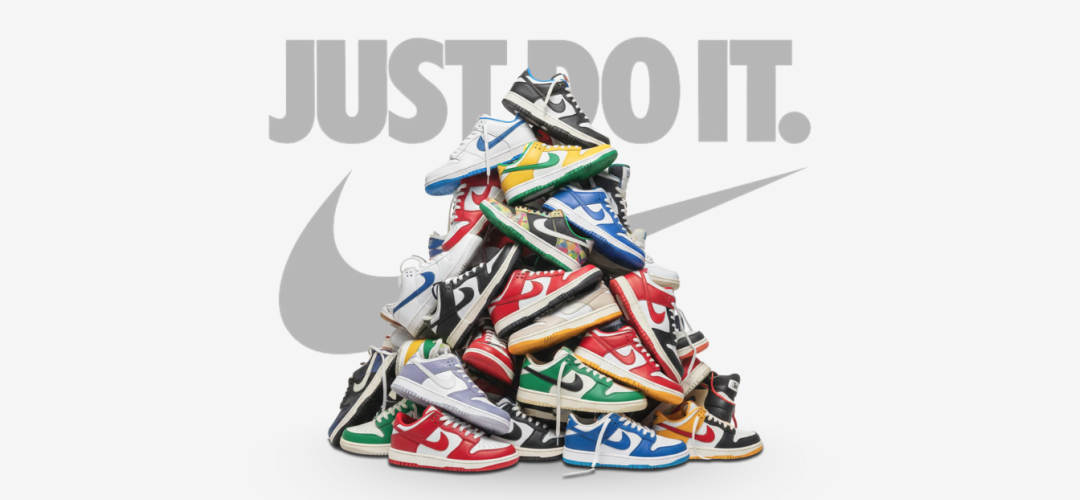
When Nike reported earnings on Thursday, December 18, the numbers were unlikely to shock. Analysts were bracing for another quarter of modest growth, with revenue expected to be largely flat to slightly down year over year, and profits still under pressure as the company absorbs higher costs and continues to face promotional drag. Compared with where the company stood a year ago, this still represents progress. Nike has steadied inventory, pulled back from its most aggressive discounting, and begun to rebalance its distribution strategy toward healthier wholesale relationships. Yet the mood surrounding Nike is one of impatience.
For investors, this last quarter represents a checkpoint rather than a turning point. The market has already accepted that Nike needed time to reset after years of channel missteps, product fatigue, and uneven execution. What it has not yet accepted is a prolonged period of incrementalism from a company that built its reputation on momentum and cultural leadership. Stabilization may satisfy analysts in the short term, but it does not justify Nike’s stature or valuation in the long run.
From Damage Control to Credibility Test
The past year forced Nike into defensive mode. Inventory discipline replaced expansion, promotions were carefully recalibrated, and wholesale partners regained importance after an overcorrection toward direct-to-consumer. These moves were necessary and, in many ways, effective. Revenue stopped sliding, wholesale showed signs of life, and the brand avoided the deeper erosion that has plagued other legacy players.
However, the transition from defence to offence is where scrutiny intensifies. Investors are no longer asking whether Nike can manage complexity; they are asking whether it can create desire again. This distinction matters. Financial engineering can protect margins for a while, but it cannot substitute for products that feel essential, timely, and culturally sharp.
Why the Product Conversation Matters Again
At the centre of this earnings moment is product credibility. Nike’s leadership has emphasized a renewed focus on sport, performance, and athletic storytelling, positioning these as anchors for the next phase of growth. The question is whether this focus is already visible in consumer behaviour or still aspirational language on earnings calls.
Sneaker culture, once Nike’s natural advantage, has grown less forgiving. New silhouettes, limited releases, and performance innovations move quickly from novelty to noise. Competitors, both established and emerging, have learned how to manufacture relevance at speed. In this environment, Nike’s scale can become a liability if it slows creative cycles or dilutes impact.
Investors understand this dynamic more than they once did. They know that without product momentum, price integrity weakens, promotions creep back in, and margins struggle to recover. This last quarter, subtle signals around full-price sell-through, repeat franchises, and genuine newness will carry more weight than headline revenue figures.
Wholesale, Control, and the Risk of Compromise
Nike’s renewed emphasis on wholesale is one of the clearest shifts in its strategy. After years of prioritizing direct channels, the brand is once again leaning on partners to rebuild reach and cultural presence. The move has been welcomed by the market, particularly as wholesale has shown healthier growth than Nike’s own direct business.
Still, this path carries risk. Wholesale expansion only strengthens a premium brand if control remains intact. Investors will be watching closely to see whether broader distribution supports brand heat or quietly erodes it. Nike must prove it can scale without slipping back into overexposure, a mistake that would undo much of the progress made over the past year.
China and the Limits of Patience
No region encapsulates Nike’s challenge more clearly than China. Once a powerful growth engine, the market has become a source of uncertainty amid intense local competition and shifting consumer preferences. Expectations for a rapid rebound are low, but patience is not infinite.
For now, stabilization would count as success. What matters is whether Nike can articulate a strategy that feels grounded in local insight rather than global assumptions. Without that, even modest improvements elsewhere may struggle to offset prolonged weakness in one of the world’s most influential sportswear markets.
When Culture and Capital Align
What makes this earnings moment unusually sharp is the alignment between Wall Street and sneakerheads. Both groups are sending the same message, albeit in different languages. Investors want proof of sustainable growth and pricing power. Consumers want products that feel relevant, confident, and worth paying full price for. At this stage, these demands are not in conflict; they are interdependent.
Nike’s brand has always thrived when culture, performance, and commerce moved in sync. The company does not need a dramatic reinvention, but it does need conviction. Incremental improvement may keep the business steady, yet it will not restore Nike’s role as the category’s agenda-setter.
As earnings approach, the question is no longer whether Nike is recovering. It is whether the recovery is bold enough to matter.