
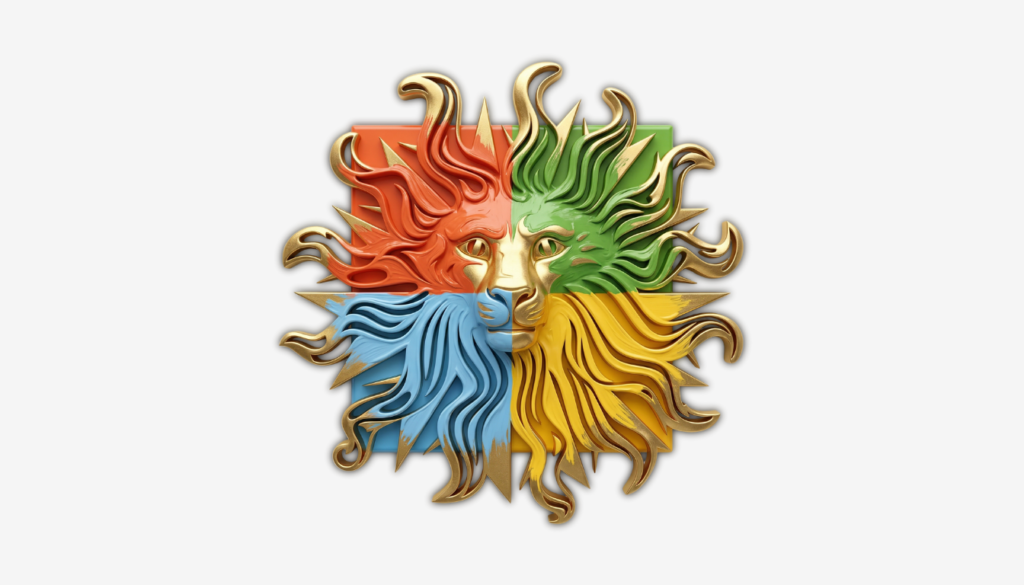
When Publicis Groupe secured Microsoft’s global media account, the scale of the business alone was enough to dominate headlines, with estimates placing its value at up to $1.2 billion, yet the true significance of the agreement extends far beyond its financial magnitude, revealing a deeper and more structural shift in how marketing is conceived, executed, and ultimately controlled.
What might once have been interpreted as a conventional agency victory begins to take on a different meaning when viewed through the lens of its context, particularly given that the deal was reached without a formal pitch process, suggesting that the criteria for selecting agency partners is no longer confined to cost efficiency or media expertise, but instead rooted in a far more complex equation involving data integration, technological alignment, and long-term strategic compatibility. While Dentsu retains elements of the relationship, including responsibilities tied to Xbox, the broader narrative is less about displacement and more about a redistribution of influence, where the center of gravity shifts toward those capable of embedding themselves within the client’s operational core.
From Campaign Execution to System Orchestration
What ultimately distinguishes this partnership is not simply the transfer of media responsibilities, but the simultaneous formation of an AI collaboration that signals a fundamental redefinition of how marketing systems are constructed and managed, as both companies move toward an “agentic” model in which tools, data, and decision-making processes are no longer separated into discrete functions, but instead operate as an interconnected and continuously evolving ecosystem.
Within this emerging framework, the traditional campaign lifecycle, once defined by clearly delineated stages of planning, activation, and measurement, begins to dissolve into a more fluid and adaptive process, where decisions are no longer fixed in advance but dynamically generated in response to real-time inputs, allowing targeting, creative delivery, and media allocation to evolve simultaneously rather than sequentially. In this context, the agency’s role undergoes a profound transformation, as Publicis shifts from executing campaigns on behalf of Microsoft to helping construct the very systems through which those campaigns are imagined, optimized, and deployed, effectively becoming part of the infrastructure that governs marketing itself.
The Rise of the AI-Native Agency
This evolution points toward the emergence of what might be described as the AI-native agency, a model in which competitive advantage is no longer derived solely from creative excellence or media scale, but from the ability to unify data, technology, and execution into a cohesive and intelligent system capable of learning and adapting over time.
By aligning itself closely with Microsoft’s AI and cloud capabilities, Publicis gains access to a technological foundation that extends far beyond a single client relationship, enabling the development of scalable solutions that can be applied across its global portfolio, thereby transforming client engagements into platforms for broader innovation. At the same time, this partnership underscores a wider convergence across the industry, where the distinction between agency and technology provider becomes increasingly difficult to define, and where marketing itself begins to resemble computation as much as communication.
Why the Pitchless Win Matters
The absence of a traditional pitch process, while seemingly procedural, carries significant symbolic weight, as it reflects a shift in how value is assessed within the industry, moving away from transactional considerations toward deeper questions of integration and interoperability, where the ability to seamlessly connect with a client’s internal systems becomes a decisive factor.
In this emerging landscape, agencies are no longer positioned as external partners brought in to deliver specific outputs, but rather as embedded collaborators whose role is to contribute to the architecture of the client’s business itself, shaping not only how campaigns are executed, but how decisions are made at a foundational level. The implication is clear: the future of agency relationships will be defined less by individual projects and more by the extent to which an agency can integrate into and enhance the client’s technological ecosystem.
A New Model for Brands
For brands, the implications of this shift are both immediate and far-reaching, as marketing transitions from a series of planned initiatives to a continuous, adaptive system in which campaigns no longer launch and conclude, but instead persist as evolving entities shaped by ongoing data flows and algorithmic optimization.
Within this new paradigm, creative assets are no longer static deliverables but dynamic components that can be adjusted and recombined in response to audience behavior, while media investments become fluid allocations that shift in real time according to performance signals, effectively collapsing the traditional boundaries between planning, execution, and measurement into a single, integrated process. Yet, rather than diminishing the role of creativity, this transformation elevates it, repositioning human input at a more strategic level, where the definition of narratives, cultural resonance, and brand identity becomes the primary domain for achieving differentiation.
The Hidden Tension Between Efficiency and Identity
However, as this model gains traction, it introduces a subtle yet significant tension: the widespread adoption of similar AI-driven systems raises the possibility of convergence in both strategy and execution, potentially leading to a landscape in which campaigns become increasingly efficient yet progressively indistinguishable.
This dynamic creates a paradox at the heart of contemporary marketing, where the pursuit of optimization, while enhancing performance, risks eroding the distinctiveness that brands rely upon to stand out, thereby placing greater emphasis on the need for original thinking and cultural sensitivity as counterbalances to technological standardization. Navigating this tension will require brands and agencies alike to ensure that the systems they build do not merely optimize outcomes but also preserve the unique qualities that define their identity.
A Blueprint for What Comes Next
Ultimately, the partnership between Publicis and Microsoft offers more than a glimpse into the future of a single client relationship; it provides a blueprint for the direction in which the entire industry is moving, where marketing is no longer organized around isolated campaigns, but structured as interconnected systems capable of continuous learning and adaptation.
In this evolving landscape, success will depend not only on the ability to create compelling narratives or execute efficient media strategies, but on the capacity to design and operate the underlying systems that bring these elements together, blending creativity with computation in ways that redefine the very nature of advertising. What may appear, at first glance, as a significant account win is likely to be remembered as something far more transformative: a moment in which the industry began to shift, almost imperceptibly, from managing campaigns to building intelligence.