
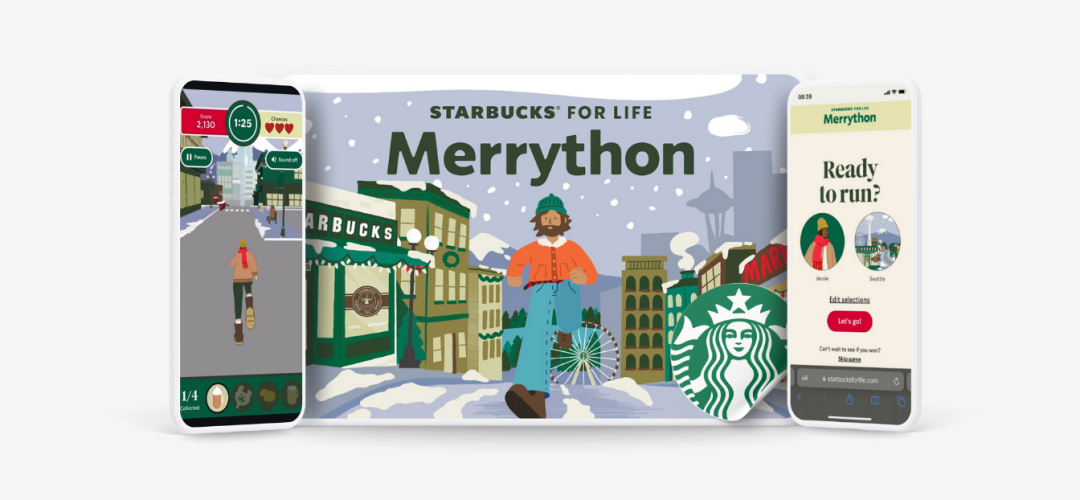
As holiday campaigns compete for space in the cultural season, Starbucks has executed one of the most strategically creative moves of the year. Instead of relying solely on the emotionally charged storytelling of its traditional holiday films, the company expanded its creative grounds to a place most brands still treat as an afterthought: its own app. The result is a seasonal game wrapped in nostalgia, ritual, scarcity, and fantasy, presented to consumers through fast, glossy Instagram Reels that feel less like promotions and more like invitations to play.
When Loyalty Becomes a Playground
What sets this move apart is not simply the existence of a holiday promotion, but how Starbucks frames it. Rather than positioning the app as a transactional hub, the brand recasts it as a holiday playground where users “run” through cities like Tokyo, Milan, and Seattle to collect items and chase prizes that feel mythic in scale. This shift turns the loyalty program into a narrative journey. It replaces the usual points-for-purchases logic with a more emotionally intuitive proposition: step inside, explore a world, and let the holiday magic unfold through play.
This approach softens the promotional edge while strengthening the brand’s power to shape ritual. By integrating the game into its broader holiday identity, already anchored in iconic cups, seasonal illustrations, and nostalgia, Starbucks ensures the experience feels additive rather than manufactured. In a season built on repetition and tradition, the company manages to introduce something new without breaking the spell of familiarity.
A Visual Strategy That Blends Festivity and Fantasy
The visual language chosen for Instagram is equally deliberate. The Reels present a hybrid grammar that merges game UI with holiday iconography, creating a sensory bridge between the digital and cultural worlds. There are fast cuts of animated items, glowing hero shots of coveted merchandise, and micro-animations that make the app itself feel alive. Even without sound, the message is unmistakable: something is happening inside the Starbucks app, and you’re meant to be part of it.
Scarcity amplifies this effect. The Bearista glass cup, which has evolved from a merch item to a cultural object with its own resale economy, appears like a holy grail within the creative ecosystem. Its presence signals a kind of insider status, and only those who enter the game have a chance to secure it. This emotional trigger is powerful because it connects product, platform, and behavior in a single motion. The prize is desirable, the path to it is entertaining, and the video makes the journey appear effortless.
The Emotional Mechanics Behind the Design
Beneath the polished visuals lies a deeper system of emotional levers. Scarcity plays its expected role, but the real ingenuity comes from how Starbucks layers it with ritual and fantasy. The holiday season at Starbucks is built on rituals that people anticipate: the arrival of red cups, the return of seasonal flavors, and the unwrapping of limited-edition merch. The game extends these rituals without replacing them, offering an interactive chapter that feels aligned with the brand’s long-running holiday story.
At the same time, the idea of winning “Starbucks for Life” injects a playful fantasy that escapes the constraints of reality. The odds hardly matter; what matters is the momentary thrill of possibility. The combination of real-world collectability paired with lighthearted fantasy increases shareability, social chatter, and repeat engagement. It is a reminder that, in a digital landscape dominated by short attention spans, the best creative work often hinges on emotional contrast: the attainable vs. the impossible, the everyday vs. the once-in-a-lifetime.
Why This Strategy Works Now
The strategic timing of this creative push is unmistakable. Consumers are fatigued by traditional ads, and brands face rising pressure to convert cultural relevance into actual engagement. Starbucks bridges this gap by meeting people where they already are, endlessly scrolling through short-form video, and directing them toward a deeper, more participatory brand world.
Instagram becomes the spark; the app becomes the arena. This two-step funnel is strengthened by the creative clarity of the Reels, which visually rehearse the behavior Starbucks wants: tap in, explore, collect, return tomorrow. In an era where many loyalty programs feel interchangeable, the company transforms its own into an experience that feels alive, kinetic, and seasonally meaningful.
What Other Brands Can Learn
The lesson here extends far beyond coffee. Starbucks demonstrates how a brand can transform a utilitarian platform into a creative environment, not by adding complexity but by adding story. It shows that holiday campaigns no longer need to live solely in cinematic films or out-of-home displays; they can unfold in apps, UI animations, gamified rituals, and the micro-moments of social media.
Moreover, the approach shows the power of leveraging objects with real cultural heat. By tying it to an interactive journey, Starbucks ensures that the creative work resonates across fandoms, collectors, casual customers, and loyalists alike.
In a season saturated with marketing noise, Starbucks created something that doesn’t feel like noise at all. It feels like a game people genuinely want to play, and that may be the most modern form of loyalty the industry has seen in years.