
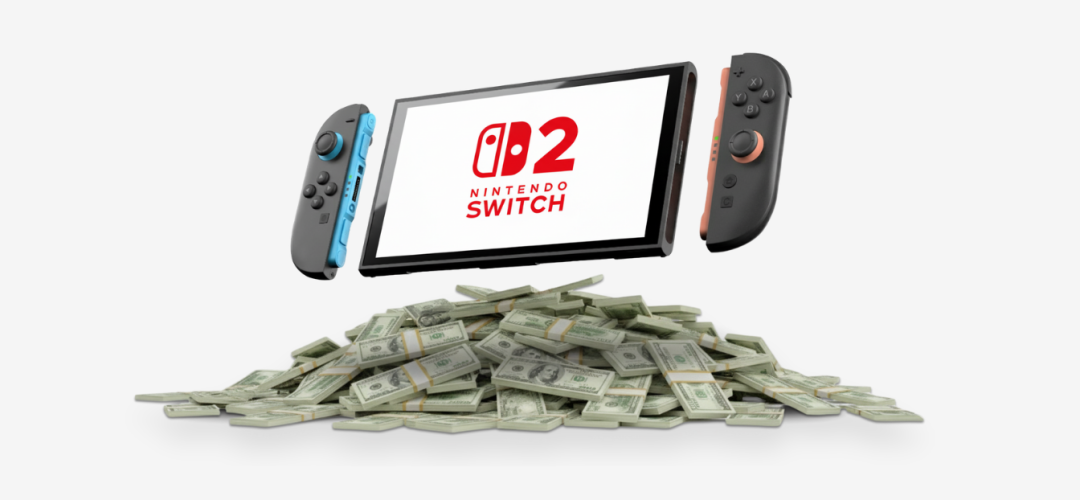
When Nintendo launched the original Switch in 2017, it rewrote the rules of the console business with a hybrid device that could live under the TV and in a commuter’s backpack. Eight years later, the company has outdone itself. From its June arrival through the end of September, Switch 2 sold 10.36 million units worldwide, making it Nintendo’s fastest-selling console to date and, by some measures, the quickest hardware launch the games industry has ever seen.
The headline number becomes more striking when set against Nintendo’s own benchmark. Over a comparable time frame after its debut, the original Switch sold roughly 4.7 million units. Switch 2 has effectively more than doubled that performance, not in a radically different market, but in a landscape still defined by the same hybrid concept Nintendo popularized. This suggests the console is more than just another hardware refresh; it is a bet that the formula still has room to grow.
Regional demand has been broad rather than concentrated. Sales reached 3.68 million units in the Americas, 2.40 million in Europe, 2.35 million in Japan, and 1.93 million across the rest of the world. Instead of relying on one outsized territory, Nintendo is seeing strong uptake across its three core pillars and meaningful traction in emerging markets, where price sensitivity is higher and logistics are more complex. For a company often accused of leaning too heavily on its domestic base, this is a reminder that Nintendo’s influence is now firmly global.
An Upgrade Cycle Dressed as a New Generation
Beneath the surface of those headline numbers sits a datapoint that may be even more revealing than the sales total. Nintendo’s own figures indicate that 84% of Switch 2 buyers already owned an original Switch. In other words, the new console’s spectacular launch is being driven less by a wave of first-time customers and more by a disciplined upgrade of an already enormous community.
On one side, this is exactly what shareholders want to see. Nintendo has built one of the largest installed bases in gaming history with the original Switch, and the ability to migrate that audience to its next device reduces platform risk dramatically. Players are being invited to renew it with better hardware, familiar franchises, and the promise of continuity in their gaming libraries.
The question remains whether early launch demand is driven mostly by the core fanbase acting quickly or whether it indicates true market expansion. Since nearly 9 out of 10 buyers are existing customers, initial sales suggest a supercharged loyalty program rather than genuine market growth. Nintendo’s challenge is to sustain momentum after early adopters upgrade and to attract new customers to its ecosystem.
Still, as upgrade cycles go, this is close to ideal. Retention at this level is a sign of a brand that has successfully threaded the needle between nostalgia and progress. It also gives Nintendo a foundation to build richer services, higher average spending per player, and longer game lifecycles on top of a stable core audience.
Hardware Euphoria Meets a Software Test
No console launch story is complete without software. Here, the picture is more nuanced. Over the same period in which 10.36 million Switch 2 units were sold, the system moved roughly 20.62 million game units. This implies an early attach rate of about two games per console. That’s respectable for a launch window, but not spectacular given Nintendo’s history of evergreen titles.
Part of this is by design. The company has leaned on a small group of flagship games, with one standout title acting as a system seller. This title appears prominently in hardware bundles. That strategy is familiar: a single must-have game turns the console into a cultural event and simplifies the marketing narrative around launch. It also makes early sales heavily dependent on the performance of a narrow portfolio.
Over time, the sustainability of Switch 2’s momentum will hinge on breadth rather than just depth. Nintendo needs a cadence of releases that speaks to different audiences: families and children, competitive players, nostalgic fans, and newcomers attracted by the hybrid promise but not necessarily invested in long-running series. Strong hardware sales without a corresponding expansion in software variety risk leaving money on the table and creating the perception that the console is defined by only a handful of major franchises.
The company’s financials hint at this balance. Revenue in the first half of the fiscal year more than doubled year over year, buoyed by Switch 2, yet operating margins have felt the weight of hardware production costs, launch marketing, and aggressive pricing. That is a familiar trade-off in console launches: sacrifice some profitability today to seed a larger, more lucrative software and services ecosystem tomorrow.
All of this is happening in the shadow of one of the most successful pieces of hardware the industry has ever seen. The original Switch has sold around 154 million units to date, putting it within striking distance of the all-time console sales leaders. Phasing out such a device is more than a logistical exercise; it is a delicate transition away from a product that defined an era.
Nintendo’s strategy so far has been evolutionary rather than abrupt. The original Switch remains available, but it is already clear that the focus of first-party development and marketing is shifting toward Switch 2. New titles are being announced with the new hardware in mind, while the older system increasingly relies on discounted evergreen games and its vast back catalog to remain relevant to price-sensitive consumers.
This gradual wind-down serves multiple purposes. It avoids alienating households that recently bought a Switch and are not ready to upgrade. It allows retailers to clear inventory without fire-sale optics. It also gives Nintendo room to shape the narrative: the Switch era is not abruptly ending, but being “continued” on a more capable device with the same hybrid DNA.
But there is an inherent tension here. As more marquee games become Switch 2-exclusive, owners of the original console may feel pressure to upgrade sooner than planned, especially if online features or multiplayer experiences increasingly center on the new ecosystem. How gracefully Nintendo navigates that tipping point will influence not just sales figures but also the emotional connection that has long set the brand apart from its competitors.
The Console Race
In the broader console landscape, Switch 2’s launch sends an unambiguous signal: Nintendo remains a force capable of setting the pace, even in a market dominated by more powerful hardware from rivals. Rather than chasing raw performance, the company has doubled down on what made the original Switch distinctive—flexibility, portability, and a library of games that feel unlike anything on other platforms.
The risk is that such a strong start can front-load demand. When a console sells this quickly at launch, some of the sales that might have happened over the following year are effectively “pulled forward” into the first few months. That places more pressure on holiday seasons, major software releases, and regional promotions to keep the curve from flattening too soon.
Yet if Nintendo can leverage its 84% upgrade rate into higher engagement, longer playtime, and greater spending on digital content, the Switch 2 story could end up less about a single, spectacular launch and more about a durable, high-value ecosystem. The numbers so far show a company that understands the power of loyalty and is willing to trade short-term margin for long-term scale.
Ultimately, the Switch 2 is more than a hit console. It is a test of whether Nintendo can turn a one-off hybrid success into a sustainable playbook. The next chapters will depend not just on how many units leave store shelves, but on how deeply this new generation embeds itself in players’ daily lives.