
The Counterintuitive Result
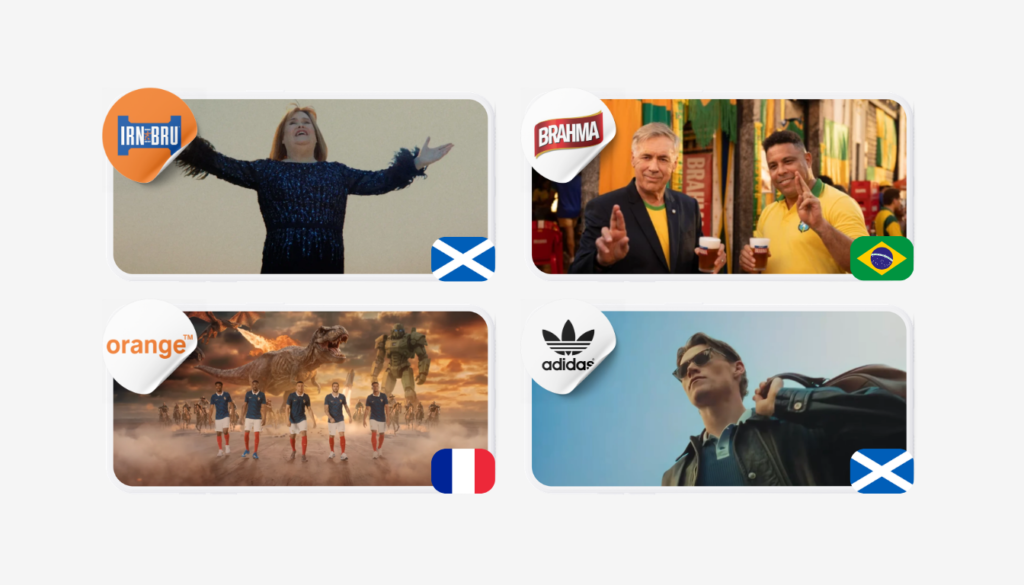
System1, the creative effectiveness platform, tested 130 World Cup-themed advertisements across the UK, United States, Brazil, Europe, and Australia — the most comprehensive audit of tournament advertising ever conducted — and scored them based on the emotional response they generated in consumers. Twenty-two ads achieved a Star Rating of 4.0 or higher, compared with just two during the entire 2022 Men’s World Cup. The winning advertisement was not Nike’s “Rip The Script,” which accumulated 66 million YouTube views in its first week. It was not Adidas’ “Backyard Legends,” which brought Timothée Chalamet and Lionel Messi together in a five-minute cinematic epic. It was an Irn-Bru campaign featuring Susan Boyle, made for a Scottish audience by a Scottish brand for a Scotland team that hadn’t appeared at a World Cup in 28 years.
The result is counterintuitive only if you assume that the largest budget and the most recognizable cast produce the strongest emotional response in the audience they’re trying to reach. The Irn-Bru campaign produced the highest score because it was built from a set of references — Scottish cultural identity, the specific texture of Scottish sporting hope and self-deprecation, a celebrity whose own story of unexpected triumph mirrors the nation’s footballing improbability — that were so precisely aimed that no other campaign was competing for the same emotional territory. Specificity, in this case, was the competitive advantage that scale couldn’t buy.
Adidas Chose Scotland — and Said Something True
The campaign that generated the most discussion among the local World Cup ads was Adidas’ “Choose Scotland,” created by Edinburgh-based Leith Agency. The brief was, by any measure, an unusual one: make a football campaign for a national team whose star player, Scott McTominay, plays his club football in Naples for Napoli — a city and a club that had not qualified for the World Cup themselves. The creative solution arrived from the brand line upward: “You can’t choose where you are born, but you can choose who you stand with.”
The film shows McTominay wandering through the streets of Naples, bags packed, receiving handshakes and waves from adoring Italian fans who will not be watching their own national team this summer. Lewis Capaldi provides narration in a Trainspotting-inflected voice-over built around the proposition of backing the underdog, the improbable, the team that made it through against expectation. Iggy Pop’s “Lust for Life” runs underneath. Andy Robertson calls from a taxi to ask if McTominay is on his way to the airport. An overhead kick against Denmark at Hampden Park appears in slow motion. The response in Scotland was immediate and visceral — “magnificent,” “the best thing I have ever seen” — and the campaign traveled globally because the underdog story, told with this much specificity, is universally legible.
What Adidas understood is that a campaign rooted in genuine national sentiment, with a creative idea precise enough to feel earned rather than generic, generates cultural conversation that no amount of media spend alone can replicate. The campaign’s reach extended far beyond its Scottish target audience precisely because it was made so specifically for that audience. The paradox of local advertising at its best: the more specific the truth, the further it travels.
Brahma Gave Brazil Permission to Believe Again
The emotional starting point of Brahma’s “Let Yourself Believe” campaign is a feeling that required careful handling: Brazilian skepticism about the national team. After the 7-1 defeat to Germany in 2014 on home soil — still referred to in shorthand by Brazilian football fans as simply “the disaster” — and a series of disappointing tournament exits in the years since, Brazil arrived at the 2026 World Cup in an unusual emotional position. The five-time champions, co-coached by the iconic Carlo Ancelotti and carrying the talent of Vinicius Jr., Endrick, and Rodrygo, were favorites on paper. In the hearts of their own supporters, the damage ran deeper than a team sheet.
Africa Creative, Ambev’s longtime agency partner in Brazil, built the campaign around this tension rather than around it. A skeptical Brazilian is pulled back into belief after watching an improvised street match where the joy, flair, and unpredictability of Brazilian football come vividly back to life. Shot in Rio de Janeiro with a 1990s and early 2000s visual aesthetic, the film recreates famous moments from the national team’s World Cup history — Carlos Alberto’s rasping volley in 1970, Edmilson’s bicycle kick in 2002, Ronaldinho’s audacious lob over David Seaman — in street football settings, mixing urban culture with archive footage. The result is less a beer commercial than an act of emotional rehabilitation: a campaign that acknowledges the wound and gently proposes that the improbable has always been part of Brazil’s story, and that one more reason to believe is enough.
System1 placed the campaign among the top 15% of the most effective ads in Brazil. More tellingly, Gustavo Castro, Director of Strategy at Ambev, described the insight underneath it: “Understanding how Brazilians truly felt about the national team allowed us to uncover a universal truth — we’ve become skeptical, but even when the odds seem impossible, all a fan needs is one reason to believe again.” That insight is only available to a brand embedded deeply enough in its local market to feel the emotional weather rather than read it from a research report.
Orange France, Irn-Bru, and the Local Campaigns That Completed the Picture
Orange France’s Mbappé-fronted campaign deployed a premise that was funny specifically because it is true about the French national team: they are extraordinary footballers and terrible Hollywood actors. The campaign — in which Mbappé and his teammates attempt to perform in increasingly dramatic cinematic scenarios with varying degrees of conviction — works because it does something that most football advertising refuses to do with its star athletes: it makes them ridiculous. The joke lands not despite the players being at the top of their sport but because of it. A French audience that knows these players well found the contrast between their football intelligence and their theatrical awkwardness irresistible.
Irn-Bru’s campaign, which carried Susan Boyle and the full weight of Scotland’s cultural self-image into a tournament moment it had waited 28 years for, converted the brand’s own iconic tagline — “Made in Scotland from Girders” — into a rallying cry for Scottish football fans. The structural intelligence of the campaign is that it did not separate the beer from the moment. It made the beer part of the story of what it means to be Scottish and at a World Cup again. For an audience that had waited nearly three decades for this, the emotional resonance was total.
The lesson that emerges from the local campaigns of the 2026 World Cup is the same one that Cannes Lions judges have been articulating for years and that the data from System1’s tournament audit now confirms with commercial precision: the most effective advertising is not the most expensive advertising, or the most globally distributed advertising, or the advertising with the most famous faces. It is the advertising most precisely aimed at the emotional truth of a specific audience at a specific moment — and the brands that found those truths at the 2026 World Cup, whether in Scotland, Brazil, or France, produced work that traveled further than their budgets had any right to predict.