
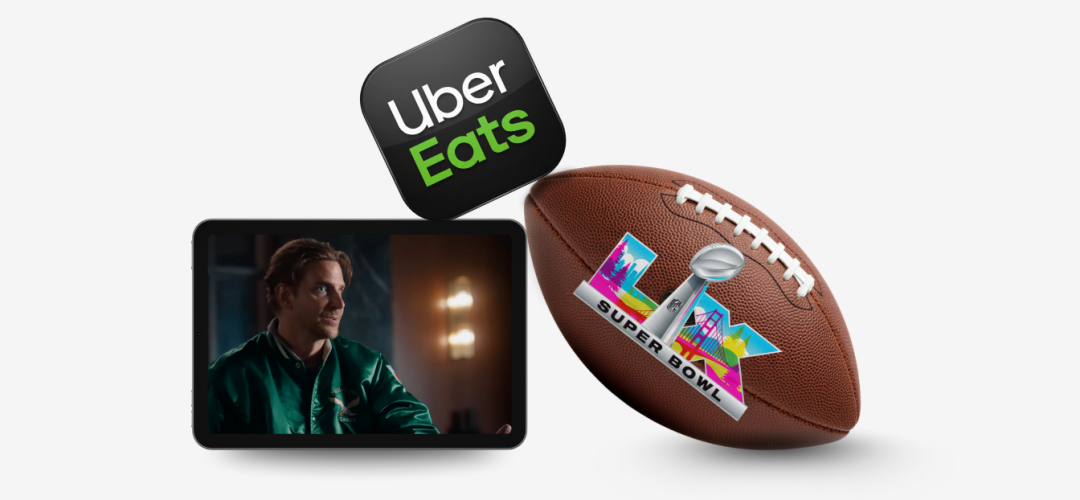
Uber Eats’ campaign “Football Is for Food,” introduced in September 2024, reframes the sport’s language as a decades-long plot to make viewers order dinner. It’s cheeky, but it’s also a clean value proposition: if football is engineered to make you hungry, Uber Eats is engineered to satisfy the craving in seconds. The premise needs almost no explanation, which is why it travels so easily across formats, casts, and moments on the calendar.
Engineering a Joke that Sells
The campaign works because its humor is built on real football idioms, including pancake blocks, turnovers, hash marks, and the in-on-the-joke cameo of Jerry Rice, so the absurdity feels plausible. The line between entertainment and transaction is deliberately thin. Each film arrives with contextually timed merchandising and in-app deals, turning a laugh into a tap. Internally, the brand treated the idea like a product: define the core mechanic, strip away friction, and publish new “evidence” as episodic content rather than isolated spots.
In addition, “A Century of Cravings,” Uber Eats’ 2025 Super Bowl chapter, scaled the conspiracy with time travel and a celebrity ensemble while keeping the idea in focus. A top-ten Ad Meter finish signaled mass appeal without sacrificing the campaign’s tone. More important than the trophy case, the chapter showed discipline: the Super Bowl served as a crescendo in an ongoing story, not a one-night reinvention. Sales velocity around the game weeks matched the entertainment value, with featured partners reporting record weeks and app sessions surging.
Keeping the World alive With Bradley Cooper
Most brands would have pivoted after the Big Game. Uber Eats didn’t. Handing the baton to Bradley Cooper keeps the story moving while letting the idea stay the star. The new chapter flips the debate dynamic and adds fresh beats without rewriting the rules, as early testing and industry chatter point to strong creative reception. However, the strategic win is sturdier: the platform still has headroom, and the brand is extracting it without breaking tone or burning equity.
What the Numbers Suggest
Across case-study disclosures, Uber Eats recorded its highest spike in brand likeability during the run, logged multiple record sales weeks for featured merchants, and saw app sessions soar—tripling quarter-over-quarter at one point, with up to an 80% lift for spotlighted partners. These aren’t vanity metrics; they indicate that a clear narrative, repeated with craft, can bend short-term attention into medium-term behavior.
Staying with a single creative frame reduces re-education costs. Rotating faces while preserving the spine compounds distinctiveness: audiences remember the world, not just the guest list. Seasonality provides a reliable drumbeat, from regular season to playoffs to Super Bowl, and the brand can drop new “clues” whenever culture pays attention. In a market where many advertisers chase novelty, Uber Eats is harvesting familiarity.