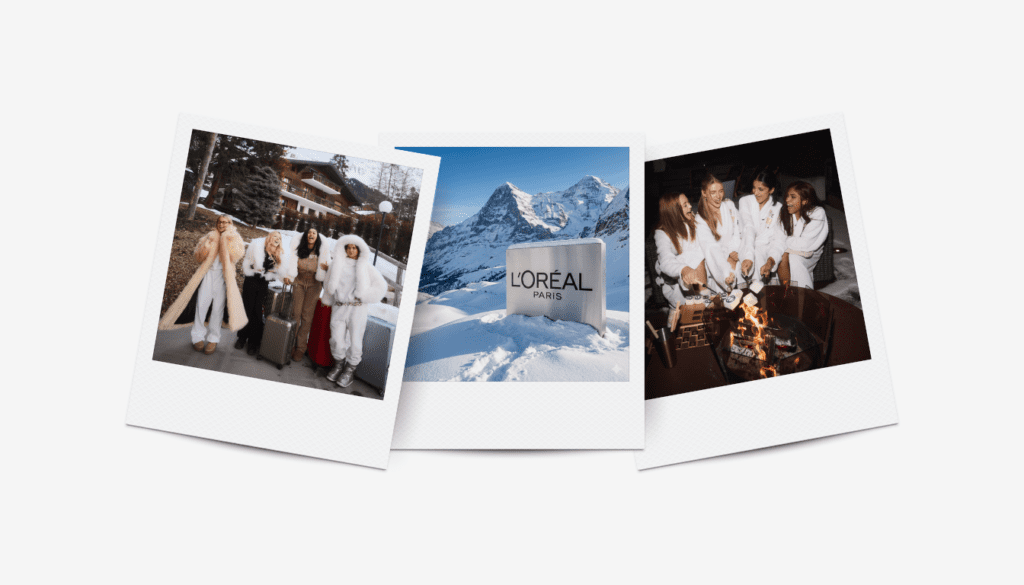


High in the mountains, where wind cuts sharply across exposed skin and sunlight bounces off snow with amplified intensity, beauty finds itself stripped of illusion and confronted by reality. It is in this demanding environment that “ski care” has emerged, not as an entirely new category but as a recalibration of how familiar products are understood and positioned.
At its essence, ski care reframes staples such as high-performance SPF, barrier-repair creams, protective lip balms, and pocket-sized reapplication sticks as functional necessities rather than cosmetic enhancements. The formulas may not have changed dramatically, yet their narrative has. Skincare is no longer presented as a finishing touch to a look but as equipment designed to endure altitude, glare, and freezing air. On the slopes, protection becomes part of the uniform.
This distinction is particularly striking when contrasted with ski fashion, which often leans into aesthetic fantasy and cinematic escapism. Beauty, by comparison, has opted for credibility. Instead of amplifying the glamour of the chalet, it underscores the consequences of exposure and the discipline required to withstand it. In doing so, it elevates everyday products into tools of resilience.
Beyond Aspen
For years, winter resort marketing revolved around a handful of influencer-heavy destinations, where luxury brands staged photogenic activations against postcard-perfect backdrops. Those moments still exist, yet the strategy has broadened in both geography and intent.
Resort-based beauty marketing has expanded well beyond Aspen and similar hotspots, embedding itself into the routines of genuine snow-sport participants rather than merely courting social media visibility. Brands are integrating into ski shops, base lodges, and on-mountain retail spaces, positioning their products at the precise point of need. When a skier reaches for sunscreen after hours under reflected UV rays or applies a reparative balm to windburned skin between runs, the interaction is immediate and purposeful.
This shift from spectacle to proximity carries significant marketing weight. Sampling is no longer a curated lifestyle gesture but a practical solution delivered at the exact moment discomfort sets in. The mountain becomes both a stage and a laboratory, where efficacy is not promised in abstract terms but experienced firsthand.
The Performance Advantage
What makes ski care particularly compelling from a marketing perspective is the clarity of its performance narrative. Snow amplifies ultraviolet exposure, altitude intensifies environmental stress, and cold air weakens the skin barrier, creating conditions that naturally heighten consumer awareness of vulnerability.
In this context, sunscreen sheds its seasonal association with beaches and summer holidays, reasserting itself as a year-round essential. Barrier creams and hydrating treatments move from indulgent add-ons to protective defenses. Lip balms become less about shine and more about survival. By situating products within an extreme yet aspirational environment, brands amplify their perceived efficacy without altering their core formulations.
The result is a form of contextual storytelling in which the environment validates the claim. Consumers feel dryness tightening their skin, notice the glare of sunlight on fresh powder, and experience immediate relief when protection is applied. In an era increasingly skeptical of exaggerated promises, that tangible cause-and-effect dynamic builds trust more effectively than polished advertising alone.
The Cultural Pull of the Slopes
Beyond performance logic, ski care is propelled by cultural forces that extend well past the mountain itself. Influencer trends, the global spectacle of the Winter Olympics, and a broader fascination with aspirational lifestyle sports have elevated winter activities into symbols of discipline, wellness, and refined leisure.
Skiing and snowboarding project an image that is at once demanding and luxurious, suggesting access, physical competence, and a commitment to self-optimization. Beauty brands, long invested in narratives of improvement and protection, find a natural synergy within this landscape. The visibility of winter sports on global stages reinforces themes of preparation, endurance, and recovery, values that mirror the language increasingly used to describe skincare.
In aligning with this cultural moment, beauty brands are not merely chasing snow-dusted aesthetics but tapping into a deeper aspiration. The slopes represent a lifestyle where performance and prestige coexist, allowing products to inhabit a context that feels both elevated and purposeful.
From Fantasy to Function
There is a subtle but telling divergence between fashion and beauty in this alpine arena. While ski apparel frequently indulges in nostalgia and fantasy, beauty has anchored its messaging in functionality, leaning into the science of protection and the pragmatism of barrier health.
This reflects a broader recalibration within the industry, as consumers grow more attuned to ingredient literacy and more skeptical of purely aesthetic claims. Conversations around SPF education, environmental aggressors, and skin barrier resilience have gained prominence, and ski care distills those concerns into a highly visible, almost theatrical setting. On the mountain, neglect has immediate consequences, and solutions deliver rapid reassurance.
By dramatizing the stakes without manufacturing them, brands create a marketing environment where necessity and aspiration intersect. The consumer is not simply imagining improvement; she is actively managing exposure, repairing damage, and maintaining comfort in real time.
The Slopes as a Seasonal Showroom
Unlike fleeting pop-ups or one-off collaborations, ski season returns with a reliable rhythm, bringing with it rituals of preparation, ascent, pause, and descent. For brands, this cyclical nature offers recurring opportunities to embed themselves into the fabric of winter routines.
The mountain functions as a seasonal showroom where beauty integrates seamlessly into lifestyle rather than interrupting it. Experiential marketing merges with utility, and brand presence feels less like an intrusion and more like assistance. Each application, each pocket-sized product retrieved from a jacket, reinforces the idea that skincare belongs alongside other forms of protective gear.
Ultimately, ski care is less about novelty than about repositioning. By anchoring their messaging in performance, credibility, and cultural relevance, beauty brands have discovered that the slopes provide not only breathtaking scenery but also strategic altitude. In doing so, they reveal a broader truth about modern marketing: aspiration may attract attention, but proof sustains belief.