
A fundamental shift is underway across the creative industry. Artificial intelligence is no longer treated as a novelty layered onto existing workflows; it is increasingly understood as foundational infrastructure. It powers ideation, production, iteration, and distribution so seamlessly that it almost disappears from view, much like electricity in a building. The presence of AI is assumed, and the fascination with it is fading.
That normalization changes everything. Creative teams are reporting that timelines are collapsing from weeks to days as tools improve and expectations accelerate. Brands no longer debate whether something can be produced. Beginning to question, instead, whether it should exist at all and whether it feels true to who they are, marking a profound inversion. For decades, access to high-end production created a competitive advantage. Now that production quality is increasingly democratized, the advantage migrates upstream, away from execution and toward thinking.
Speed has Become Table Stakes
The industry has spent years celebrating speed as innovation. Faster turnarounds, more versions, more formats, more outputs. Those capabilities still matter, but their strategic value is rapidly fading as they become increasingly accessible. When everyone can move fast, speed stops being a differentiator and becomes a baseline expectation.
This is where the conversation begins to mature. The new priority is not acceleration at any cost, but controlled acceleration. As brands want scale without dilution, they want automation without losing their voice and the efficiency of machines without surrendering authorship.
The bottleneck, it turns out, is no longer production capacity; it is editorial clarity.
When Realism is Cheap, Meaning Becomes a Luxury
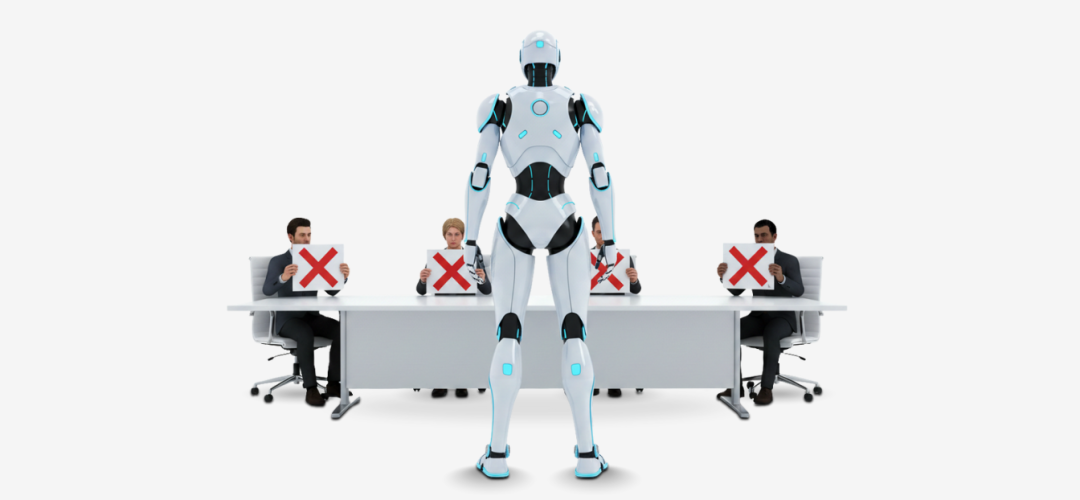
Recent demonstrations of AI-generated films, campaigns, and creative systems reveal a striking reality: audiences are increasingly unable to distinguish between AI-generated and human-made content. Visual realism, cinematic polish, and stylistic sophistication are no longer reliable markers of craft. The technical ceiling has effectively collapsed.
As that happens, the criteria for evaluating creative work shift. People stop asking how it was made and begin responding purely to how it feels. Does it resonate? Does it feel culturally aware? Does it carry emotional weight? Does it sound like a brand with a point of view, or like a machine trained on everything and committed to nothing?
In this environment, the “masterpiece” loses its scarcity because a beautiful execution is no longer exceptional. What becomes rare instead is coherence, intentionality, and depth. Meaning, not output, becomes the new luxury.
The Real Prompt is Not a Sentence, But a Strategy
Public discourse around AI creativity still tends to focus on prompting, as though mastery lies in technical phrasing. In reality, the quality of output is shaped far earlier in the process. In that scenario, the most powerful prompts are not clever instructions, but the product of clear thinking.
Strong outputs come from brands that understand their identity, boundaries, worldview, and narrative over time. Without that foundation, AI does what it is designed to do: generate competent, generic, aesthetically pleasing material that blends seamlessly into the wider noise.
As tools grow more capable, the human role does not diminish; rather, it becomes more demanding. Judgment, taste, and narrative direction grow in importance because machines can now execute almost any direction they are given. The critical question becomes whether the direction itself is meaningful.
Democratization Will Not Create Equal Outcomes
As AI becomes more embedded into everyday devices and workflows, access to powerful creative tools will continue to expand. Production capabilities once reserved for specialized studios are increasingly available to individuals with a laptop or phone. This is often described as democratization, and in many ways it is.
However, equal access does not lead to equal outcomes. The brands that thrive will not be the ones who generate the most content, but the ones who maintain discipline as volume explodes. Without strong narrative systems and editorial guardrails, acceleration turns into erosion, voice fragments, identity blurs, and trust weakens.
The technology does not protect coherence; humans must.
The Return of the Storyteller
The paradox of this moment is that the more advanced the tools become, the more timeless the core requirement feels. We are returning to fundamentals: story, perspective, meaning, and intention.
AI can generate scripts, images, videos, and campaigns at scale and remix, extend, and localize them endlessly. But it cannot independently decide what deserves to exist. And most importantly, it cannot have an original purpose, feel cultural tension, or actually care. That responsibility remains human.
In a landscape where everyone can generate anything, the brands that will endure are not the ones with the most sophisticated tools. They are the ones with the clearest sense of self. Because when execution becomes infinite, clarity becomes power. And when content becomes abundant, the best story still wins.