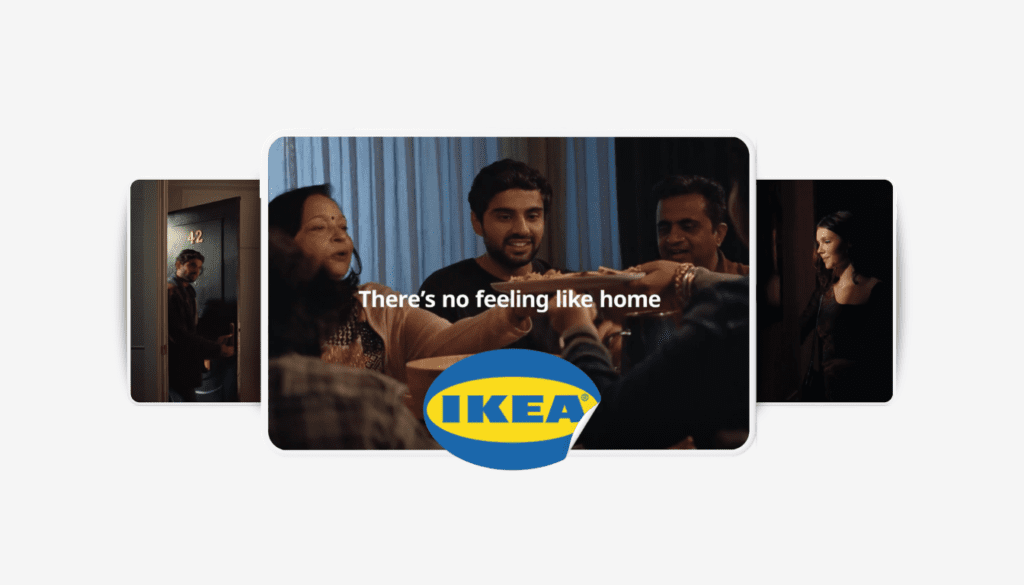


For a decade, holiday advertising chased novelty with cinematic stunts, purpose-driven manifestos, and frothy social-first experiments that felt more at home on For You Pages than on TV screens. Yet this year, an entirely different force has taken over the season as advertisers are orchestrating a full-scale return to traditional holiday storytelling, complete with nostalgic aesthetics, moral fables, reunion arcs, and cosy domestic settings.
The result is one of the most emotionally consistent holiday seasons in years. But beneath the warm lighting and tartan-heavy aesthetics lies a more complicated truth: tradition has become the most strategic, data-backed response to a generation overwhelmed by chaos, craving stability, and looking for cues that feel familiar enough to trust, yet contemporary enough to share.
Comfort as a Cultural Reset
The resurgence of classic holiday tropes didn’t emerge from creative nostalgia alone. It grew from a cultural climate defined by uncertainty, digital fatigue, and a longing for something analog, even if only in aesthetic form.
Platforms have reported that Gen Z and millennials are planning earlier, celebrating more “micro-occasions,” and seeking emotional rituals that feel steady amid volatility. The explosion of trends like the “Ralph Lauren Christmas” aesthetic—lodges, fireplaces, velvet bows, maximalist tables—revealed a cross-generational craving for emotional safety and classic atmosphere, a desire for environments that signal comfort and warmth even in hyper-modern lives.
Advertisers recognised that the most effective holiday story isn’t the most original; it’s actually the ones that feel like they’ve always existed.
Retail and Grocery Rediscover the Magic Formula
Nowhere is the return to tradition more visible than in supermarkets and big-box retailers, where the season’s biggest campaigns play like short films rooted in familiar rhythms, combining saving the day, restoring the magic, and reuniting the family.
In addition, animated mascots continue to anchor epic quests that culminate in tables groaning with food. At the same time, storybooks, fairy-tale structures, and classic TV references transport viewers into worlds where the stakes are simple, the humour lands gently, and the retailer becomes the quiet hero behind holiday harmony.
Even when these ads feature high-energy soundtracks or modern humour, the storytelling’s architecture remains unmistakably traditional. Successful brands won’t be reinventing Christmas; they will be reasserting its emotional reliability.
Tech and Mobility Bring Tradition into the Modern Living Room
Even the least “festive” categories are reviving classic Christmas arcs. In tech and mobility, the dominant storyline revolves around reconnection, with themes of coming home, making amends, and restoring relationships. In that scenario, a quiet car ride becomes the emotional bridge to a long-awaited reunion, and a planning platform transforms into a digital version of the old holiday magazine, serving as the place where meals, outfits, and décor are imagined weeks in advance.
Streaming platforms have deepened this narrative shift. With holiday viewing increasingly dominated by nostalgic films and seasonal specials, advertisers are leaning into longer-form storytelling that fits seamlessly into living-room viewing. The rise of streaming as an ad destination has made classic narrative, the kind built for a couch, not a phone, culturally relevant again.
Celebrities, Humor and IP: The Modern Filters That Make Tradition Work
The pivot toward traditional aesthetics risks feeling conservative or outdated, but brands have found three powerful tools to modernise the classics without diluting their emotional core.
Celebrity casting is the first. Familiar, cross-generational figures, such as comedians, musicians, actors, and influencers, act as cultural anchors, signaling that the traditional setting is intentional, self-aware, and modern. They make nostalgia feel playful rather than regressive.
Humour is the second filter. Whether it’s a carrot staging a heist or a self-deprecating narrator guiding viewers through a chaotic holiday moment, comedy helps audiences embrace tradition without feeling trapped in it. It’s the wink that says: “We know you’ve seen this before—but this time, we’re having fun with it.”
Iconic IP and mascots serve as the third. Characters from children’s books, animated universes, or brand lore provide instant emotional shorthand, condensing decades of cultural memory into a single frame. They make the traditional legible fast, and shareable faster.
Tradition, Reimagined for a New Era
This season’s embrace of traditional holiday storytelling doesn’t represent a return to the past as much as a recalibration of what the present demands. In an environment where attention is fragmented, trust is low, and digital noise is relentless, classic narratives offer grounding. They give brands a stable emotional framework, one that can be layered with modern humour, diverse casting, internet culture, and performance-driven media.
Far from retreating into sepia-toned nostalgia, advertisers are using tradition as an adaptable canvas. It’s a foundation that everyone recognises, yet flexible enough to host new voices, new faces, and new cultural meanings. The holiday ads of this year feel familiar, but never stagnant. They are collectively asking a new question: what does tradition look like when it belongs to everyone?