
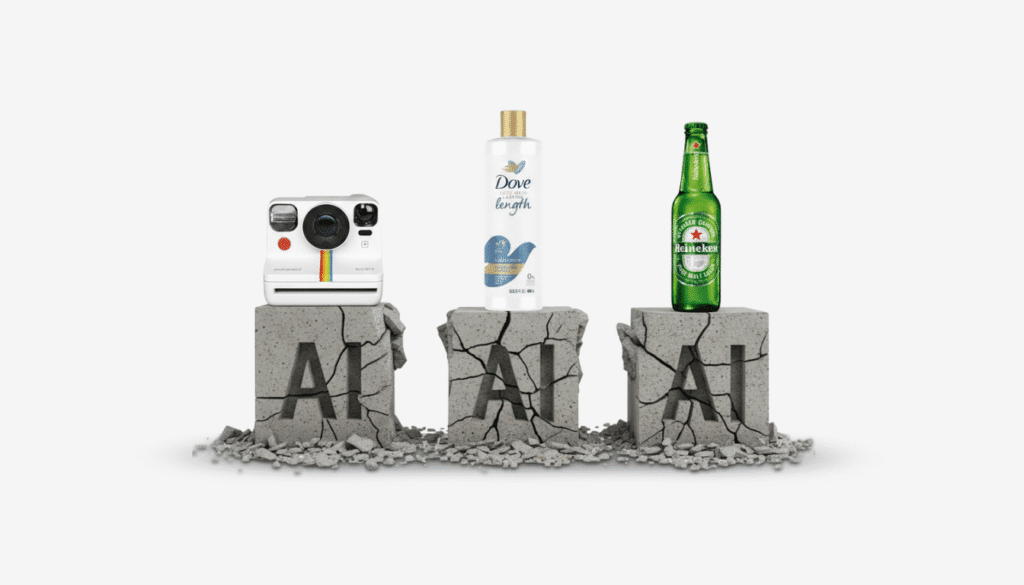
In an era when brands race to experiment with generative tools, a quieter, more defiant trend is unfolding. Instead of feeding prompts to algorithms, some of the world’s biggest marketers are looking back, celebrating human imperfection, analog experiences, and emotional truth. Some examples include Polaroid’s cheeky subway posters and Dove’s Real Beauty pledge, building an anti-AI wave that is less nostalgia than strategy, reclaiming authenticity at a time when trust in technology is faltering.
The Rise of the Analog Rebellion
Polaroid lit the spark early in 2025 with a campaign across New York City that mocked Big Tech’s obsession with generative everything. The brand’s minimalist posters, stamped with lines like “AI can’t generate sand between your toes”, reminded passersby that some sensations can’t be rendered, bringing the message about analog emotion beating artificial creation.
Soon after, Aerie, the lifestyle and intimates label under American Eagle, pledged to use only real people, meaning no AI-generated bodies and no synthetic faces in its advertising. The post announcing the move became the brand’s most-liked Instagram content of the year, driven by Gen Z consumers who have grown wary of the flawless, unrealized world dominating their feeds.
Even Heineken, never shy about humor, joined the rebellion with a campaign that reframed its beer as a symbol of real connection, with the message “Real friends. Real beer.” The brand’s outdoor ads playfully contrasted the warmth of shared nights out with the sterile image of AI-made companionship.
Why Brands Are Turning Back to Humans
This is not just creative nostalgia, as surveys from the Pew Research Center reveal that roughly half of Americans now feel more concerned than excited about AI’s growing role in daily life. Advertising, long obsessed with emotion and relatability, has become a flashpoint for that tension. While AI tools like Midjourney and Sora can generate imagery at lightning speed, many viewers find their output cold, repetitive, and eerily perfect.
In that scenario, brands should be taking note. For instance, Cadbury leaned into the debate with its tongue-in-cheek “Make AI Mediocre Again” campaign, celebrating human flaws and spontaneity. The chocolate maker turned imperfection into personality, contrasting messy creativity with machine logic. Meanwhile, Dove renewed its Real Beauty commitment by promising never to use AI-generated women in ads, tying the stance directly to its two-decade mission of challenging unrealistic standards.
These decisions tap into the powerful cultural undercurrent that consumers will always crave honesty. In an age of deepfakes and hyper-filtered perfection, showing the “real” has become a radical act.
Authenticity as Strategy
For marketers, rejecting AI is no longer a rejection of innovation; instead, it is actually a repositioning of values. When Aerie says “real people only,” or Dove declares its images “human-made,” the brands aren’t anti-tech; they’re pro-trust. They understand that emotional connection, not algorithmic polish, drives recall and loyalty.
Following this logic, the data support it. Campaigns built around human authenticity tend to outperform synthetic visuals in engagement and favorability. Aerie’s pledge resonated with its community because it wasn’t just a promise; it was proof of listening. Heineken’s humor struck a chord because it turned an everyday social truth into a cultural wink.
Even Polaroid, a brand literally founded on analog emotion, found new relevance by defending the tactile in a digital world. By doing so, these brands advertised humanity itself.
The Human Touch as a Luxury
The irony is that “human-made” is becoming the new premium label. As AI content floods timelines, imperfection now signals craftsmanship, care, and credibility. Just as handmade products once defined luxury, handmade creativity may soon define brand value.
The brands leading this movement have realized that consumers don’t reject technology outright; they reject the feeling of being fooled by it. By staying transparent and preserving a human core, marketers are giving audiences what algorithms can’t replicate — empathy, warmth, and story.
This “keep it real” era isn’t about abandoning progress; it’s about redefining it. The most forward-thinking brands aren’t anti-AI; they’re pro-human by using restraint as a creative statement and imperfection as a differentiator.
Whether this countertrend lasts or evolves alongside new tools, one thing is clear: authenticity has never been more marketable. In a world of infinite content, the rarest commodity might be the human touch.