
While much of the luxury sector navigates slower growth, shifting consumer sentiment, and a more cautious spending environment among aspirational shoppers, Miu Miu stands out as a striking exception. As competitors struggle, Miu Miu advances at a pace that few established fashion houses have managed to replicate in recent years.
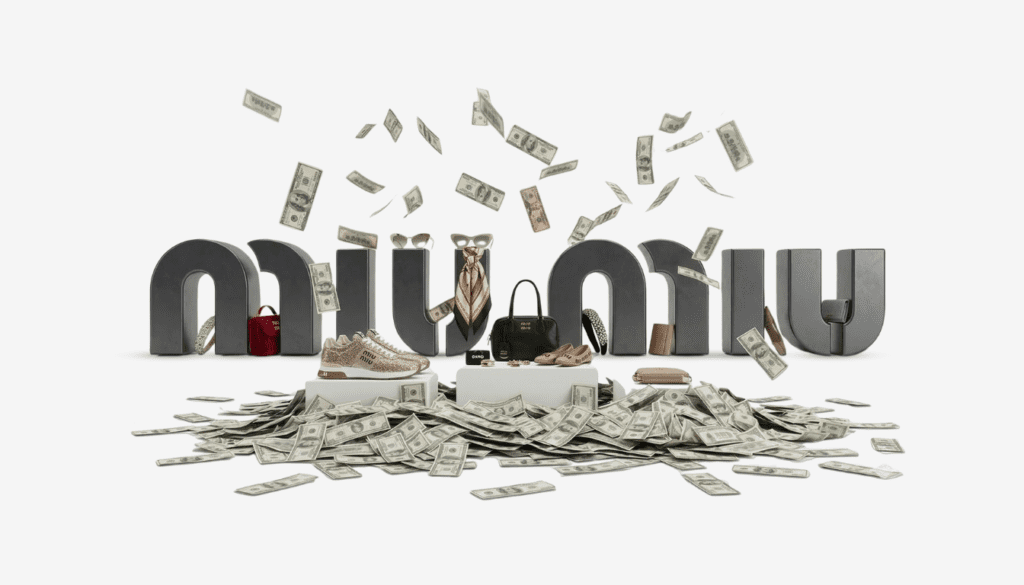
The Italian label surpassed €1.5 billion in sales in 2025, propelled by a remarkable 35 percent increase over the previous year and extending a momentum that has steadily transformed the brand’s commercial trajectory. Over the past five years, revenue has expanded by more than 450 percent, a rate of growth rare in the luxury sector, where growth typically unfolds gradually and often mirrors broader economic cycles.
This acceleration has not only elevated Miu Miu’s financial performance but also reshaped its position within the Prada Group. As recently as 2021, the label accounted for roughly 12 percent of the group’s sales, reinforcing its long-standing perception as the playful, slightly irreverent counterpart to Prada. Today, however, the brand accounts for more than 30 percent of the group’s revenue, underscoring how dramatically its cultural and commercial relevance has expanded in a relatively short period.
When Styling Becomes Strategy
The transformation of Miu Miu cannot be explained solely through sales figures or seasonal collections; rather, it reflects a deeper shift in the visual and cultural language surrounding the brand. That evolution accelerated when stylist Lotta Volkova began shaping the brand’s runway presentations, introducing an aesthetic that felt intentionally unconventional and unmistakably aligned with contemporary youth culture.
Instead of reinforcing the traditional codes that have long defined luxury fashion—polished elegance, immaculate tailoring, and timeless restraint—the brand began exploring a visual vocabulary that felt more experimental and slightly disruptive. Silhouettes appeared deliberately imperfect, proportions were exaggerated, and layering became part of a narrative that suggested spontaneity rather than refinement.
This styling language struck a chord with a generation that remixes fashion references. Runway looks, once just editorial inspiration, are now widely shared on social media. Items like the micro-mini skirts and playful layering quickly became cultural signals for young fashion fans.
In this context, styling effectively became a strategic marketing force, transforming runway moments into digital phenomena that extended far beyond the confines of the fashion calendar.
Luxury Aspiration Without the Price Barrier
The enthusiasm surrounding Miu Miu among younger consumers naturally raises a practical question: how can individuals in their early twenties engage with a brand known for runway pieces that can cost $10,000 or more?
In luxury, high-priced runway garments act as symbols for creative vision. They shape the brand’s identity and aspirational aura. At the same time, a wider range of accessible products lets more people join in that identity.
In Miu Miu’s case, the elaborate jackets and statement pieces on the runway help define the brand’s aesthetic universe. At the same time, younger consumers often engage through items such as loafers, accessories, or poplin shirts priced under $1,000, which remain firmly within the luxury category but are considerably more attainable than the headline runway pieces.
This structure keeps the brand exclusive while growing a global community of aspirational consumers. These fans amplify Miu Miu’s cultural influence online.
The Power of Cultural Timing
Beyond product strategy and pricing architecture, Miu Miu’s extraordinary momentum also reflects a broader transformation in the luxury landscape. Historically, prestige within the sector was largely defined by heritage, craftsmanship, and long-established reputations. Today, however, cultural relevance has become an increasingly powerful determinant of success.
Brands that align with the sensibilities and aesthetics of younger generations often experience a disproportionate surge in visibility and demand. In this regard, Miu Miu appears to have captured a particularly precise cultural moment, combining bold design with a styling language that feels authentic to a generation raised within digital culture.
The brand’s success is not only about popular products. It’s about a clear aesthetic that people want to be part of. Fashion becomes less about owning garments and more about being part of a larger cultural identity.
A Lesson for the Luxury Industry
As the luxury sector evolves, industry observers ask how long Miu Miu’s growth will last. Fashion history shows cultural momentum is fleeting. Tastes can change as fast as they appear.
Yet even if the pace of growth eventually moderates, the brand’s recent ascent already offers a revealing lesson for the broader industry. In an era defined by digital culture and generational identity, the brands that thrive are often those capable of translating cultural signals into design, styling, and storytelling that feel genuinely connected to their audiences.
For Miu Miu, this alignment changed it from a secondary label to a major force in fashion. Its rise shows that, today, capturing youth culture can matter as much as having decades of heritage.