
Over the past decade, advertising has used AI mainly as a productivity tool—a smart assistant that helps with copywriting, creative work, targeting, and automating bids —while still relying on marketers to make key decisions. People have managed campaigns by checking dashboards, reading performance data, and making many manual choices about budgets, audiences, and creative direction. TikTok’s latest announcement suggests the company thinks this hands-on era is starting to change.
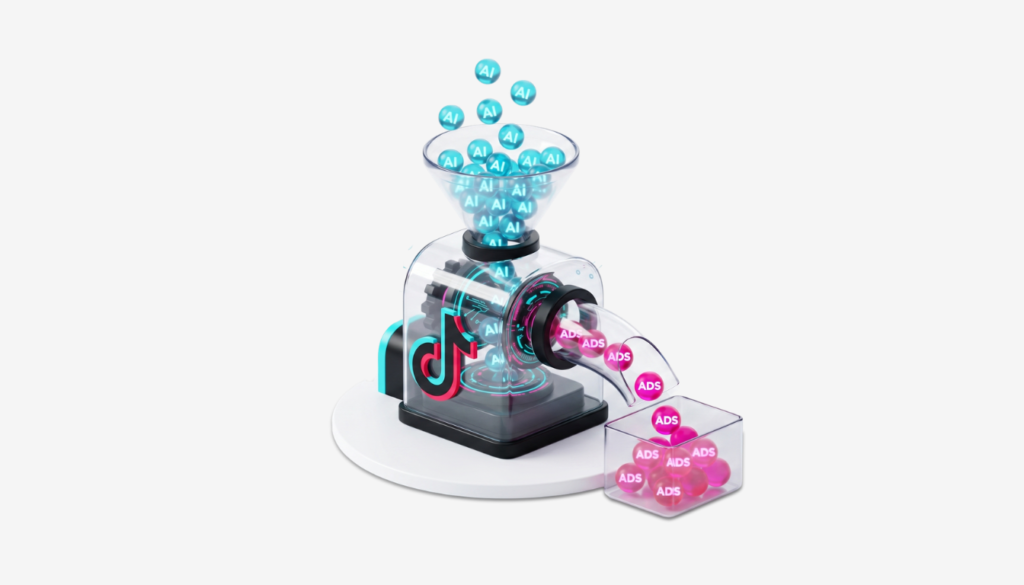
At TikTok World, the company’s annual event for advertisers, TikTok announced it will allow third-party AI agents into its ad system. This means autonomous systems can now help develop, optimize, and manage campaigns directly. While this might seem like a technical update for developers, it’s actually a bigger shift. TikTok is building an advertising setup that can run more independently.
The key to this change is the new Model Context Protocol server, or MCP. This system lets outside AI tools connect directly to TikTok’s ad platform. Now, brands and agencies can use their own AI tools or third-party agents to handle tasks that once required whole teams of media buyers, strategists, and marketers.
The implications are difficult to overstate. Rather than entering Ads Manager to configure campaigns, allocate budgets, and constantly monitor performance, marketers may increasingly assign broader business goals to AI systems and allow them to orchestrate the mechanics behind execution. A simple request to improve conversions for a specific consumer segment, prioritize high-performing creator content, or dynamically adjust spend based on shifting performance signals could trigger a continuous cycle of testing, optimization, and adaptation, all with minimal human intervention.
If previous waves of marketing automation promised efficiency, TikTok’s latest move suggests something far more ambitious: a future in which advertising itself becomes increasingly autonomous.
The Shift From Assistance to Autonomy
TikTok’s announcement marks a real shift in how AI is used in marketing. AI is moving from just supporting marketers to actually making decisions, which could change how campaigns are managed.
The first wave of AI in advertising mostly added to what marketers could do. It helped them work faster, create more ad versions, understand performance data, and manage complex workflows, but people still made the key decisions. AI sped things up, but didn’t replace human control.
TikTok, however, appears to be betting that the next chapter belongs to AI, not as an assistant, but as an operator.
This shift reflects a broader reality already unfolding within digital advertising. Media buying has gradually become one of the most automated disciplines in marketing, shaped by algorithmic bidding systems, machine-learning optimization, and increasingly autonomous campaign products across major platforms. Yet despite this automation, marketers continue to wrestle with overwhelming operational demands, from managing endless creative permutations and audience fragmentation to navigating increasingly volatile performance patterns in real time.
Autonomous AI agents are uniquely positioned to solve for that complexity because they are designed not merely to analyze information, but to act. Autonomous AI agents can help solve these challenges because they don’t just analyze data—they act on it continuously. They learn from results, adjust strategies on the fly, and make decisions much faster and at a larger scale than people can. The smartest systems, not the biggest teams.
An Open Ecosystem That Quietly Reinforces the Walls
However, TikTok’s open approach also brings a strategic contradiction. At first glance, allowing third-party AI agents to connect to TikTok suggests a more open and flexible future, unlike the tightly controlled ad platforms of the past. Brands can now use their own AI systems within TikTok, giving them more options and control over their advertising.
In reality, this step makes TikTok’s ecosystem even stronger and boosts its competitive edge. As more AI agents learn from TikTok’s unique data, audience habits, and creative trends, these systems become even more valuable within TikTok. Over time, advertisers may rely not just on TikTok’s audience but also on the smart systems built into the platform, making it harder to shift their budgets elsewhere without losing performance.
TikTok is changing from just a media channel into something more strategic—an intelligence environment. In this space, advertising knowledge builds up over time, and success depends as much on smart systems as on content or audience. By bringing in outside developers, TikTok might actually gain even more control over its own ecosystem.
A New Competitive Race in Advertising
TikTok’s goals are part of a broader shift in digital advertising, where competition between platforms is changing in important new ways.
For years, platforms competed on targeting accuracy, audience size, and measurement tools, trying to show they could deliver better results and returns. Now, the focus is shifting to a new question: which platform is best set up for autonomous intelligence? Across the industry, platforms are investing more in AI-driven advertising. Meta is increasing automation and creative tools, while Google is using more machine learning to enable marketers to make independent decisions.
TikTok’s announcement shows that the next stage of competition may not be about who has the best data, but about which platform offers the smartest and easiest environment for AI agents to work in.
This change could have a big impact on advertisers. In a future led by autonomous systems, marketers may choose platforms not just for their audience, but for how well their AI works. In other words, dashboards may be replaced by operating systems.
The Reinvention of Agency Value
Agencies may feel this change more than anyone else, since their traditional services have relied on managing campaigns, optimizing, reporting, and adjusting budgets and creative work over time. As AI agents handle more of the execution, agencies will need to rethink how they add value in a world where automation is the norm.
But this doesn’t mean agencies will be less important. In fact, their role could become more strategic. Instead of just running campaigns, agencies might focus on designing workflows, training AI systems, setting up decision-making processes, and ensuring automation aligns with the brand’s goals. After all, even with efficient AI, machines still lack human judgment.
AI agents might find the fastest way to drive conversions, but efficiency doesn’t guarantee a strong brand, cultural relevance, or emotional impact. If a system focuses only on short-term results, it could undermine the brand’s long-term value or miss important context.
In this new environment, marketers might spend less time running campaigns and more time deciding where automation should start and stop, and what success really means.
The Future of Advertising May Feel More Like a Conversation
Perhaps the clearest signal embedded in TikTok’s announcement is not simply about AI, but about the interface through which marketing itself may increasingly be experienced.
For years, advertising has been managed through dashboards, spreadsheets, and lots of manual decisions. But as AI agents get better at understanding goals and running campaigns autonomously, media buying may shift away from manual interfaces toward systems based on conversation.
Instead of logging into different platforms and setting up campaigns by hand, marketers might start telling systems what they want through prompts and goals. The AI would then handle tasks such as selecting the best audiences, reallocating budgets, and automatically updating creative work. In this future, the key skill may not be using ad dashboards, but knowing how to guide AI systems effectively.
TikTok’s latest move shows the company thinks this shift is coming sooner than many marketers expect. If that’s true, the winners in advertising may not be the brands with the biggest budgets or teams, but those who build the smartest systems to adapt and optimize for them. For an industry that has spent years obsessing over efficiency, the most disruptive possibility may be that marketers themselves are no longer the ones doing most of the optimizing.