
For much of the past decade, the story of marketing technology has been told through expansion. Brands added platforms to manage email, customer data, analytics, loyalty, paid media, personalization, commerce, content, social media, automation, and, more recently, artificial intelligence, each promising to solve a specific operational problem or unlock sharper customer engagement. Yet as the stack has grown, so has the realization that more technology does not automatically create more intelligence. In many cases, it has produced the opposite: a system with greater technical capacity but less coherence in how customers actually experience a brand.
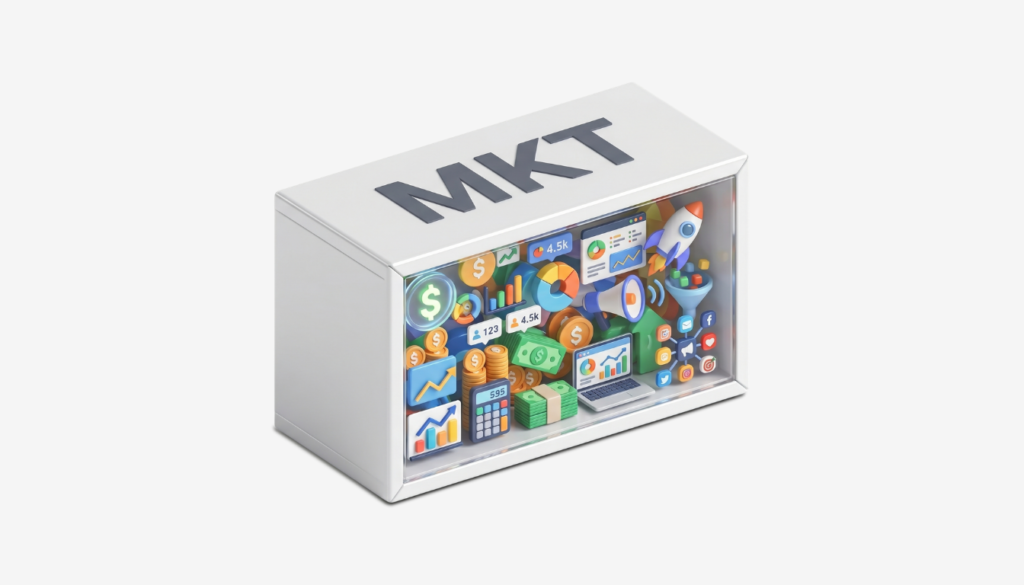
That tension is at the center of a new argument in marketing operations. A better stack doesn’t start with another tool. It starts with strengthening the decisioning layer between data and activation. This is the ‘middle’ of modern marketing—the often invisible layer where information turns into action. Here, fragmented signals become coordinated experiences, and the brand decides not only what to say, but what should happen next for a specific customer at a specific moment.
It is an increasingly important distinction because today’s marketers are no longer short on information or channels. They have more customer signals than ever, more platforms through which to act on them, and more AI-assisted capabilities to accelerate execution. What many still lack is the operational intelligence to connect those assets into a customer journey that feels consistent, contextual, and measurable. In that sense, the hidden engine of modern marketing is not the campaign customers see or the dashboard executives review. The decisioning core determines how all the moving parts should work together.
The Stack Got Bigger, But Not Always Smarter
The continued expansion of the marketing stack reflects real commercial pressure. Customers move fluidly across websites, apps, inboxes, stores, social feeds, marketplaces, loyalty programs, and service channels, and they rarely care which internal system is responsible for each interaction. To keep pace with that behavior, brands have continued to add tools to sharpen segmentation, accelerate activation, personalize communication, and improve measurement. Nearly 38% of brands have added 1 to 2 applications to their stack, while another 21% have added 3 to 5, suggesting that many organizations are still trying to address complexity by increasing capability.
The problem is that every new capability can create a new point of fragmentation. The email platform may know one version of the customer, the CRM another, the commerce system another, and the media platform yet another. Customer service may know recent frustrations. The personalization engine responds only to browsing behavior. From the inside, this seems like specialization. From the outside, it feels like an inconsistency.
This is how the “Frankenstack” experience emerges. A customer buys a product and continues to be retargeted with the same item. A loyal subscriber receives an acquisition offer meant for strangers. A customer who has just contacted support gets a cheerful promotional email that ignores the unresolved issue. These failures do not usually happen because the brand lacks data. They happen because the data is not governed by a shared decision-making system that can interpret context, prioritize actions, and determine what should happen next.
The result is a marketing operation that can be technically sophisticated while still emotionally clumsy. It has the tools to know more, but not always the structure to respond better. And in a market where consumers are increasingly sensitive to irrelevant, intrusive, or repetitive communication, that gap is becoming harder to ignore.
The Middle Layer Becomes the Real Strategy
The reason the middle layer matters is that it is where customer knowledge becomes customer action. It connects data, business rules, predictive models, eligibility logic, channel preferences, privacy constraints, timing, measurement, and commercial priorities into a single decisioning environment. When it works properly, it does not simply help a brand decide who belongs in a segment. It helps determine whether a message should be sent at all, which channel should carry it, what offer should be prioritized, what context should shape the interaction, and how success should be judged.
That represents a meaningful departure from the traditional campaign-first model. For years, marketing often began with a message, a product push, or a promotional calendar, then sought out the audience most likely to respond. A stronger decisioning core reverses that logic. It begins with the customer’s context and determines the best course of action from there, allowing marketing to move from fixed campaigns to responsive journeys that adapt as people behave.
This shift is especially important because customers do not experience brands in neatly separated campaigns. They experience them as a sequence of interactions, some commercial, some informational, some service-related, and some entirely passive. A click, a purchase, a complaint, a lapsed subscription, an abandoned cart, a loyalty milestone, or a product view can all change what the next best interaction should be. Without a strong middle layer, those signals may remain trapped inside separate platforms. With one, they can become part of a coordinated decision about the relationship.
In that environment, personalization goes beyond using a first name, changing a product recommendation, or swapping creative based on a past click. It becomes a discipline of arbitration. A customer may qualify for a discount, a loyalty message, a service update, and a cross-sell at the same time, but a brand that sends all of them is not being relevant; it is simply being busy. The middle layer decides which action matters most, weighing not only the likelihood of conversion but also customer value, margin, fatigue, timing, consent, inventory, and long-term relationship health.
That is where modern marketing begins to look less like message distribution and more like decision design.
AI Raises the Stakes
Artificial intelligence makes this middle layer more urgent because it dramatically increases the speed and scale at which marketing can operate. AI can generate content, identify patterns, build segments, analyze performance, optimize journeys, recommend actions, and automate workflows at a pace that would have been impossible for most teams only a few years ago. Its share of marketing activity has risen nearly 85% over the past two years, underscoring how quickly the discipline is moving from manual execution toward machine-assisted decision-making.
Yet AI also exposes the weakness of fragmented systems. When artificial intelligence is layered onto a stack without a strong orchestration core, it can simply produce more of what was already broken: more content, more triggers, more micro-segments, more automated campaigns, and more opportunities to overwhelm customers. In that scenario, the organization becomes faster, but not necessarily wiser. It can generate personalized-looking messages without creating genuinely relevant experiences.
That distinction matters because customers are already learning to recognize the difference between useful personalization and algorithmic excess. A recommendation that arrives at the right moment can feel helpful. An ad that follows someone too closely can feel invasive. A service message that reflects recent behavior can build trust. A promotional campaign that ignores the customer’s actual situation can make the brand feel careless. AI does not resolve that tension on its own. In some cases, it intensifies it.
This is why the decisioning layer is becoming one of the most important places to unlock AI’s real marketing value. AI is most powerful when it is not merely used to produce more assets or accelerate old workflows, but to help decide which experience should happen next. It can identify churn risk before it becomes visible, predict intent, adjust offers, suppress irrelevant messages, recommend the next best action, and surface patterns that human teams might miss. But these capabilities only become strategically useful when they are connected to a system that can govern them across channels, align them with business priorities, and measure whether they actually improve outcomes.
In other words, AI may be the accelerator, but the middle layer is the steering system. Without it, the brand may move faster in the wrong direction. Take action now: evaluate your marketing stack’s decisioning layer to ensure your organization stays on course and delivers meaningful customer experiences.
From Data Activation to Customer Relevance
The continued investment in database strategies shows that brands understand the importance of the foundation. More than half of organizations are increasing spending in this area, reflecting the belief that better data is essential to better marketing. That belief is correct, but incomplete. A cleaner database, a more unified profile, or a more robust customer data platform can help a company see the customer more clearly, but seeing more clearly is not the same as acting more intelligently.
This is the point at which many marketing organizations still struggle. They can collect behavioral signals, but cannot respond quickly enough. They can build segments, but cannot update them dynamically as behavior changes. They can personalize one channel but fail to coordinate that personalization across the wider journey. They can report on individual campaign performance but struggle to connect that performance to lifetime value, retention, margin, or customer satisfaction.
The gap between knowing and doing has become one of modern marketing’s most consequential bottlenecks. Brands have invested heavily in the ability to observe the customer, but the next competitive edge comes from the ability to respond with judgment. That means not only deciding what to send, but also when to hold back, when to prioritize service over sales, when to protect margin rather than offer a discount, and when a customer’s most recent behavior should override the campaign calendar.
A stronger middle layer helps close that gap by making marketing more responsive. Instead of relying entirely on batch campaigns planned weeks in advance, brands can build journeys that evolve as customers behave. A new subscriber can be moved into onboarding rather than acquisition. A high-value customer can be protected from unnecessary discounting. A cart abandoner can receive a different experience depending on margin, inventory, loyalty status, and predicted intent. A customer showing signs of churn can be routed toward reassurance, service, or value reinforcement before the relationship weakens.
These may sound like tactical improvements, but together they represent a broader shift in marketing’s role. The discipline becomes less about pushing campaigns into channels and more about managing the quality of the customer relationship across touchpoints. The brand no longer treats every interaction as an isolated opportunity to convert. It begins to treat each one as part of a longer, measurable conversation.
The ROI Is in Simplification, Not Just Personalization
The business case for the middle layer is often framed around personalization, but its value may be just as powerful in simplification. As stacks expand, teams can become trapped inside overlapping tools, duplicated workflows, inconsistent audience definitions, and conflicting performance metrics. One system optimizes for clicks, another for conversions, another for engagement, and another for retention. Each may be doing its job, but the overall experience can still become inefficient, expensive, and difficult to measure.
A stronger decisioning core creates a way to coordinate those competing systems around a clearer set of priorities. It can help prevent audience conflicts, reduce redundant messaging, manage frequency, connect measurement, and ensure that automated actions support broader business goals rather than isolated channel metrics. It can also make AI more accountable by anchoring automated decisions in a defined strategy, rather than allowing experimentation to spread across the stack without a shared operating logic.
This matters because marketers are under increasing pressure to prove return on investment. The next phase of martech will not be judged by how many tools a company owns, how many AI features it has adopted, or how many channels it can activate. It will be judged by whether those capabilities work together to improve growth, retention, efficiency, and customer trust.
That is a harder standard, but also a healthier one. It shifts the focus from technology accumulation to technology performance. The best stack is not necessarily the biggest stack. It is the one that helps the organization make better decisions faster, with fewer contradictions and clearer evidence of impact.
The Hidden Engine of Modern Marketing
The irony of the middle layer is that customers will never see it directly. They will not know which orchestration engine selected a message, which predictive model scored their intent, which rule suppressed an irrelevant offer, or which system connected their service history to their next interaction. They will only feel the result. They will feel whether the brand seems to understand them, whether it remembers what just happened, whether it respects their context, and whether the next interaction makes sense.
That feeling is becoming one of marketing’s most valuable competitive advantages. In a crowded digital environment, relevance is not created by volume. It is created by timing, context, consistency, and restraint. The brands that know when to speak, when to sell, when to help, and when to stay out of the way will build stronger relationships than those that simply automate more communication.
As marketing stacks continue to expand and AI becomes embedded in more of the workflow, the companies that win will not necessarily be those with the most tools or the most ambitious automation roadmaps. They will be the ones with the strongest core, capable of turning data into decisions, decisions into experiences, and experiences into measurable growth.
That power may be hidden in the middle, but it is quickly becoming the part of the stack that matters most.