
A Fast Finish to a Slow Season
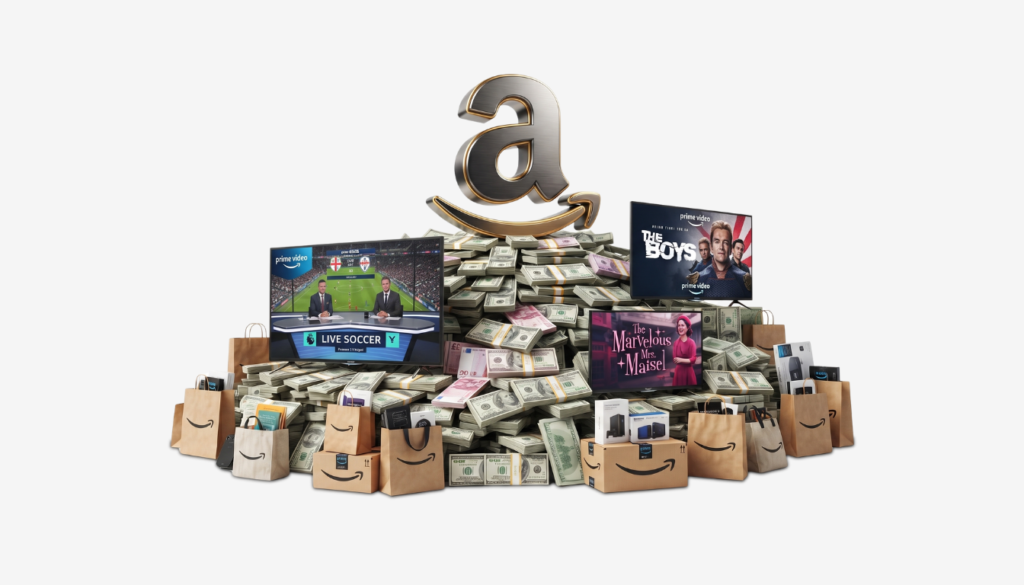
Amazon has crossed the upfront finish line, becoming the second major presenter of this year’s upfront week to close its negotiations, after Fox. According to Alan Moss, vice president of ad sales at Amazon Ads, the company wrapped talks with all major holding companies for the 2026–27 season, exceeded its volume goals, and sustained year-over-year growth from both new and existing advertisers. In a market where deals often drag deep into the summer as buyers and sellers spar over pricing and guarantees, an early close carries a signal of its own. It suggests advertisers were willing to commit budget rather than wait, and that Amazon had enough leverage to hold its terms.
The Programming That Drove Demand
Moss attributes the demand to the breadth of Amazon’s portfolio rather than a single tentpole. Live sports did much of the heavy lifting, with Thursday Night Football, NBA on Prime, and NASCAR anchoring the pitch. Prime Video’s entertainment slate added scale through titles such as The Greatest and The Lord of the Rings: The Rings of Power, while a run of young-adult properties, including The Summer I Turned Pretty film, Off Campus, Overcompensating, and the Legally Blonde prequel Elle, gave advertisers a direct line to younger viewers. That mix matters because it lets a single seller promise both mass reach through sports and culturally specific audiences through scripted and young-adult programming, without forcing buyers to assemble that combination across multiple partners.
The Full-Funnel Argument
The more consequential part of Moss’s statement is strategic. He framed the growth as a reflection of advertiser confidence in Amazon’s full-funnel advertising solutions and what he called deterministic audience reach. The phrasing is deliberate. Deterministic reach points to Amazon’s ability to tie viewership to real purchase and browsing behavior across its retail and streaming footprint, rather than relying on modeled or probabilistic estimates. For advertisers under pressure to show that television spending moves product, the promise of connecting an impression during a Thursday-night game to a downstream purchase is the pitch that closes deals. It also explains why the same infrastructure powering shoppable entertainment partnerships, like the L’Oréal work inside Elle, sits at the center of Amazon’s ad story.
What It Signals for the Ad Market
For marketers, Amazon’s early close is a useful barometer. It indicates that budgets for premium video are holding rather than collapsing, and that demand is concentrating around platforms able to fuse content, commerce, and measurement in one place. The risk for the broader market is consolidation. As a handful of sellers pair large audiences with retail data, smaller media owners without a commerce layer may find it harder to compete on the outcomes advertisers now expect. Buyers should read the moment as confirmation that full-funnel capability, not raw reach alone, is becoming the price of entry. The question for the rest of upfront season is whether traditional networks can make a comparable case before the money is spent.