
The Numbers That Justified the Bet
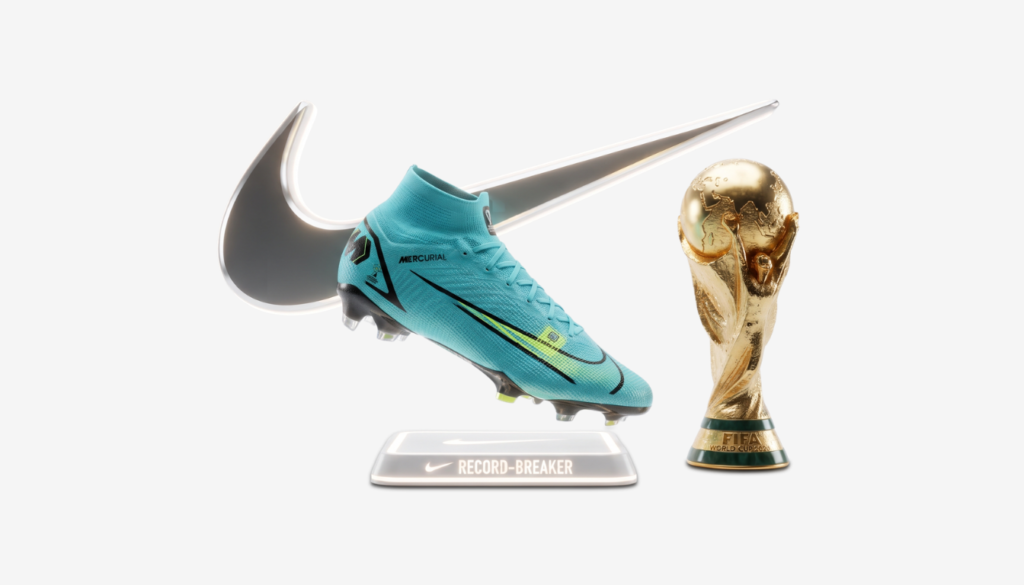
Elliott Hill arrived at Nike’s Q4 fiscal 2026 earnings call with something he hadn’t been able to bring to recent calls: evidence. By the first week of the World Cup, Nike had accumulated 1.5 billion views of its various campaign stories. Kit sales through the early tournament period were running 2.5 times ahead of the equivalent period during the 2022 Qatar World Cup. The Mercurial boot launch before the tournament became the fastest-selling 24-hour launch for cleated footwear in the history of Nike Direct. And the Rip The Script film had generated the kind of cultural conversation that the brand’s performance marketing numbers for the prior two years had emphatically not produced.
“What feels different this time around,” Hill told analysts, “is we’re not treating the tournament as a single moment or using it to reshape our business. Telling a connected story over time, engaging different communities in relevant ways, and building momentum that carries well beyond the tournament.” The 12-week campaign architecture was designed from the beginning not as a tournament activation but as a commercial and cultural platform: one that would use the World Cup as its most intense moment of energy and then extend that energy into the months that follow. The House of Merc in New York, Estadio Niky’s in Los Angeles, and the Roof at Vanta in Dallas were built to function as ongoing commercial infrastructure, not temporary event spaces.
The Sport Offense Beyond Football
The strategic architecture Hill described places football within a broader framework he explicitly wants to extend across the company. The Sport Offense, which reorganizes Nike’s entire operation around sport-specific teams combining product, marketing, and marketplace capabilities, is now moving from football as its first and most visible proof point into a wider set of categories. “We expect growth to expand beyond running into training, basketball, and ACG,” Hill said, while noting that progress will continue to be uneven. Running had already shown meaningful momentum. Training, tennis, golf, and outdoor were all cited as sports where the Sport Offense architecture is generating early energy.
The Serena Williams Radical Air appearance, cited by Hill as an example of performance product beginning to cross into sportswear, illustrates how the logic is intended to compound. A performance shoe worn by one of the world’s most recognizable athletes at a major event generates cultural visibility that lifts the adjacent lifestyle product. The performance credibility of the sport category becomes a brand asset for the lifestyle category. It is, in theory, a flywheel the Sport Offense is designed to accelerate.
The Honest Reckoning the Call Also Contained
Hill did not allow the World Cup numbers to obscure the difficulty that remains. “Results aren’t there yet,” he said at the opening of the call, a phrase that carries particular weight from a CEO eight months into a turnaround. Nike Sportswear and Jordan Streetwear, representing approximately half of Nike’s total revenue, continue to face weak sell-through and challenged order books. The brand has removed $2 billion of classic franchise product from the market in fiscal 2026, a necessary inventory correction that creates a revenue headwind even as it rebuilds scarcity and desire over time. Converse logged a 35% revenue decline in the most recent quarter. Greater China remains structurally difficult.
The Tournament as Catalyst, Not Destination
The clearest articulation of Nike’s post-World Cup plan came from Hill in language that translates marketing strategy into commercial logic: “We’re utilizing the World Cup as an opportunity to catalyze the football marketplace for quarters to come.” A catalyst accelerates a reaction already underway. The World Cup is not Nike’s recovery; it is the event that makes the recovery visible and creates the commercial conditions for subsequent quarters to build on. The specific question that will define whether that logic holds is whether the World Cup’s energy can be sustained through a product portfolio and retail activation that extends its relevance past July 19, through the fall fashion cycle and into the early months of fiscal 2027. Every element of the Sport Offense built around the 2026 World Cup was designed with that extension in mind. Whether the design survives contact with post-tournament consumer reality will be the story of the next two earnings calls.