
The 2026 FIFA World Cup captured more than $10 billion in global ad spend, according to WARC Media estimates, on top of the $2.8 billion FIFA collected from its 20 official sponsors. Add the dozens of non-sponsor brands that joined for free, and the tournament became six weeks of extraordinary noise fighting for the same six billion potential viewers. The question every CMO now faces from the C-suite is simple. Did the marketing break through and drive commercial results?
The brands that answered yes shared a set of habits. Drawing on analysis from marketing strategist Pio Schunker, co-founder of the consultancy The Actionists and a former global marketing leader at Samsung and Coca-Cola, five lessons separate the breakthroughs from the spots that blended in.
Build for the long tail, not just the peak
Most World Cup advertisers planned a six-week run and stopped. Adidas built differently. Its Backyard Legends work, launched with a five-minute film starring Timothée Chalamet, was the latest chapter of a You Got This platform running since the 2024 Paris Olympics. It was preceded by product drops with Bad Bunny and Messi in early 2026 and followed by pop-ups inside Nordstrom, a retail push timed to a Messi hat-trick, and fan experiences across five host cities.
The payoff was commercial, not just cultural. On its April 2026 earnings call, Adidas reported roughly $292 million in World Cup product sales before kickoff, with revenue up 7% to €6.6 billion. The tournament became fuel for the company’s entire year rather than a standalone spike. The lesson is to start the drip months before the tentpole and integrate retail, product, app, and content from the outset so the campaign keeps working after the event ends.
Find the story no one else is telling
Many brands leaned into the same message of communal joy and love of the game. The tournament, meanwhile, was telling a sharper story that few tapped: the underdog against Goliath. Cabo Verde, a nation of 500,000 ranked 67th, held Spain scoreless and took Argentina to extra time before falling. Spain and Argentina overcame the odds against France and England, and Spain ultimately beat the defending champions for the title. That is what the internet talked about.
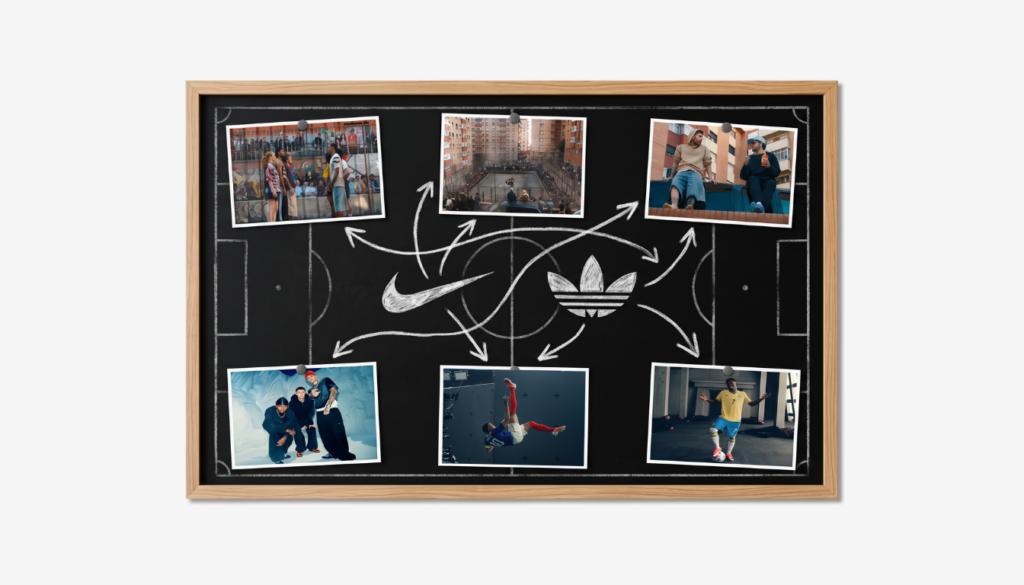
Nike’s Rip the Script platform was broad enough to embrace the drama, but it did not celebrate what the world was discussing as it happened. The lesson is to build a platform flexible enough to pivot from pre-produced content to on-the-field surprises, so a brand stays relevant through the tournament and beyond.
Audit your talent before your rivals rent it
Using celebrities to make the game accessible was another familiar playbook, and it curdled into sameness. Everyone cast the same eight stars. Beckham appeared in ads for more than ten sponsors. Messi showed up in nearly a quarter of tournament spots. It became hard to know which brand featured which player. YouGov found that roughly 40% of U.S. World Cup followers noticed sponsors, but noticing and attributing are different things, and shared casting erodes brand recognition.
The lesson is operational. Brands can avoid drowning in celebrity sameness by extending their category conflict clauses to adjacent categories and by standing up social listening tools that track share of voice by talent. Distinctiveness has to be protected contractually, not assumed.
Make the brand inseparable from the story
The strongest work made the product and the event impossible to pull apart. Brahma Beer’s World Cup ad channeled the sheer joy of Brazil and its cultural pride in football while keeping the product central to the storyline. Weaker work could have belonged to any brand in the category. The test is blunt. Could you swap your product for a rival’s without changing the ad? If so, the product is a prop, not a proposition.
This is where a lot of expensive World Cup creative failed. Beautiful films that celebrated soccer in general did little for the specific brand paying for them. The discipline of tying the narrative to something only your brand can own is what turns attention into preference.
Start a conversation, do not broadcast
Reaching Gen Z and Millennials requires two-way dialogue, and many brands missed it. One standout came from an underrated medium: packaging. Café Bustelo’s Game Face campaign shipped more than one million cans designed by hyper-local artists across Mexico, Brazil, Argentina, and Colombia, paired with temporary face-tattoo kits. The tattoos went viral as people used them to promote their flag, their country, their team, and the product in a single gesture.
The lesson is to hand the audience something to participate in rather than a message to absorb. Younger consumers reward brands that give them a role in the story.
The through-line
The five lessons converge on one idea. Scale and spend did not decide who won the World Cup marketing battle. Planning horizon, cultural awareness, casting discipline, brand centrality, and participation did. The brands that treated the tournament as a moment inside a longer strategy, rather than a six-week window to be maximized, are the ones now reporting results their CFOs can see. For marketers preparing for the next global stage, the brief writes itself.