

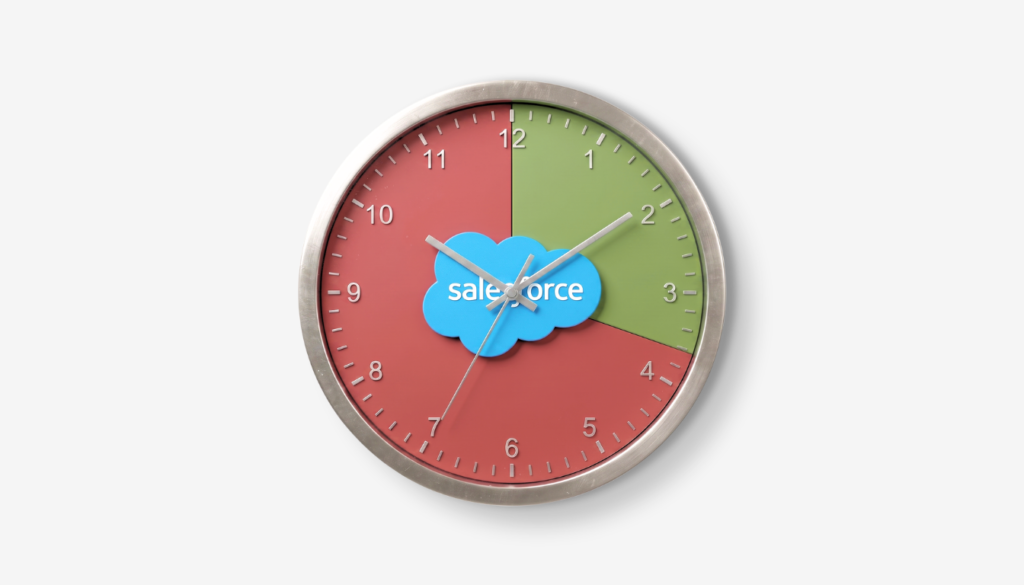
The selling-time problem
Advertising sales teams are being asked to move faster, personalize more and prove outcomes across audiences and revenue models that keep fragmenting, and they are trying to do it with less time to actually sell. A new Salesforce report, the media and entertainment edition of its State of Sales study, puts a number on the strain: sellers spend about 71% of the average week on work other than selling, leaving under a third of their time for advertiser strategy, cross-platform packaging and the relationship building that closes complex deals.
That imbalance is the core finding, and it reframes a familiar complaint as a measurable drag on revenue. Every hour lost to administrative overhead, manual data entry and internal coordination is an hour not spent understanding an advertiser’s business. As the report notes, the media companies that fix this stand to turn operational friction into a competitive advantage rather than a constant tax.
The fragmentation behind the numbers
The pressure did not appear overnight. Media audiences have splintered across streaming, social, retail media and a widening field of connected-TV platforms, and each new surface arrives with its own buying model, measurement standard and set of expectations. A seller who once packaged a handful of properties now has to assemble and explain campaigns that span formats and pricing schemes that did not exist a few years ago. Buyers, for their part, have grown more demanding, asking for personalization and provable outcomes rather than reach alone. The result is a job that has expanded in complexity while the hours available to do it have not, which is the context that makes the 71% figure sting.
AI agents arrive in the workflow
The remedy the report foregrounds is artificial intelligence, and adoption is already well underway. Among media sales organizations, 64% say they use AI agents, 95% believe the technology improves their odds of hitting sales targets, and 85% say it lifts productivity. The pattern tracks with Salesforce’s broader survey of more than 4,000 sales professionals, in which 87% of organizations report deploying AI agents across the sales cycle, and sellers who work alongside AI tools describe themselves as far likelier to make quota.
The appeal is time recovered. AI agents are being pointed at the non-selling work that consumes the week: researching prospects, drafting outreach, assembling proposals and pulling reporting. Salesforce’s data suggests those tasks can be compressed substantially, handing sellers back the hours the same report says they lack. Adoption, however, is not the same as transformation. Agents that draft and research still need oversight, the data they rely on is only as good as the systems feeding them, and a seller freed from busywork still has to be redeployed toward higher-value work rather than simply handed a lighter load.
Pricing turns dynamic
The second shift is in how media is priced. The report finds 61% of companies now use usage-based pricing and the same share use hybrid models, a move away from flat, fixed commitments toward structures that flex with delivery and outcomes. For ad sales, that means deals are no longer set once and forgotten; they adjust with performance, which raises the premium on connected revenue operations that can track and reconcile all of it.
Dynamic pricing rewards organizations whose data, deals and delivery sit in one coordinated system, and it punishes those where each lives in a separate silo. A usage-based agreement is only as reliable as the plumbing that measures usage, which is why the report ties pricing evolution so tightly to operational maturity.
What it means for the industry
For sellers, the message is that the job is being rebuilt around judgment rather than administration. The routine work is migrating to software, and the value a seller adds is shifting toward strategy, consulting and the parts of a relationship a machine cannot replicate. That is an opportunity for those who adapt and a threat to those who define their role by the tasks now being automated.
For the buy side, leaner and better-equipped sellers should mean sharper, more consultative conversations and faster turnarounds, though buyers will want to watch how usage-based pricing changes the economics of what they commit to. One caveat belongs on the whole picture. The study is Salesforce’s own, and Salesforce sells the customer-relationship and AI tools it recommends, so the enthusiasm for AI agents and connected operations should be read with that interest in mind. The underlying pressures the report describes, fragmenting audiences, demanding buyers and shrinking selling time, are visible across the industry regardless of who is measuring them. The prescription deserves the skepticism any vendor’s research invites; the diagnosis is harder to argue with.