
A Burger Chain Declares a Beverage War
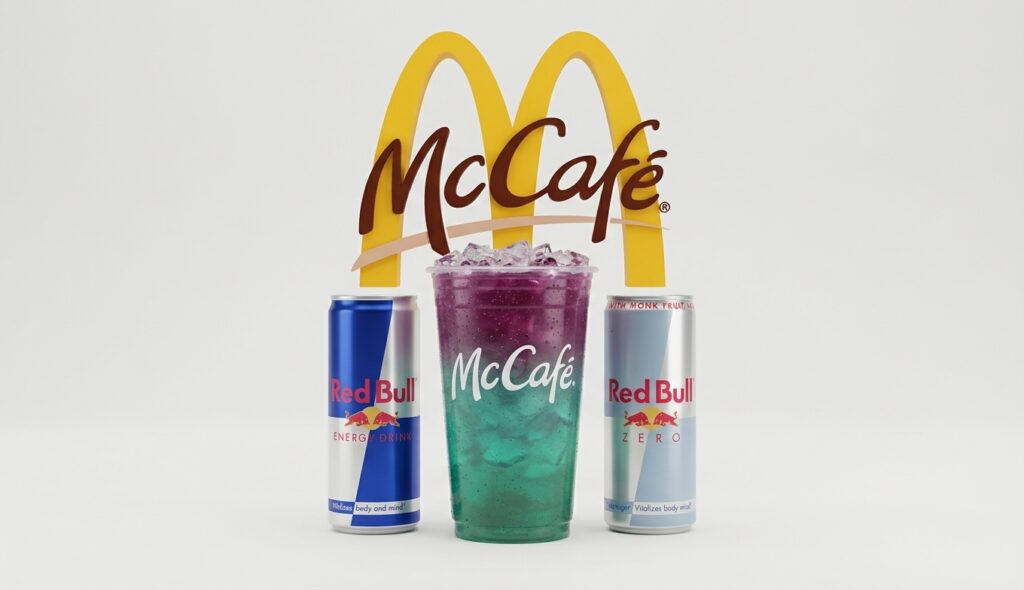
McDonald’s USA has entered the energy-drink business with the Red Bull Dragonberry Energizer, a mix of Red Bull, blue raspberry syrup and freeze-dried dragonfruit, offered with a lower-sugar Red Bull Zero option or as a standalone can. The launch is one piece of what the company calls a new era of beverages, an expansion of McCafe that also brings a Dirty Dr Pepper and a Mango Pineapple Refresher to the main menu. The drinks are aimed squarely at younger customers and priced below Starbucks, Dutch Bros and Sonic, a signal that McDonald’s intends to compete on value in a category built on premium positioning.
The Hundred-Billion-Dollar Logic
The ambition is explicit. Chief executive Chris Kempczinski has framed specialty beverages as a $100 billion global opportunity, and the appeal is easy to see. Drinks carry high margins, invite customization, and pull incremental traffic during slow afternoon hours when few people want a burger. McDonald’s did not arrive at this cold. It ran a roughly 500-restaurant test across Wisconsin and Colorado in the summer of 2025, featuring drinks inspired by its shuttered CosMc’s spinoff, and used the results to validate a national push. The failed standalone concept became a research lab, and its lessons are now being folded back into the core menu at a scale CosMc’s could never have reached.
Why the Timing Works
The move follows the market. Cold drinks have become the growth engine of the category, and Starbucks now generates more than two-thirds of its beverage sales from cold formats, while Dutch Bros has surged on customizable, energy-forward concoctions that court Gen Z. Dirty sodas and fruit-charged energy refreshers have moved from regional curiosities to national trends. McDonald’s brings two advantages its rivals cannot match, a footprint heading toward 50,000 restaurants by 2027 and the everyday traffic to introduce a new drink to millions of people at once. Attacking a premium-coded category with scale and low prices is the same playbook that made McCafe a credible coffee business.
The Licensing Shortcut
Rather than build an energy brand from nothing, McDonald’s borrowed one. Anchoring its entry to Red Bull buys instant credibility with young consumers and skips the expensive, years-long work of establishing a new name in a trust-driven category. The tradeoff is control. Licensing means sharing margin and creative latitude with a partner and tying a signature drink to another company’s brand, which is the opposite of how Starbucks built an empire on beverages it owns outright. For a launch designed to move fast, borrowed equity is the pragmatic choice, but it leaves McDonald’s renting the differentiation rather than owning it.
What It Signals for the Category
The larger message is that beverages have become fast food’s central battleground for both traffic and margin, and a player of McDonald’s size can reshape the competitive map simply by showing up. The risks are operational. Customized drinks slow the line, and an already crowded menu grows more complex with every new refresher. Yet the strategic direction is unmistakable, as the drive-thru edges closer to becoming a drink shop with a grill attached. For marketers, the case worth studying is how a mass-market brand uses licensed intellectual property and aggressive pricing to force its way into a category that has long sold itself as a premium indulgence.