
Record Sales From a Football Summer
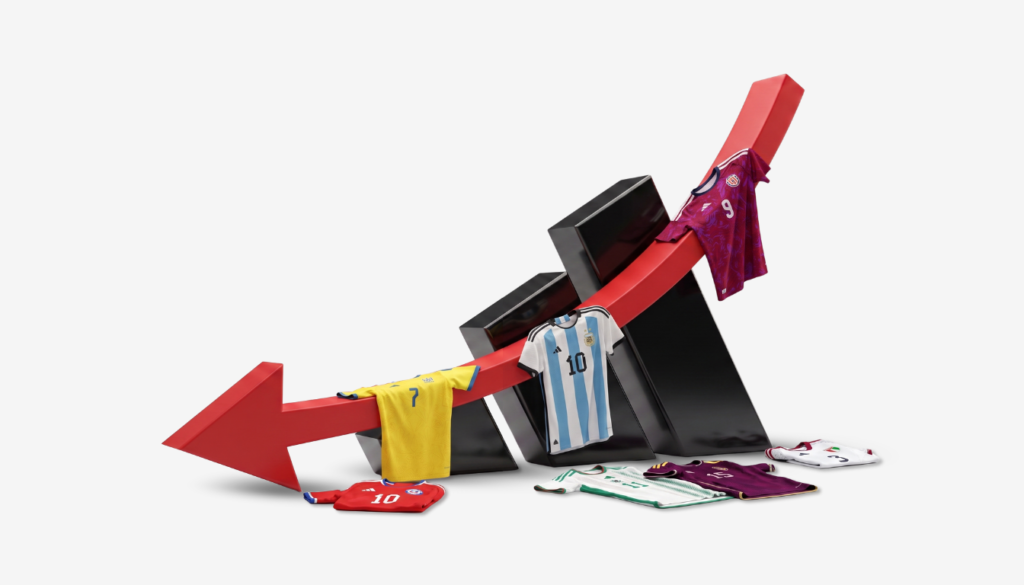
Adidas turned the 2026 World Cup into the best quarter in its history. The company reported record second-quarter net sales of €6.74 billion, up 14% on a currency-neutral basis and ahead of analyst expectations, with apparel sales climbing 35% year over year on the strength of World Cup kits. The tournament alone generated around €1.5 billion in related sales and more than 17 million jersey sales, four times the total from the 2022 edition. Adidas outfitted 14 competing national teams, including finalists Spain and Argentina, putting its three stripes on the shirts that defined the summer’s biggest sporting moment.
The Bill for the Spotlight
The marketing behind those numbers was vast. Adidas spent €924 million, roughly $1.06 billion, on marketing in the quarter, a 30% increase year over year, to power its World Cup push. The centerpiece, a campaign called Backyard Legends featuring Timothée Chalamet, Lionel Messi, Lamine Yamal, Jude Bellingham and Bad Bunny, drew more than 9 billion views and 400 million engagements across digital platforms. Yet the market did not celebrate. Earnings per share came in at €2.10 against a €2.38 forecast, and the stock fell about 16% as investors focused on the profit miss rather than the record top line. The quarter crystallized an old tension in marketing: the spending that builds a brand and drives sales often arrives well before the profit does, and public markets tend to punish the gap.
The Thin Margin on a Jersey Boom
The economics of the jersey boom are less generous than the volume suggests. Football kits carry heavy licensing and production costs, and much of the revenue is shared with federations and retailers, so a record in units does not translate cleanly into a record in profit. Reporting on the quarter highlighted how little of the tournament windfall reached the bottom line once those costs and the €924 million marketing bill were absorbed. That is the uncomfortable arithmetic of sponsorship at this scale, where the sales line and the profit line can move in opposite directions within the same three months.
The Ambush Problem
The most uncomfortable finding for Adidas came from a competitor that did not pay for a place at the tournament. Nike, which is not an official FIFA partner, was named as a sponsor by 32% of respondents in one survey, a striking result achieved through fashion and culture rather than official visibility, including collaborations with NOCTA and Jacquemus. Adidas did win the conversation on paper, taking a 58% share of brand-centric World Cup social discussion, but it paid a premium for ground a rival occupied for a fraction of the cost. The takeaway circulating among analysts was blunt: a brand no longer needs official sponsorship to own a cultural moment, only speed, creativity, and a credible claim to the culture around the event.
What a Sponsorship Has to Prove
This is where the Adidas quarter becomes a case study rather than a headline. Official sponsorship of a mega-event delivers guaranteed presence, on-shirt visibility, and a level of association that ambush marketing cannot fully replicate, and Adidas has clearly converted that into sales. The question is durability. Analysts at eMarketer framed the spend as an investment in long-term brand momentum rather than a one-quarter sugar high, and that framing only holds if the jersey buyers, the campaign viewers, and the cultural goodwill translate into sustained demand after the trophy is lifted. A World Cup can inflate a single quarter; the discipline is proving the lift outlasts it.
The Lesson for Brand Investment
For anyone deciding where to put a marketing budget, Adidas illustrates the trade at the heart of major sponsorships. The upside is real: record sales, global attention, and a defensible association with the sport it has always claimed. The cost is equally real: a margin hit the market registers immediately and a rival that can siphon credit without paying the entry fee. The right response is not to abandon sponsorship but to enter it with conviction and a long horizon, to measure success in brand equity and repeat demand rather than in the quarter the tournament happens to fall, and to build the cultural creativity that keeps official status from being undercut by a faster competitor. Adidas won the World Cup. Whether it wins the payback is a question the next several quarters, not this one, will answer.