
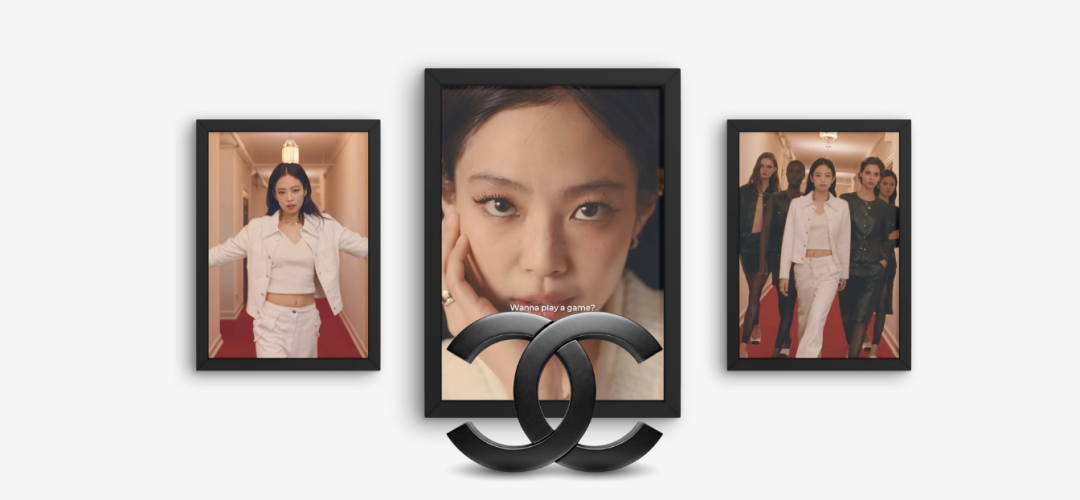
Chanel did not introduce the newest chapter of COCO CRUSH with the familiar choreography of a luxury campaign rollout. There were no sterile backdrops, no predictable press moments, no visual language borrowed from the archive. Instead, the house chose Château Marmont, a setting whose power lies not in architecture but in mythology, and by doing so, it subtly yet decisively shifted the narrative around fine jewelry away from lineage alone and toward something more elusive and far more valuable today: cultural presence.
For decades, Château Marmont has existed less as a hotel and more as a symbol. It is a place shaped by selective visibility, by stories that circulate precisely because they are never fully confirmed, by an aura built on discretion rather than spectacle. Chanel’s decision to anchor COCO CRUSH there is, therefore, not an aesthetic decision but a narrative one. The brand is translating the hotel’s cultural codes into jewelry, positioning the collection as something designed not for safekeeping or ceremony but for movement, for proximity, for environments where identity is performed rather than declared. The implication is unmistakable. COCO CRUSH is not jewelry for preservation. It is jewelry for life as it happens.
From Heritage to Presence, Without Abandoning Either
This shift lands with particular weight at a moment when heritage maisons are under increasing pressure to prove relevance without weakening legitimacy. COCO CRUSH already carries unmistakable Chanel DNA through its quilted motif and its proprietary BEIGE GOLD, yet design codes alone no longer guarantee cultural traction in an era where younger audiences value authenticity over symbolism and presence over pedigree. What revitalizes the collection is not a change in product, but a recalibration of meaning.
By transforming Château Marmont into both a stage and a narrative engine, Chanel reframes the value proposition. The worth of COCO CRUSH no longer lies solely in craftsmanship or house codes, but in the attitude it conveys, the confidence it inspires, and the cultural spaces it feels at home in. It becomes less about owning an object and more about inhabiting a point of view.
A Campaign that Behaves like a story, Not an Ad
That logic extends naturally into the campaign’s cinematic expression. The short film set within the hotel unfolds around movement, pursuit, and fleeting encounters, using corridors, thresholds, and private rooms not merely as scenery but as emotional architecture. Rather than presenting luxury as static perfection, the narrative mirrors how contemporary audiences experience desire itself, through fragments, glances, and moments that feel discovered rather than staged.
The casting strengthens this cultural positioning rather than distracting from it. By featuring figures who move fluidly across music, fashion, and youth culture, Chanel bridges its traditional luxury authority with a generation that places greater value on cultural fluency than on institutional prestige. The effect is subtle but powerful. The brand does not chase relevance; it situates itself inside it.
When the Launch Itself Becomes the Proof
What ultimately gives the campaign its coherence is the way format and message reinforce each other. The dinner staged at the hotel, the ritual of arrival and check-in, the sense of temporary takeover, and the continuity between real-world experience and campaign imagery all serve to collapse the distance between communication and lived moment. Guests were not simply attending a brand activation; they were stepping into the same narrative world the visuals portray.
This is experiential branding at its most mature. The event does not exist to decorate the campaign. It exists to validate it. The format becomes the argument. The environment becomes the evidence. COCO CRUSH does not just claim to belong to contemporary culture; it is seen operating inside it.
A New Model of Exclusivity Emerges
Beyond the immediate campaign, Chanel’s choice reveals a broader understanding of how luxury functions today. For decades, distance was the primary mechanism of desirability, with prestige reinforced through opacity and removal. Yet distance alone increasingly feels out of step with a culture that values proximity, access, and emotional connection.
What Chanel proposes instead is a more nuanced model of exclusivity: not mass accessibility, but selective intimacy. Château Marmont embodies this perfectly. It is globally recognized yet rigorously private, culturally saturated yet resistant to spectacle, aspirational yet grounded in real collective memory. By aligning COCO CRUSH with this atmosphere, Chanel argues that modern luxury is no longer defined only by what it has been, but by where, how, and with whom it meaningfully exists today.
Luxury No Longer Lives Only in Archives
The campaign ultimately operates less like traditional advertising and more like cultural positioning. Chanel suggests that luxury no longer resides exclusively in ateliers or archives, but in movement, in social environments, in the tension between private and public life, in moments that feel personally authored rather than inherited.
The house is not abandoning its heritage. It is doing something more sophisticated. It is allowing that heritage to circulate freely through contemporary culture rather than keeping it preserved behind glass.
By anchoring COCO CRUSH to the mythology of Château Marmont, Chanel is making a clear bet about the future of fine jewelry. Permanence will not come from reverence but from resonance. Relevance will not come from tradition alone but from cultural legitimacy. And value will increasingly be defined not by what is handed down, but by what feels chosen, lived, and claimed.