
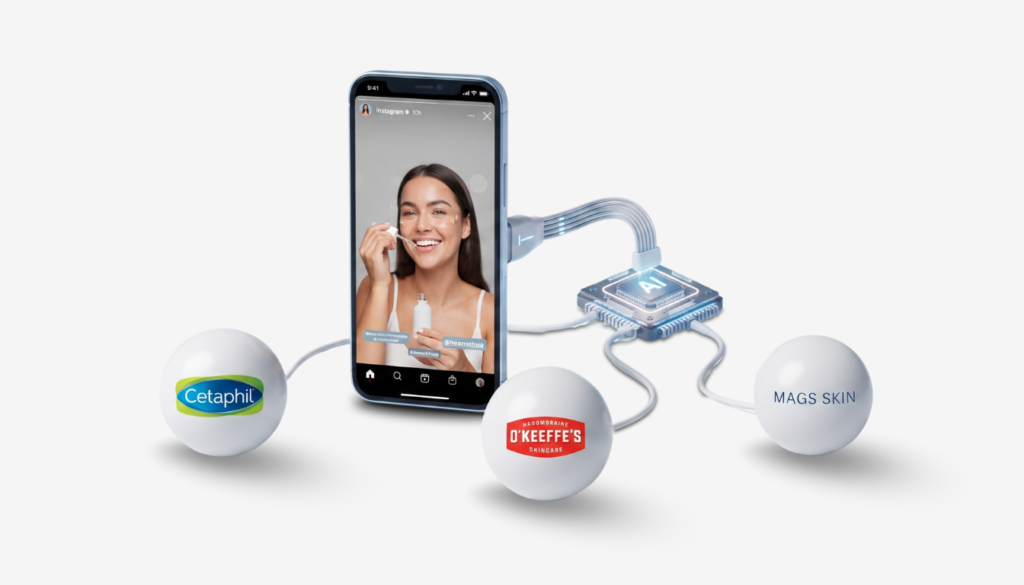
Andrew Polo was not trying to be found by an AI assistant. A fashion creator, he gave an interview last fall documenting his experience living with eczema. Months later, ChatGPT and Claude began surfacing him in response to prompts like “who are the top eczema creators” and “which content creators post about fashion and their experience with eczema.” Inbound brand inquiries climbed roughly 50 percent, with skincare companies including Cetaphil, Hypothesis, O’Keeffe’s, and MAGS Skin reaching out directly. His TikTok following ticked up in parallel. Polo had stumbled into a new distribution layer, one that no longer runs through a search bar or an agency.
The Assistant Becomes the Middleman
For a decade, creator discovery followed a familiar path. Brands ran influencer searches, filtered by follower count and engagement, and negotiated deals. Polo’s case scrambles that sequence. The introduction came from a machine that reads the open web, synthesizes patterns across articles, forums, and creator posts, and returns a shortlist of names when a user asks a conversational question. Neither the creator nor the brand initiated the match. The model did.
That shift matters because of where audiences now begin. A large share of consumers have moved a meaningful part of their product research into AI chat, asking assistants for recommendations they once typed into a search engine. Recent adoption data cited across the marketing industry puts the figure near 77 percent of US consumers using ChatGPT as a primary search tool. When purchase intent forms inside a conversation rather than on a product page, the brands and creators the assistant names hold an advantage that traditional ad spend cannot buy outright.
Optimizing for Answers, Not Rankings
The tactics emerging around this behavior have a name in marketing circles: generative engine optimization, the AI-era descendant of SEO. The logic differs from the old model. AI recommendation engines do not rank pages and reward backlinks. They construct answers by pulling from multiple credible sources within a category, favoring content that maps cleanly onto how people actually phrase their questions.
That reshapes how sharp creators write. Content that opens with a problem, “if you have struggled with eczema,” aligns with conversational queries far better than content that leads with a product announcement. Creators who anchor themselves to a specific use case or condition build what practitioners call category signal density. A brand associated with twenty creators discussing the role of ceramides in barrier repair generates a stronger recommendation signal than a brand with a hundred creators posting undifferentiated glow-up content. Specificity, not volume, is the currency the models reward.
What This Means for Brands
For marketing teams, Polo’s story is a preview of a discovery channel that is difficult to see and harder to measure. Direct attribution from an AI recommendation to a sale does not yet exist in any clean form. Brands are adapting with structured prompt audits, running category-relevant questions through ChatGPT, Perplexity, and Google’s AI Mode to monitor when and how their names surface. Tracking shifts in branded search volume and direct traffic alongside those audits offers a workable proxy while better tools mature.
The strategic implication is a reordering of budget logic. If a model is likely to recommend the creators and brands that appear most often in contextually relevant, problem-first content, then earning that presence becomes a content architecture decision made months in advance. The brands that structure creator partnerships around clear use cases today are shaping how AI represents them six to twelve months from now. The ones waiting for a dashboard to confirm the channel exists risk arriving after the recommendations have already calcified.
The Compliance Question Nobody Has Answered
The regulatory picture trails the practice, as it usually does. The FTC has not issued specific guidance on AI-mediated recommendations seeded through influencer programs, yet the underlying content still falls under existing endorsement and disclosure rules. A creator whose AI-surfaced post carries a paid relationship needs to disclose it, even when the assistant, not the creator, delivered the recommendation to the consumer. Brands leaning into this channel should document their content strategy, ensure every partnership carries appropriate disclosure, and watch for FTC updates as the framework catches up to a discovery model that did not exist when the current rules were written.
For creators, the opportunity is real and, for the moment, uncrowded. The ones who understand that they are now writing for two audiences, the human reader and the model summarizing them, will keep landing the inbound deals that find people like Polo without a pitch ever being sent.