
The Numbers That Changed the Argument
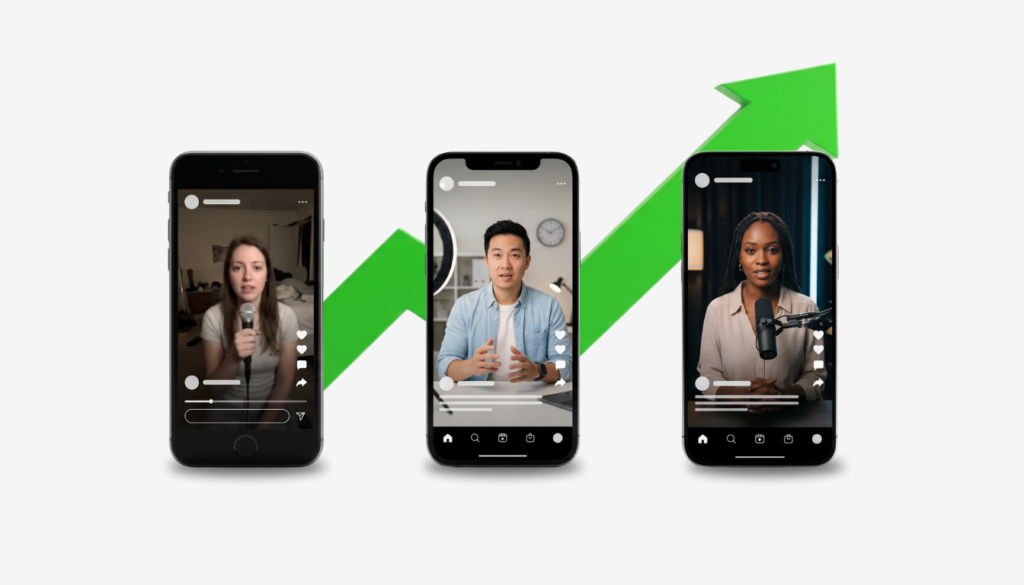
For years, influencer marketing occupied an uneasy position in the brand budget: too large to ignore, too difficult to measure, and too dependent on vanity metrics to justify the kind of investment that conventional media channels commanded. That argument has been systematically dismantled by the accumulated weight of scale and evidence. Creator marketing budgets rose 171% year-over-year, according to CreatorIQ’s most recent State of Creator Marketing report — with 71% of organizations reporting increases and nearly two-thirds of those pulling funds directly from traditional paid media. Enterprise-level brands now invest an average of $5.6 to $8.1 million annually in creator partnerships. Industry leaders average $7.8 million.
The commerce numbers are even more clarifying. TikTok Shop processed over $3.4 billion in beauty-related transactions in Q1 2026 alone — a 41% year-over-year increase that reflects not just a new retail channel but a structural transformation in how product discovery and purchase collapse into a single social interaction. The boundary between watching a creator recommend a product and buying that product is now, for a significant portion of consumers, measured in seconds and a single tap. Creator revenue across the industry will increase 16.2% in 2026 to $20.6 billion. Social media creator revenue is not a rounding error in the marketing budget. It is one of the most commercially significant forces in the global consumer economy.
What Maturity Actually Requires
The phase that the creator economy has entered is one that Ogilvy and other major agencies have begun calling the “era of efficacy” — a transition from experimental spend toward proven performance, from reach-based metrics toward genuine commercial accountability. For years, the primary barrier to creator marketing growth was budget. Today, the leading barriers are measurement (cited by 26% of brands as their top challenge), content velocity (21%), navigating AI (20%), and brand fit (20%). The industry has not run out of money to spend. It has run out of easy answers to the question of whether that money is working.
The implications for how brands approach creator partnerships are significant and still being absorbed. The era of paying a flat fee for a single Instagram post and counting impressions has not disappeared, but it is visibly fading as a primary investment model. Performance-based compensation — where creators are paid based on tangible outcomes such as sales, clicks, and sign-ups rather than a fixed rate for content delivery — is growing rapidly as brands demand the same accountability from creator spend that they have always demanded from search and social advertising. The shift transforms the brand-creator relationship from a transaction into a partnership, with shared stakes in the outcome. It also raises the bar for creator selection: a creator who generates high engagement but low conversion is, in a performance model, a worse partner than a smaller creator whose audience buys consistently.
The Micro-Influencer Correction
The data’s clearest finding — the one that has done most to reshape how sophisticated brands approach creator strategy — is the consistent outperformance of micro-influencers over celebrity and macro-influencer partnerships at the level of commercial outcome. Micro-influencers, typically defined as creators with between 10,000 and 100,000 followers, generate average engagement rates between 7% and 20%, compared to the 1 to 3% that characterizes most celebrity-tier accounts. More than 80% of marketers now explicitly state that micro-influencers are more effective at driving measurable business results than traditional celebrity endorsements.
The reason is not difficult to understand once the underlying logic is examined. A creator with 25,000 followers in a specific niche — sustainable skincare, independent coffee, urban cycling, Korean cooking — has built their audience through consistent, specific, genuine content that attracts exactly the people most interested in that topic. When they recommend a product, the recommendation lands within a community of pre-qualified buyers who trust the source. A celebrity with 25 million followers who posts the same recommendation delivers it to an audience whose relationship with the creator is primarily one of aspiration rather than trust, and whose interest in the specific product category is largely unknown. The numbers favor reach. The conversion data favors specificity.
This is the correction the creator economy’s maturation is forcing. The instinct to measure influencer marketing by follower count — to pay more for bigger audiences on the assumption that scale correlates with impact — turns out to be wrong in most categories and for most brand objectives. The brands that have absorbed this finding are building creator rosters that look very different from five years ago: more creators, smaller individual followings, tighter niche alignment, longer-term partnerships with documented performance history.
The Long-Term Partnership Imperative
The structural shift that the creator economy’s maturity demands is from transactional to relational — and the evidence for its commercial superiority is now sufficiently robust to have moved from marketing theory into standard industry practice. Long-term ambassador relationships, built around creators who genuinely use and believe in the products they represent and sustained across months or years rather than one-off activations, consistently outperform single-post campaigns on every metric that matters commercially: conversion rate, customer lifetime value, brand sentiment, and earned media amplification.
The mechanism is not complicated. A creator who has been working with a brand for 18 months has integrated that brand into their content in ways that feel natural to their audience, because it has become natural to them. Their followers have seen the product across many contexts, over time, and have developed their own relationship with it through the creator’s ongoing use. When a purchase decision arrives, the brand is already present in the consumer’s consideration set with a layer of community-validated credibility that no single sponsored post could create.
The creator economy has, in this sense, been teaching brands something that the oldest principles of marketing already knew: trust compounds over time, and the fastest way to build commercial relationships at scale is to invest in the human relationships through which trust travels. What is new is the infrastructure — the platforms, the measurement tools, the performance models — through which that principle can now be executed, tracked, and optimized at a scale that was not possible five years ago. The brands moving fastest in this environment are the ones that grasped both things simultaneously: that the principles are old, and that the tools to execute them have never been better.