
The Next Phase of the Advertising Machine
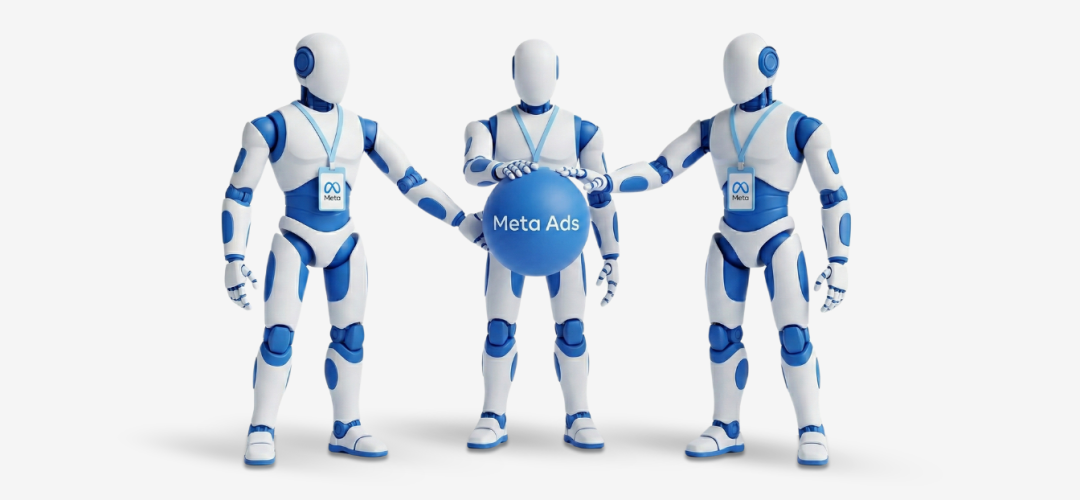
Meta Platforms is preparing one of the most consequential evolutions in the architecture of digital advertising, developing artificial intelligence tools that could transform how campaigns are created, deployed, and optimized across its platforms. According to reports about the company’s roadmap, the initiative aims to enable advertisers to generate entire campaigns with only a handful of inputs, allowing the platform’s AI systems to handle nearly every operational step that once required teams of specialists.
Under the proposed framework, advertisers would upload a product image, define a campaign objective, and determine a budget. At the same time, Meta’s artificial intelligence constructs the advertising campaign itself, producing visuals, writing copy, generating video variations, and determining how those creative assets should be distributed across Facebook and Instagram. Once deployed, the system would continuously analyze performance signals, dynamically refining creative elements, placements, and audience selection in real time as it learns which combinations generate the strongest engagement and conversion outcomes.
In effect, the process of building campaigns manually—once the central discipline of digital marketing—would give way to a model in which marketers articulate goals while algorithms manage execution.
From Assisted Tools to Autonomous Campaigns
This initiative represents the latest step in Meta’s broader transition toward an increasingly automated advertising infrastructure. Over the past several years, the company has steadily introduced artificial intelligence tools that assist advertisers in modifying existing campaigns, from generating alternative backgrounds for product images to suggesting multiple headline and caption variations to improve performance.
The next phase, however, moves beyond assistance and into full automation. Rather than refining creative assets that marketers already produced, Meta’s systems would generate those assets from the outset, assembling images, short-form video, copy, and calls to action as part of a single integrated campaign structure. At the same time, the platform’s algorithms would determine how best to allocate spending across different placements within the ecosystem, ensuring that each variation reaches the audiences most likely to respond.
This approach reflects a broader industry movement toward what many analysts describe as goal-based advertising, in which advertisers no longer design every element of a campaign manually but instead provide strategic inputs. At the same time, the platform translates them into optimized media execution.
Protecting the Engine of Meta’s Business
The strategic significance of this development becomes clearer when viewed in the context of Meta’s broader business model. Advertising remains the company’s financial engine, accounting for the overwhelming majority of its revenue and shaping nearly every strategic decision the platform makes regarding product development and technological investment.
With billions of users interacting across Facebook and Instagram each day, Meta already possesses one of the world’s most extensive datasets on consumer behavior and digital engagement. By embedding increasingly advanced artificial intelligence into its advertising infrastructure, the company can leverage that scale to predict which creative formats resonate most strongly with specific audiences and which combinations of visuals, messages, and placements ultimately translate into purchases.
For Meta, the logic behind automation is therefore both technical and economic. If artificial intelligence can improve campaign performance while simultaneously reducing the complexity of launching ads, the platform becomes more attractive to advertisers, and greater advertiser participation ultimately translates into higher advertising spend flowing through the system.
Lowering the Barrier to Entry
Beyond its implications for Meta’s internal strategy, the initiative could also reshape who participates in the digital advertising ecosystem. For many small businesses and independent entrepreneurs, launching an effective advertising campaign has historically required access to creative production resources, marketing expertise, and media planning capabilities that are not always readily available.
Designing compelling visuals, writing persuasive copy, and determining how to target audiences effectively can be both costly and time-consuming, often placing smaller brands at a disadvantage compared with larger companies that can rely on dedicated marketing teams.
If Meta’s AI tools deliver on their promise, however, those barriers could shrink considerably. A small brand with a single product image and a defined budget can launch a fully functional campaign within minutes, enabling emerging businesses to compete in the advertising marketplace with far fewer resources than previously required.
The acceleration of campaign creation also introduces a new level of agility into marketing operations, enabling brands to respond rapidly to cultural moments, product launches, or seasonal opportunities without the long production cycles that have traditionally shaped advertising timelines.
A New Role for Marketers and Agencies
At the same time, the emergence of fully automated advertising inevitably raises questions about how the roles of marketers, creative teams, and agencies may evolve in response to these technologies. If artificial intelligence systems are capable of generating visual assets, writing advertising copy, and optimizing targeting strategies autonomously, some of the operational responsibilities that once defined advertising work may gradually shift toward algorithmic systems.
Yet automation does not eliminate the need for human judgment or strategic thinking. While artificial intelligence can generate countless variations of creative assets and analyze enormous volumes of performance data, the underlying narrative of a brand—its positioning, its cultural relevance, and the emotional resonance it seeks to create with audiences—remains something that marketers must define.
Rather than displacing creativity, the expansion of AI may therefore reshape where creativity resides within the marketing process. Execution becomes increasingly automated, while human expertise moves further upstream into areas such as strategic direction, brand storytelling, and the conceptual frameworks that guide how companies communicate with consumers.
The Future of Platform-Driven Advertising
Meta’s ambitions reflect a broader transformation unfolding across the advertising industry, where campaign management is steadily evolving from a manual discipline into a system guided by predictive algorithms and automated optimization. Across digital platforms, marketers are gradually relinquishing granular control over targeting and creative distribution as machine learning systems assume greater responsibility for determining which messages reach which audiences.
If Meta successfully implements a fully autonomous advertising environment, the implications could extend well beyond its own platforms. Advertising may resemble an intelligent infrastructure in which brands define objectives and allocate budgets while artificial intelligence handles the complex mechanics of campaign creation, testing, and optimization.
For marketers, the shift suggests that the future of advertising may be less about constructing campaigns piece by piece and more about collaborating with systems capable of executing strategy at a scale and speed that no human team could replicate alone.