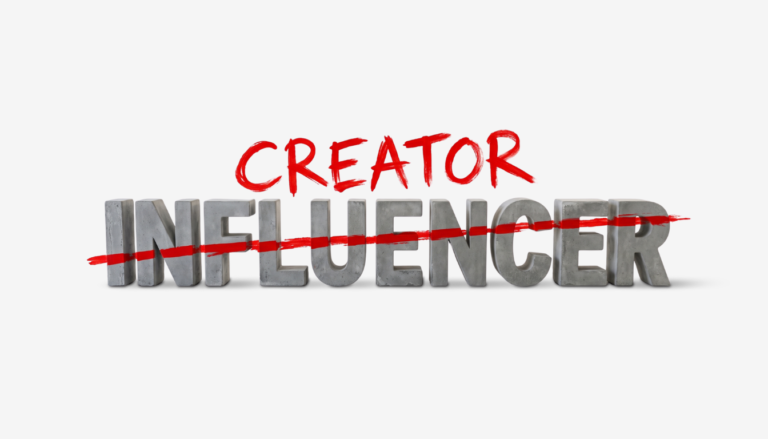

Influencer marketing operated within a comfortable ambiguity for a long time, where success was often inferred rather than definitively measured, and where reach, engagement, and cultural relevance served as the primary indicators of value, allowing brands to justify investments on the promise—rather than the proof—of impact. That ambiguity, however, is rapidly dissolving, as tighter budgets and rising expectations force a more disciplined approach, compelling marketers to confront a far more precise question than before: not who is being seen, but who is actually driving sales.
What has emerged from this shift is a growing recognition that visibility and effectiveness are not synonymous, and that the creators who command the most attention are not always those who generate the most meaningful business outcomes, a realization that is beginning to reshape both perception and practice across the industry.
The Tools That Changed the Game
This transformation has been accelerated by a new generation of measurement tools that have introduced a level of clarity previously absent from the space, enabling brands to trace the path from content exposure to purchase with greater accuracy and, in doing so, fundamentally altering how influencer marketing is understood and evaluated.
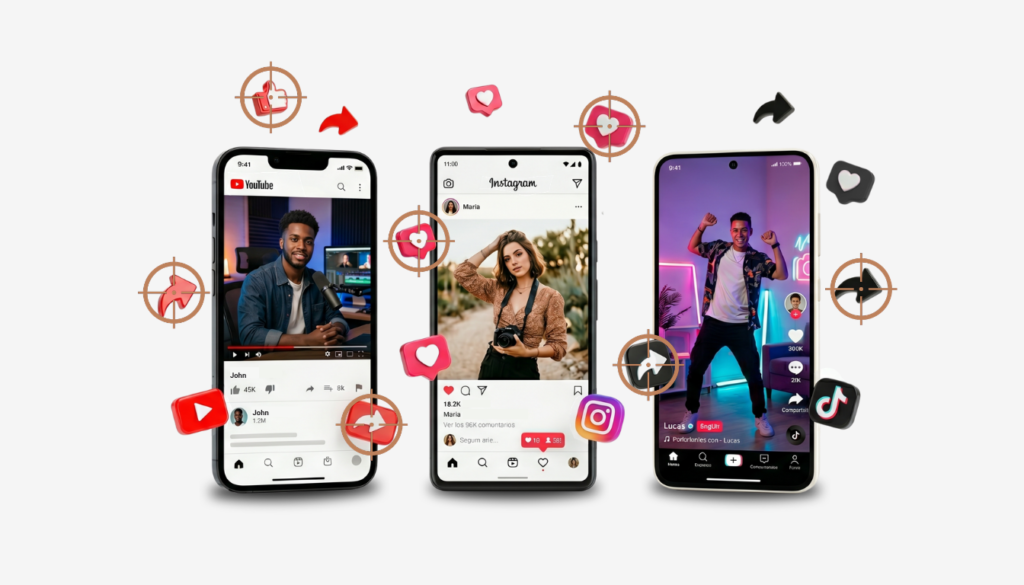
Through the widespread adoption of affiliate links, integrated shopping features, unique promotional codes, and more sophisticated attribution systems, what was once a largely opaque channel is becoming increasingly transparent, allowing marketers to compare creators not only by their ability to attract attention but by their capacity to convert that attention into measurable revenue, thereby repositioning creators as performance partners rather than purely cultural amplifiers.
As this infrastructure continues to mature, the distinction between perceived influence and actual impact is no longer subtle but stark, forcing brands to reconsider long-held assumptions about where value truly lies.
Why Visibility Doesn’t Equal Conversion
What these tools are revealing, perhaps most strikingly, is that scale alone is a poor predictor of performance, as larger creators—while capable of delivering significant reach—often engage audiences that are broader, less defined, and consequently less inclined toward action, resulting in a dilution of relevance that weakens conversion potential.
By contrast, smaller and more specialized creators frequently demonstrate a more potent form of influence, rooted not in volume but in proximity, as their audiences tend to be more tightly aligned with their content, more receptive to their recommendations, and more inclined to trust their judgment, creating conditions that are far more conducive to conversion.
At the same time, traditional engagement metrics are undergoing a reassessment, as likes and comments, once treated as reliable signals of effectiveness, are increasingly understood as indicators of interest rather than intent, prompting brands to look more closely at how content resonates, how products are integrated, and whether the narrative feels authentic enough to move audiences beyond passive interaction and toward decisive action.
The New Profile of a High-Performing Creator
Out of this recalibration, a more nuanced and demanding definition of a high-performing creator is beginning to take shape, one that extends beyond the ability to capture attention and into the more complex territory of guiding audience behavior, requiring a balance between creativity and commercial awareness that few have fully mastered.
These creators exhibit a refined understanding of how storytelling and persuasion intersect, weaving products into their content in ways that feel organic rather than imposed, thereby maintaining the trust essential to conversion while still delivering measurable outcomes.
Moreover, they tend to operate with a strategic sensibility that reflects a deeper familiarity with the mechanics of the platforms they inhabit, their audiences’ expectations, and the broader ecosystem’s dynamics, allowing them to optimize not only for visibility but also for sustained performance over time.
Significantly, their value is often less visible at first glance, as it is not defined by sporadic virality, but by consistency, efficiency, and the ability to deliver results repeatedly, which, in an increasingly accountable environment, is becoming far more valuable than fleeting attention.
Rethinking the Creator Mix
As brands gain access to more granular performance data, their approach to building creator partnerships is evolving in tandem, shifting away from reliance on a small number of high-profile collaborations toward a more diversified, strategically constructed network of creators, each contributing in distinct ways to the overall marketing objective.
This model reflects a more sophisticated understanding of how influence operates across the funnel, allowing brands to combine the broad reach of larger creators with the precision and conversion power of smaller ones, thereby creating a more balanced and resilient system that can be continuously optimized based on real-world performance.
In parallel, compensation structures are also undergoing a transformation, as fixed fees are increasingly supplemented by performance-based incentives that align creator rewards with tangible outcomes, reinforcing the expectation that influence should not only be seen, but felt in measurable business terms.
From Content to Conversion Systems
Another defining feature of this evolving landscape is the growing integration of paid media into creator strategies, as brands recognize that organic reach alone is insufficient to guarantee results, and that amplification is often necessary to unlock the full potential of high-performing content.
By investing in paid distribution, brands are effectively transforming creator output into scalable assets that can operate across channels, extending their impact beyond initial audiences and reinforcing their role within a broader conversion system, where content, data, and media investment are tightly interconnected.
In this context, influencer marketing increasingly resembles performance marketing, with creators functioning not just as storytellers but as integral components of a coordinated effort to drive both awareness and action.
A More Disciplined Creator Economy
As these dynamics continue to unfold, the creator economy itself is becoming more structured, more analytical, and more demanding, as decisions that were once guided by intuition are increasingly shaped by data, benchmarks, and continuous optimization.
Brands are becoming more selective, prioritizing creators who can demonstrate consistent, measurable impact, while creators, in turn, are being challenged to evolve beyond visibility and into effectiveness, redefining their role within the marketing ecosystem.
This shift does not diminish the importance of creativity; rather, it elevates it, placing a premium on those who can combine originality with strategic intent and who understand that, in a performance-driven environment, authenticity is not just a virtue but a prerequisite for success.
Finding the Ones Who Convert
In this more mature and transparent landscape, identifying the creators who truly convert requires a deeper level of analysis, one that moves beyond surface metrics to consider how audiences respond over time, how content influences behavior, and how individual creators contribute to broader business outcomes.
What is becoming increasingly clear is that the meaning of influence itself is being redefined, shifting away from visibility as an end in itself and toward action as the ultimate measure of success, a transition that is reshaping not only how creators are valued but also how brands think about growth in an increasingly competitive environment.
And as measurement continues to improve, the gap between those who simply attract attention and those who can translate it into tangible results will only become more pronounced, ensuring that in the next phase of the creator economy, performance will define who endures.