
Nutella has been cultivating its global dominance through a disciplined refusal to change, preserving not only the product’s taste and texture but also the ritual it represents, a daily familiarity that has anchored its relevance across generations. In an industry often defined by cycles of reinvention and seasonal novelty, this consistency became a differentiator in its own right, allowing Nutella to occupy a unique position where reliability translated directly into emotional equity.
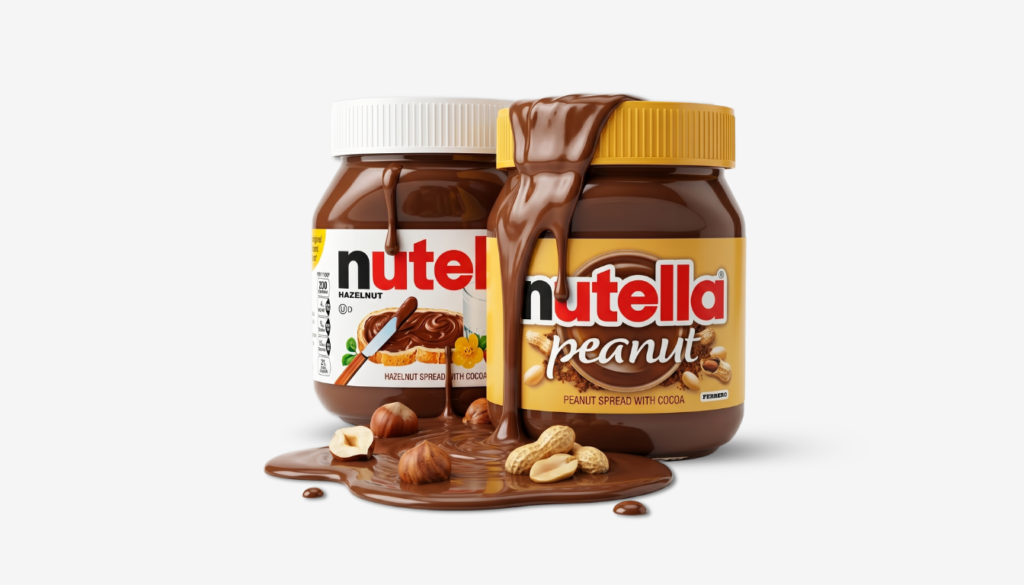
It is precisely this history that makes the introduction of Nutella Peanut, developed under the umbrella of Ferrero Group, feel less like a simple product extension and more like a carefully measured departure. By blending its signature hazelnut base with roasted peanut flavor, the brand is not attempting to redefine itself, but rather to explore how far it can expand without disrupting the familiarity that has long sustained its appeal.
When Growth Demands Change
The decision to introduce a variation after such a prolonged period of stability reflects a broader reality faced by mature brands, where growth can no longer rely solely on expanding reach and must instead emerge from reinterpreting existing demand. Nutella, having achieved near-universal recognition in its category, now faces the challenge of extending its relevance into new consumption contexts, particularly those associated with higher frequency and everyday use.
In this sense, the incorporation of peanut is far from incidental, as it aligns the brand with a category deeply embedded in routine, particularly in markets where peanut butter functions less as an indulgence and more as a staple. By positioning itself closer to these habitual occasions, Nutella subtly shifts its identity, moving beyond its traditional role as a treat and entering a space where it can compete for daily presence, thereby expanding both its utility and its growth potential.
Listening Before Launching
What distinguishes this launch further is not only its strategic positioning but also the narrative that underpins it, one rooted in years of consumer demand that effectively reframes the product as a response rather than an imposition. In acknowledging these requests, Nutella is participating in a broader transformation within brand strategy, where innovation increasingly emerges from interpreting audience signals rather than dictating new directions from within.
This dynamic alters the relationship between the brand and the consumer, positioning the latter as an active contributor to the product’s evolution, while simultaneously reducing the inherent risks of introducing something new. The result is a launch that feels less experimental and more inevitable, as though the brand is formalizing a desire that has long existed within its audience.
Turning a Product Into a Moment
To reinforce this transition, Nutella has extended the launch beyond traditional retail, staging a pop-up experience in New York that immerses consumers in the product’s debut through interactive elements and curated sampling environments. This move reflects an increasingly important shift in how brands approach introductions, recognizing that in a landscape defined by fragmented attention, visibility must be complemented by experience.
The pop-up, with its games and snack stations, operates not merely as a promotional tool but as a mechanism for generating cultural relevance, transforming the act of trying a new flavor into a participatory event that invites sharing and amplifies reach organically. In doing so, Nutella acknowledges that the success of a product today is as dependent on the narratives it generates as on the qualities it delivers.
The Fine Line Between Evolution and Dilution
Yet beneath this carefully orchestrated evolution lies a delicate balance, as the very consistency that has defined Nutella’s success also imposes limits on how far the brand can extend itself without risking fragmentation. The introduction of variations, while offering pathways for growth, inevitably challenges the clarity that has long distinguished the product, raising questions about how to expand without eroding identity.
For Ferrero, the task is not simply to innovate, but to do so with restraint, ensuring that each new iteration reinforces rather than dilutes the brand’s essence. Nutella Peanut must therefore function not as a departure, but as a reinterpretation, maintaining the core attributes that consumers recognize while subtly expanding the boundaries of what the brand can represent.
A Signal of What Comes Next
Seen in this light, the launch of Nutella Peanut extends beyond the introduction of a new product, serving instead as an indicator of how legacy brands are adapting to a market that increasingly rewards both familiarity and flexibility. The era in which icons could remain static has given way to one in which even the most established names must evolve, albeit with a level of precision that preserves their foundational identity.
Nutella’s approach suggests that the future of brand building will not be defined by constant reinvention, but by the ability to calibrate change, introducing just enough variation to sustain growth while maintaining the continuity that fosters trust. It is within this narrow margin that the brand now operates, testing not only a new flavor but the limits of its own evolution.