
For most of the internet’s history, the relationship between publishers and Google Search followed one rule: visibility at any cost. Media companies spent decades optimizing, restructuring, and occasionally contorting themselves to rank higher, because search traffic was the largest single source of audience and revenue. That era is ending, and not on Google’s terms.
A handful of influential players in the digital media ecosystem are now laying the groundwork for something long considered unthinkable: removing themselves from Google Search entirely.
The Ultimatum From the Internet’s Middle Layer
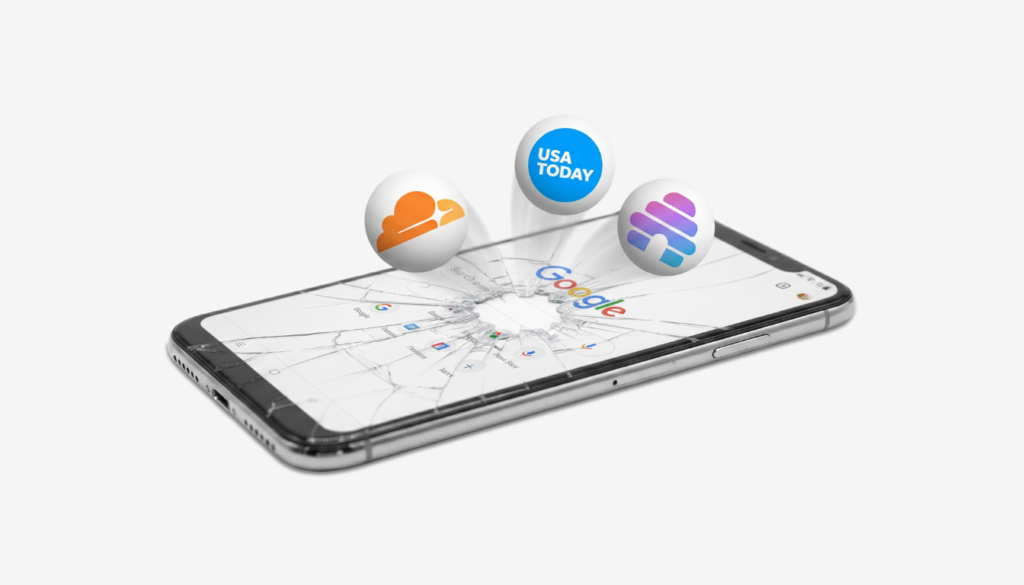
The most consequential move came from Cloudflare, the content delivery network that hosts roughly one-fifth of the world’s websites. Beginning September 15, all new websites signing up for Cloudflare, along with all free-tier customers, will have their bot management settings default to blocking multi-purpose crawlers on any page carrying ads. Any crawler that scrapes for both search indexing and AI training will be turned away unless the site owner opts otherwise.
Cloudflare chief strategy officer Stephanie Cohen has framed the demand plainly: publishers want to be discoverable “without having to give your content away for free.” The policy’s unnamed but obvious target is Google, which uses a single crawler both to index sites for search and to train its AI models.
Google’s Two-Headed Crawler
That dual-purpose crawler is the crux of the conflict. Publishers face a binary choice: allow both functions and watch their content feed AI products that answer user questions without sending traffic back, or block both functions and vanish from the search engine that still drives their audience.
Google has introduced partial remedies, including Google Extended, which nominally lets publishers opt out of AI training while remaining in search. But media executives remain skeptical that opting out carries no penalty to search visibility, and similar new controls in the UK depend on trusting Google’s discretion rather than enforcing a hard block. Google, for its part, maintains that its controls do not affect traditional search visibility and that its AI experiences are designed to drive valuable traffic to publishers.
USA Today Prepares to Walk
The threats are no longer hypothetical. USA Today Inc., which operates a nationwide network of news sites, is prepared to delist from Google within the next six to twelve months, according to CEO Mike Reed. The company has spent years diversifying its audience through newsletters, social media, and events, and has held its traffic at a goal of one billion monthly pageviews for three consecutive years. Its AI monetization now runs through licensing agreements with Meta, Microsoft, and Amazon.
Google is the conspicuous absence from that list. Unlike its hyperscaler peers and AI firms such as OpenAI and Anthropic, Google has struck no licensing deals with publishers. Reed’s logic is simple: partners with agreements get the content; those without get blocked. The creator platform Beehiiv has taken a parallel step, giving its network the ability to block Google’s crawler through a Cloudflare partnership.
The Math of Leaving
SEO consultant Lily Ray has called the tradeoff a hard one, noting that Google’s user base dwarfs that of any AI firm publishers have blocked so far. But the calculation is shifting because the thing publishers feared losing is already eroding. Search traffic has declined across the industry, and in extreme cases the collapse has been existential. Newsweek’s readership fell from roughly 100 million monthly visitors in May 2025 to 23 million a year later, a drop of nearly 75 percent according to Similarweb data, a slide accompanied by successive rounds of layoffs.
When search delivers less, withholding content costs less, and its value as a bargaining chip rises. Executives at every major media company have reportedly modeled what blocking the Google Bot would look like. The decision has become arithmetic: once search traffic falls below a threshold, leverage beats visibility.
What Marketers Should Take From This
For marketing and media professionals, the implications reach well beyond publishing. The discipline that shaped two decades of content strategy, search engine optimization, is giving way to answer engine optimization, where authority and trusted authorship drive citations inside AI assistants rather than clicks from result pages. Future’s chief revenue officer Mike Peralta has observed that audiences are shrinking for most publishers, but the audiences that remain are far more engaged, and that agent-to-agent transactions could dominate programmatic buying within a year.
The deeper signal is structural. The implicit contract that built the open web, content in exchange for traffic, has broken, and the parties are renegotiating in public. No publisher wants a future without Google. But a growing number are prepared for one, and Google has no equivalent plan for a search engine stripped of premium content. Whoever blinks first will define the economics of digital content for the next decade.