

The Wrong Question
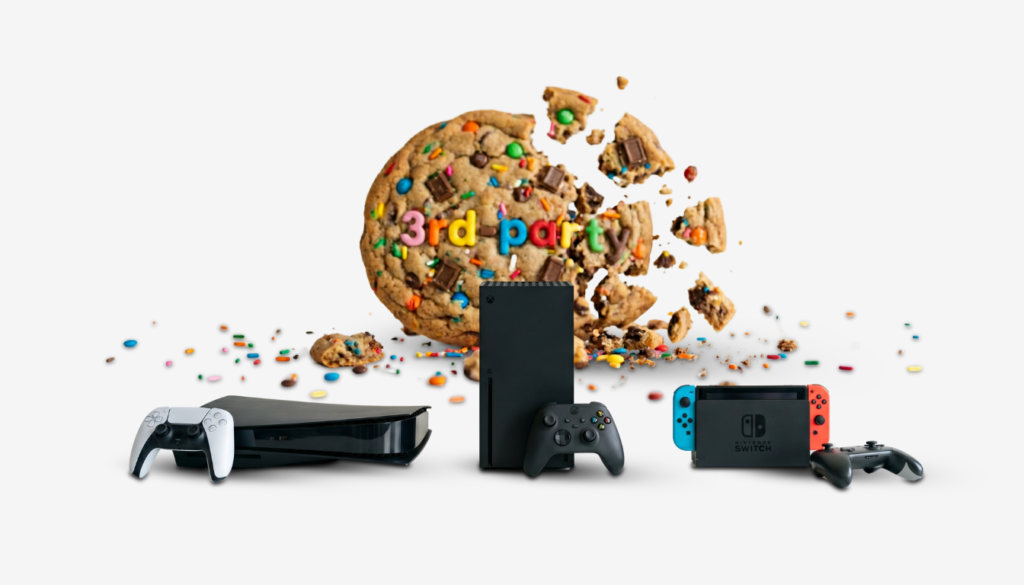
For the better part of a decade, the dominant conversation in digital advertising has been organized around a single question: what replaces the third-party cookie? The question framed the identity problem as one of substitution, finding an alternative tracking mechanism that could replicate what cookies did while satisfying the privacy requirements that rendered cookies obsolete. The answers that emerged — unified IDs, clean rooms, first-party data onboarding, contextual targeting — are all legitimate responses to a legitimate problem, and most of them will play a role in the post-cookie advertising stack. None of them fully resolves the underlying challenge: how do you understand the same consumer across a fragmented media environment, at the behavioral depth required to make advertising genuinely relevant, without relying on surveillance-grade tracking infrastructure?
The answer, as Indy Khabra, co-founder and co-CEO of gaming marketing company Livewire, has articulated with unusual clarity, was never missing. It was hiding in plain sight inside the gaming ecosystem, where it had been built — out of necessity rather than foresight — years before the rest of the industry recognized it needed it.
Why Gaming Had to Solve This First
Gaming’s confrontation with audience fragmentation predates the advertising industry’s by several years, and the severity of the problem was greater. A gaming audience in 2015 was spread across PlayStation, Xbox, Nintendo Switch, PC via Steam and Epic Games Store, mobile on iOS and Android, and a proliferating landscape of independent publishers and titles — each with its own account system, its own identity layer, its own behavioral data, and no standardized mechanism for connecting any of them. For a brand trying to reach gamers across this landscape, the fragmentation was not a nuance. It was a fundamental barrier to any coherent audience strategy.
Gaming’s response was to invest in identity and behavioral data infrastructure that could resolve the same audience across multiple environments — not through surveillance, but through the structural reality of how games work. Players log in. They maintain persistent accounts. They build social graphs with other players. They transact digitally. They return repeatedly over months and years. Every session generates behavioral signals — title preferences, genre affinities, engagement depth, progression patterns, in-game interactions — that create a picture of consumer behavior that is richer, more specific, and more durable than anything the open web’s cookie-based tracking ever produced. And it is built on an authenticated, consented identity by design, because games require you to log in before you can play.
The result is what Livewire’s Gamer.ID platform represents: a framework for de-duplicated, cross-device behavioral profiles built on real user relationships rather than inferred browsing patterns — the exact architecture that the post-cookie advertising world has been trying to build from scratch everywhere else.
The Audience Is Not Who Brands Think It Is
The commercial opportunity embedded in gaming’s identity infrastructure is compounded by a demographic misunderstanding that has kept most non-endemic brands from investing in the channel at the scale that the audience warrants. Gaming is still discussed in many marketing meetings as a niche interest category, its audience imagined as a narrow demographic of young males consuming content in a specialized environment that is largely irrelevant to mainstream consumer categories.
The data tells a radically different story. There are 3.4 billion gamers globally — nearly half the world’s population. The average age of a gamer is 41. According to 2026 GWI data, 44% of gamers are parents, 47% regularly exercise, 38% intend to buy an electric or hybrid vehicle as their next car, and 96% frequent fast-food establishments. These are not niche consumers. They are the mainstream consumer base that QSR, automotive, financial services, CPG, travel, and retail brands spend billions of dollars trying to reach through channels that are, in almost every measurable dimension, less authenticated, less behavioral, and less persistently engaging than gaming environments.
The reason brands in these categories have underinvested in gaming is not that the audience isn’t there. It is that the infrastructure to reach that audience at scale, with the precision and measurement accountability that modern media buying requires, has not been widely accessible. That infrastructure is now accessible.
What This Means for the Open Internet
The broader argument that gaming’s identity infrastructure represents is, at its deepest level, a structural one about where durable identity signals will be generated in an increasingly privacy-constrained digital environment. The open web’s cookie-based tracking is being restricted not temporarily but permanently, by a combination of browser policy, regulatory enforcement, and consumer preference that has no plausible reversal. The replacement architectures being built — first-party data, authenticated media, clean rooms — all converge on the same fundamental principle: identity in the post-cookie world will be built on consented, authenticated relationships between users and platforms rather than on passive behavioral surveillance.
Gaming has operated on exactly that principle for its entire existence. The authenticated, persistent, behaviorally rich identity layer that the open internet is still trying to construct is what gaming built as basic infrastructure years ago. The campaigns that have run on Livewire’s behavior-based gaming identity system have demonstrated this commercially: higher video completion rates, higher clickthrough rates, and stronger audience understanding than campaigns built on contextual or interest-based targeting alone.
As media buying becomes increasingly AI-driven — as automated systems require structured, interoperable audience intelligence that can operate consistently across fragmented environments — the value of persistent, behavior-based identity will only increase. Gaming identity systems are particularly well-positioned for that future, because they were never built any other way. The post-cookie answer was here all along. The question now is whether the brands that need it most will recognize it quickly enough to use it.