
The Problem Reserved Is Solving
The experience of buying a ticket to a genuinely in-demand concert is, for most fans, some variation of the same nightmare: the sale opens, the queue forms, the system crashes, bots win, and a substantial portion of the remaining inventory ends up on resale platforms at three times the face value. The system has been broken for years. Responses from ticketing platforms have addressed it partially and inconsistently, often while creating their own frustrations.
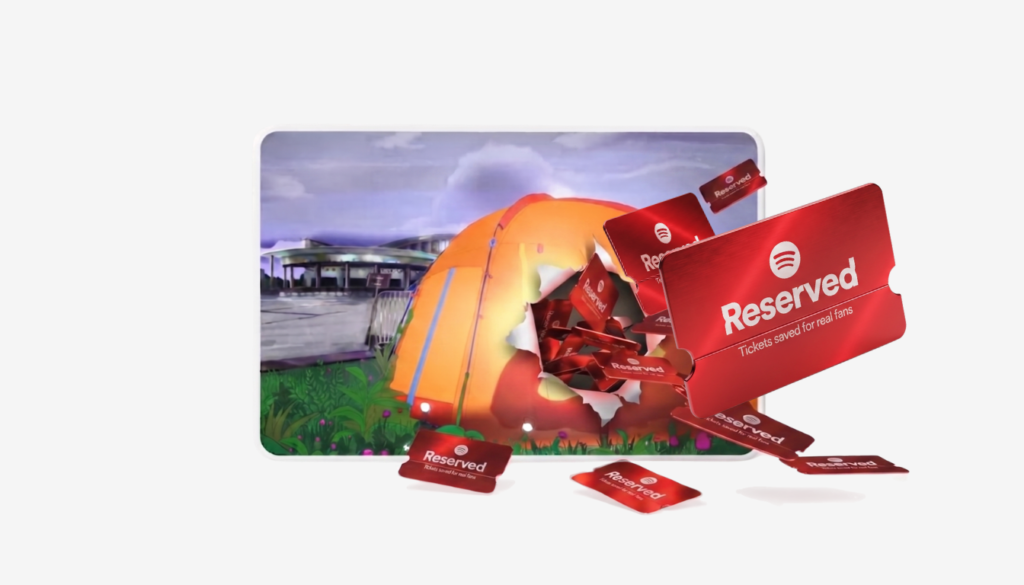
Spotify’s Reserved feature is built on a different premise: rather than trying to verify genuine fans at the point of sale, it identifies them through their existing listening behavior. Streams, shares, how long someone has followed an artist, the organic consistency of their engagement over time: all of these signals, processed across Spotify’s 675 million monthly active users, generate a behavioral profile that distinguishes the person who has listened to every album from the person who knows the biggest single. The most dedicated fans, as defined by that profile, receive a Reserved offer before the general sale opens; an email and in-app notification with a purchase window of roughly 24 hours to buy up to two tickets through Ticketmaster, with no added fees from Spotify. The feature launched in June 2026 in the U.S. for Premium subscribers aged 18 and over, with Role Model as the first artist to participate, followed by Rod Wave and additional artists in a growing slate.
“Great Lengths” — the Campaign That Earns Its Ambition
The animated campaign accompanying Reserved, “Great Lengths,” directed by Jocelyn Charles through Paris-based production company Remembers, is the kind of advertising that earns attention rather than buys it. The film depicts the extreme, irrational things fans have historically done to secure concert tickets before Reserved existed, including waiting in an infinite line in the desert, selling their hair, and missing a beloved grandmother’s funeral. All of it rendered in a visual style that makes the absurdity feel warm rather than cold.
The animation technique is labor-intensive: backgrounds hand-drawn with markers, characters animated frame by frame on a computer, with original music by sound studio Citizen. The result is a visual texture that feels handmade and specific, an aesthetic choice that mirrors the campaign’s underlying argument: the fans who go to these lengths are the ones who care enough to deserve a better system. “Great Lengths” is not a product demo. It is a character study of the people Reserved was built for, which is why it works as advertising rather than merely announcement. The campaign extends into outdoor advertising near concert venues across New York, Los Angeles, Miami, Chicago, and Atlanta, alongside CTV, OLV, and paid social.
What Reserved Signals About Spotify’s Ambition
Reserved is not only a ticketing feature. It is a commercial statement about what Spotify believes it is becoming. The platform has long been where music is discovered, where artists grow their audiences, and where listening behavior generates the data that defines who is genuinely invested in an artist’s work. Reserved monetizes that data, not by selling it, but by using it to deliver a tangible benefit to the fans whose behavior generated it.
The strategic logic is circular and mutually reinforcing: fans who stream consistently on Spotify are more likely to receive Reserved offers, which gives them a reason to remain active Premium subscribers, which generates more behavioral data, which makes eligibility signals more accurate. The $1.5 billion in ticket sales that Spotify says its live music features have driven to date gives Reserved a credible commercial foundation rather than an aspiration. This is not a streaming platform experimenting with an adjacent market. It is a platform with demonstrated commercial capability in live music deploying a new product in a category where its behavioral data creates a genuine competitive advantage. The fans who once sold their hair to get to the show will, with Reserved, no longer have to.